China says 40,000+ humanoids shipped in H1. The datasets disagree
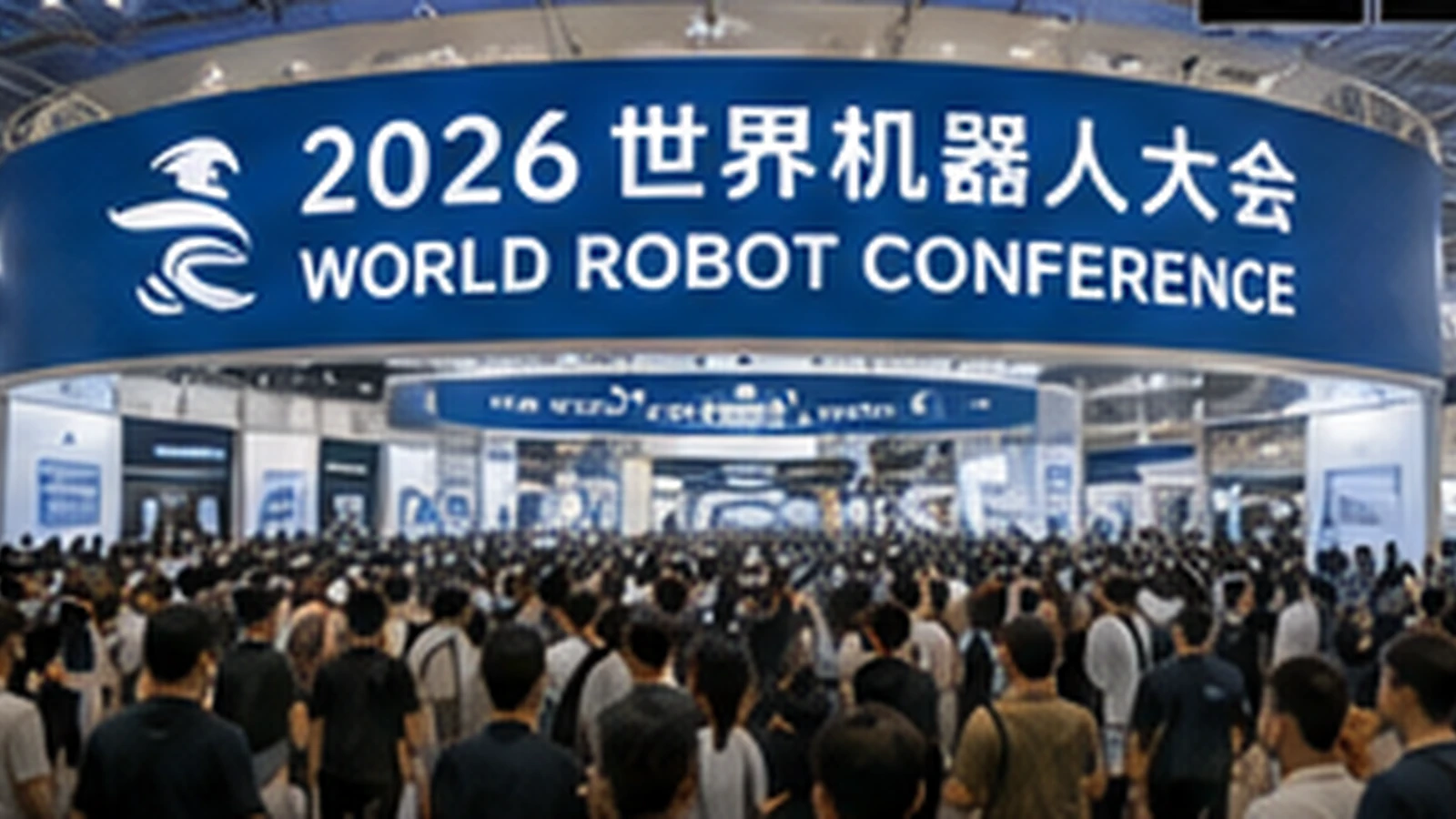
A new report presented at the World Robot Conference in Beijing adds another very large number to the debate over humanoid scale. The China Humanoid Robotics and Embodied Intelligence Committee of 100 says China shipped more than 40,000 humanoids in the first half of 2026 and represented 97% of global shipments. The figure was published on the evening of August 20 and needs careful interpretation because it differs materially from other public market datasets.
The key issue is not simply “40,000”. It is what the report defines as a humanoid, a shipment and a delivered unit. Lower estimates from other analytical sources have circulated publicly in recent days. Without a common methodology, those figures must not be blended into one trend or presented as mutual confirmation.
What the new report says
Information released at WRC says the report examines the industry across five dimensions: overall landscape, development trends, technology mapping, the industrial chain and applications. It also compares China with the United States, Germany, South Korea and Japan. The headline claim is more than 40,000 units shipped in China in H1 and a 97% share of global shipments.
If both figures use the same denominator, they imply a global market slightly above 41,000 units. That is substantially higher than several other public estimates. The gap could come from product definitions, vendor coverage, shipments to integrators and laboratories, or inclusion of machines that other analysts do not classify as full humanoids.
Why incompatible datasets should not be merged
Yesterday we discussed lower public estimates and explicitly flagged the definition problem. Today’s release does not automatically invalidate those figures. It is a new measurement from a different source. Rather than rewriting the history without methodology, we treat the Committee of 100 report as a separate dataset and make the disagreement visible.
That distinction matters in a young market. A shipment can mean a sale to an end customer, a unit sent to a distributor, a research platform, a robot used to generate training data or a demonstration machine. Economically those are very different outcomes. A robot sitting in a laboratory is not equivalent to a machine working two production shifts every day.
97% says more about supply than autonomy
Even if the China share is measured correctly, it does not mean China owns 97% of the world’s most advanced embodied intelligence. It primarily demonstrates an ability to manufacture and ship hardware: actuators, gearboxes, batteries, sensors, controllers and complete platforms. That is a major industrial advantage, but software remains the bottleneck, a point Unitree CEO Wang Xingxing made openly this week.
The two WRC messages therefore fit together. China can scale robot hardware quickly, while industry leaders simultaneously say current humanoids are not yet intelligent enough for mass deployment without specialized training. Hardware volumes can grow much faster than productive autonomy.
What it means for Europe
For European manufacturers the challenge is not only the number of finished humanoids. Higher Chinese volumes can lower component costs across the supply chain and accelerate product iteration. Europe remains strong in automation, drives, safety, integration and industrial customers, but it has to avoid becoming only a buyer of finished platforms and a supplier of niche components.
The defensible conclusion today is that the market is expanding extremely quickly, but the exact H1 2026 size cannot be established by combining public headlines. Definitions and methodology tables are needed. The benchmark should be updated only when the Committee of 100 methodology is available in sufficient detail.