Hyundai Plans 25,000 Atlas Robots as RMAC Begins Factory Training
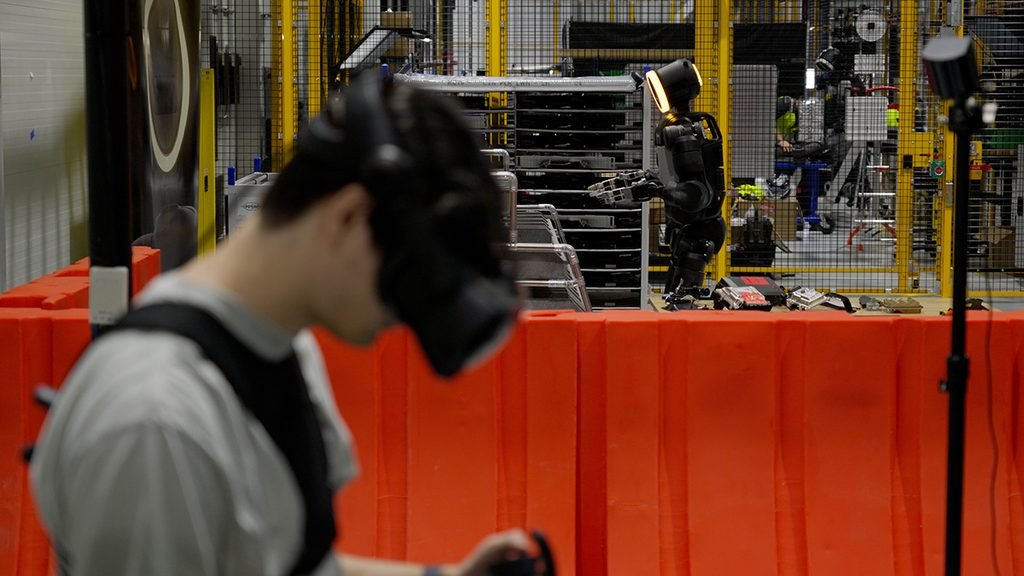
Hyundai Motor Group and Boston Dynamics have put a much larger number on their Atlas commercialization plan. On September 21, Boston Dynamics announced that the first phase of the Robotics Metaplant Application Center (RMAC) is operational at Hyundai Motor Group Metaplant America in Georgia. Atlas robots are training in a real manufacturing environment, while the Group says it plans to scale deployments across its global network, beginning with 25,000 units at Hyundai Motor and Kia plants over the next few years. The new information extends the commercialization plan described in August. Source: Boston Dynamics.
RMAC is no longer only a plan
Boston Dynamics describes the first phase of RMAC as operational. Atlas is being trained on tasks such as preparing logistics and sequencing automotive parts before they are placed in the correct order for assembly. That matters because the robot is beginning to gather experience inside a real HMGMA manufacturing environment rather than only inside a Boston Dynamics lab.
The word “training” is equally important. The company is not saying that tens of thousands of Atlas robots are already operating autonomously on production lines. RMAC is a testbed and deployment-preparation center. By 2030, applications are expected to extend into component assembly, with repetitive and physically demanding tasks forming part of the roadmap.
Twenty-five thousand Atlas units is a deployment plan, not today’s installed base
The strongest new number is 25,000. Boston Dynamics says Hyundai Motor Group plans to expand Atlas across its global network, “beginning with 25,000 units” at Hyundai Motor and Kia plants over the next few years. RoboMorrow treats this as a plan, not as a completed order or a current installed fleet.
The annual cadence, price, number of factories in the first wave and ratio of training units to normal production units are not disclosed. The target is huge relative to most current humanoid pilots, which makes the distinction between intended deployment and active fleet especially important.
The 30,000-robots-per-year figure is a separate number
Hyundai had already discussed a new U.S. production capability of up to 30,000 robots annually. Today’s announcement repeats that capacity target, but it should not be conflated with the 25,000 Atlas figure. The first refers to a planned production facility and can cover a broader robotics portfolio; the second explicitly describes the intended Atlas deployment scale across Hyundai and Kia plants.
RoboMorrow’s August coverage deliberately did not label the 30,000 capacity target as “30,000 humanoids.” That caution remains correct. What is genuinely new today is a very large Atlas-specific deployment number. It is still a forward plan across multiple years.
RMAC is expected to grow roughly tenfold in 2027
Boston Dynamics says RMAC will move into a new building in 2027 and expand to approximately ten times its current size. The company also wants to explore applications beyond automotive. It is discussing Atlas data collection and training with existing Spot and Stretch customers in manufacturing, aerospace, semiconductors, logistics, food and beverage, and life sciences.
That suggests a commercialization path based on specific processes and existing customer relationships rather than immediately selling a general-purpose humanoid into any workplace. If Atlas expands beyond Hyundai Motor Group, those industries are logical candidates for the next stage.
What remains of the earlier dealer-channel idea
In August, Hyundai was exploring the possibility of using its dealer network and Hyundai Capital financing for future robot distribution. The new Boston Dynamics release does not announce the launch of such a channel and does not provide an Atlas price. That idea therefore remains a strategic option rather than current retail availability.
The concrete story today is Hyundai’s own ecosystem: RMAC, Hyundai/Kia factories, U.S. robot production and the data pipeline needed to scale Atlas. That may be a more realistic route to the first tens of thousands of humanoids than open-market sales because the Group controls the deployment environment, process and much of the supply chain.
What it could mean for Europe
The release does not name the first European sites, local delivery dates or an Atlas price. We therefore do not assign the planned fleet to a particular European factory. The relevant development for an EU buyer is the deployment-preparation model, not an announcement of local product availability.
The announcement connects a training center, future production capacity and the plants where the Group wants to use the robots. Our guide to interpreting humanoid-market numbers separates those plans from completed deliveries. For Atlas, the useful next evidence would be a timetable showing tasks moving from training into ordinary operation, rather than a comparison of large totals from different commercialization stages.
What would show that the 25,000-unit plan is becoming real
The most useful next data would be a first-wave schedule, the number of Atlas units operating at HMGMA, named factories outside the U.S., and tasks that graduate from training into normal production. Safety metrics, completion rate and operator interventions would be equally valuable. At the scale Hyundai is describing, even a small reliability difference can translate into thousands of hours of downtime or savings. Only when those figures emerge will it be possible to compare the 25,000-unit plan with the economics and productivity of conventional automation.
From training data to acceptance of a real workstation
A practical assessment of RMAC should separate teaching a robot from approving the process in which it will eventually operate. Gathering examples shows how an action can be performed. Workstation acceptance should establish whether the complete arrangement achieves the required result under ordinary production conditions. That second assessment also covers material presentation, waiting time, error detection and the procedure for restoring operation after a stop.
Consider an illustrative parts-sequencing task. One successful transfer is not sufficient: identity, sequence and destination must all be correct. If an employee regularly adjusts the object’s position, that time belongs in the cost of the process. This example explains the difference between training and autonomous completion of an entire job; it is not a description of faults observed in Atlas.
The choice of a humanoid should also be compared with alternative ways of transporting and presenting parts. Our AMR versus AGV guide helps organize questions about routes, layout variability and integration, although it is not an Atlas test. For a simple, stable flow, purpose-built automation can remain a relevant baseline. The ability to change tasks needs an economic justification rather than being treated only as an attractive demonstration feature.
The Boston Dynamics photograph also includes a person wearing equipment used for control and training. That role should not be hidden: operator involvement during teaching is different from continuous assistance during normal execution. Reporting the two stages separately would make the transition easier to assess. Teams preparing their own deployment can use RoboMorrow’s business resources as a starting point for defining acceptance criteria. The essential question is which result a plant will measure and approve before attempting to reproduce the workstation across further factories. A large future fleet becomes a practical programme only when each repeatable operating unit has been defined.
Sources and verification
RMAC status and future deployment volumes come from Boston Dynamics. Plans are not treated as completed deliveries. Acceptance criteria are editorial analysis.