Generalist AI reaches a reported $3B valuation as “robot brains” attract major capital
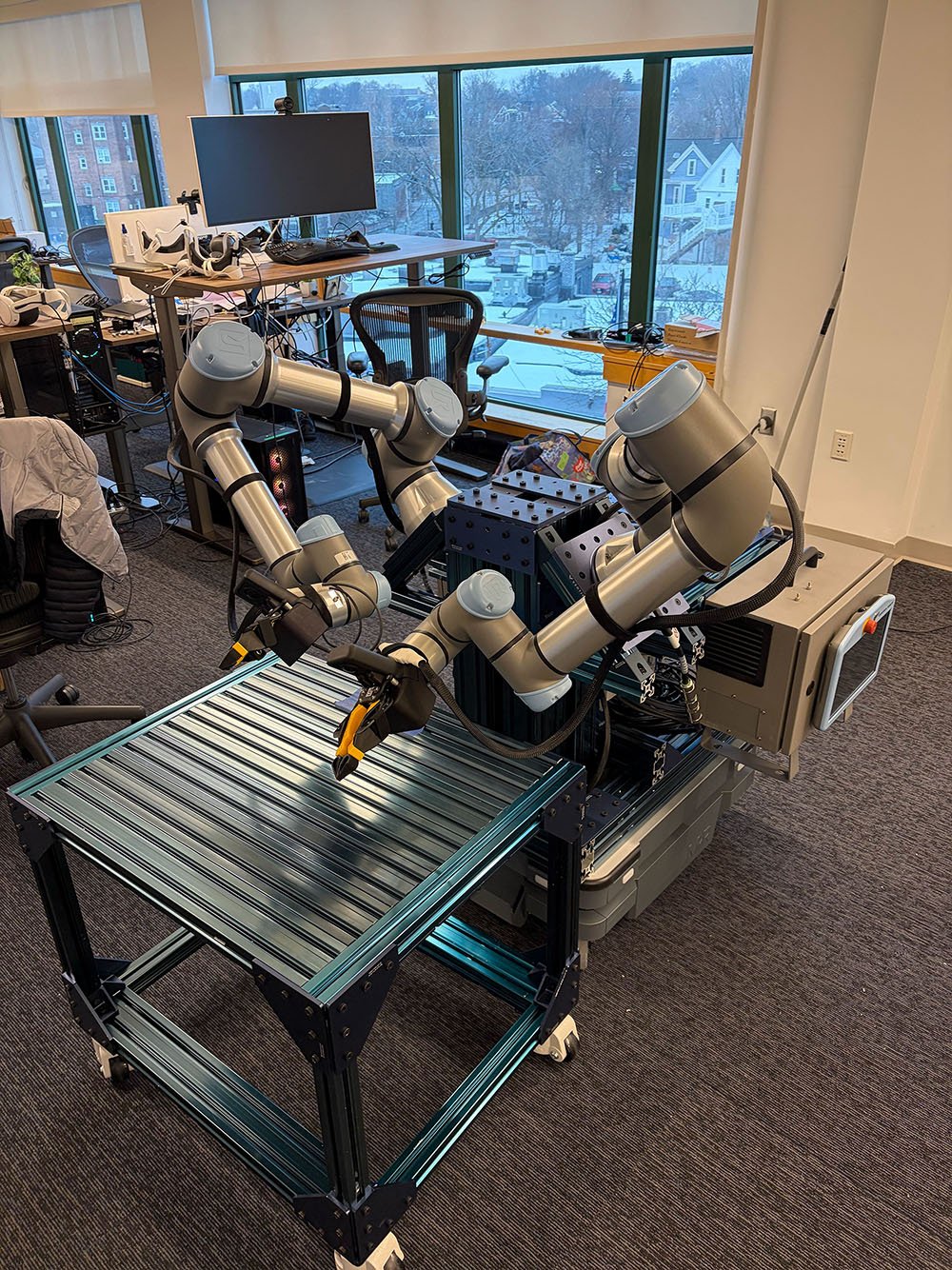
The market is starting to value “robot brains” as a category of their own. Generalist AI does not build a humanoid. It develops a foundation model intended to work across different robot platforms and learn new tasks quickly from demonstrations — and that software layer is attracting hundreds of millions of dollars.
The new capital extends an earlier round
TechCrunch, citing two people familiar with the deal and a regulatory filing, reports a $3 billion valuation for Generalist AI. The fresh capital is nearly $200 million led by 8VC. It is described as an extension of the $400 million Series B announced in June, bringing the round total to roughly $600 million.
Generalist and 8VC did not respond to TechCrunch’s request for comment. The $3 billion valuation is therefore not a company announcement. The additional financing, however, is supported by the filing, while the earlier $400 million round had been publicly announced.
Generalist is not building its own humanoid
That is the important distinction. The company wants a foundation model that works across different robots, hands and mobile platforms. If the software is genuinely portable, hardware manufacturers may not need to build the full intelligence layer in-house. Value could accumulate in a separate “robot brain” layer much as operating systems and foundation models created distinct layers in computing and AI.
Generalist was founded by researchers with backgrounds at Google DeepMind and Boston Dynamics. Team pedigree is not proof of product superiority, but it helps explain why investors view the company as a bet on generalization rather than another mechanical robot manufacturer.
GEN-1.5: a strong claim, but still a company benchmark
Generalist introduced GEN-1.5 in August. The model is designed to consume a 3–12 second demonstration in context and execute a new task without gradient updates. Across an internal set of ten tasks, the company reports 59% average one-shot success. With a few examples and short adaptation, it reports 83%.
Generalist explicitly notes that the tasks are simple and short-horizon and that one-shot behavior is still brittle. That matters: 59% success on short manipulation tasks does not yet mean a robot can watch a full warehouse process and run an unsupervised shift. There is also no independent apples-to-apples benchmark against Physical Intelligence, Skild AI or other foundation models on identical hardware and data.
Why investors are funding the intelligence layer
Capital flowing into Generalist, Physical Intelligence and Skild AI shows a shift in how the market is being framed. For several years, humanoid hardware captured most of the attention. Now large rounds are also going to companies that want to provide intelligence for robots made by others.
If cross-embodiment generalization works, the economics are attractive: one model can potentially serve many fleets and use cases without owning a mechanical factory. If transfer remains weak and every deployment needs large amounts of customer data and fine-tuning, the business starts to look more like integration services than a highly scalable software platform.
What it means for Europe
European robot manufacturers are strong in hardware, safety and industrial automation but often lack the foundation-model budgets of U.S. AI labs. Access to a hardware-agnostic robot brain could lower the barrier to more flexible autonomy.
EU customers will still need answers on local data processing, liability for model failures and validation after software updates. That is why our 2026 humanoid guide increasingly separates the hardware platform from the intelligence layer.
Sources and methodology
Funding and valuation: TechCrunch, Aug. 25, 2026. Model capabilities: Generalist — GEN-1.5. The $3B valuation is source-reported and not officially confirmed by Generalist. The 59% and 83% results are company benchmarks.
One-shot learning matters because robots cannot be programmed task by task forever
If robots are to enter thousands of different warehouses and factories, conventional programming of every new task becomes a cost bottleneck. A model that can watch an operator demonstrate an action for a few seconds and then attempt it could dramatically shorten integration. That is why GEN-1.5 is interesting even though its benchmark tasks are short: Generalist is trying to move robot programming from code toward physical demonstration.
At the same time, 59% average success after one demonstration is not deployment-grade reliability for most industrial processes. In manufacturing or logistics, a 41% failure rate would be unacceptable without safeguards, human oversight and recovery procedures. Even 83% after limited adaptation illustrates the gap between an interesting learning system and the reliability required on a production line. Generalist itself acknowledges the short-horizon and brittle nature of the current tasks.
The $3B valuation is reported market information, not a company announcement
The most headline-friendly number in the story — a $3 billion valuation — comes from TechCrunch sources and has not been formally announced by Generalist or 8VC. RoboMorrow therefore does not treat it as an audited company valuation. The more durable signal is that substantial capital is flowing into software that is not tied to a single humanoid body. If foundation models become portable across platforms, a meaningful share of robotics value may accrue to companies supplying the “brain” rather than the mechanics.
What should convince the market more than another funding round
The strongest proof for Generalist will not be another valuation headline but the same model working across multiple robot types and longer, less curated tasks. If GEN-1.5 or its successors can transfer skills across arms, grippers and environments without heavy retraining, the company could become a genuinely hardware-independent software layer. If each deployment still requires large amounts of robot-specific data, the advantage is much smaller.
Adaptation economics also matter. “A few minutes of demonstrations” sounds attractive, but enterprises care about the whole process: scene preparation, safety validation, monitoring and maintenance after a product or package changes. A foundation model wins only when it reduces total integration cost, not merely the minutes required to produce the first successful attempt.