A camera-equipped robot at home or work: eight privacy and GDPR questions
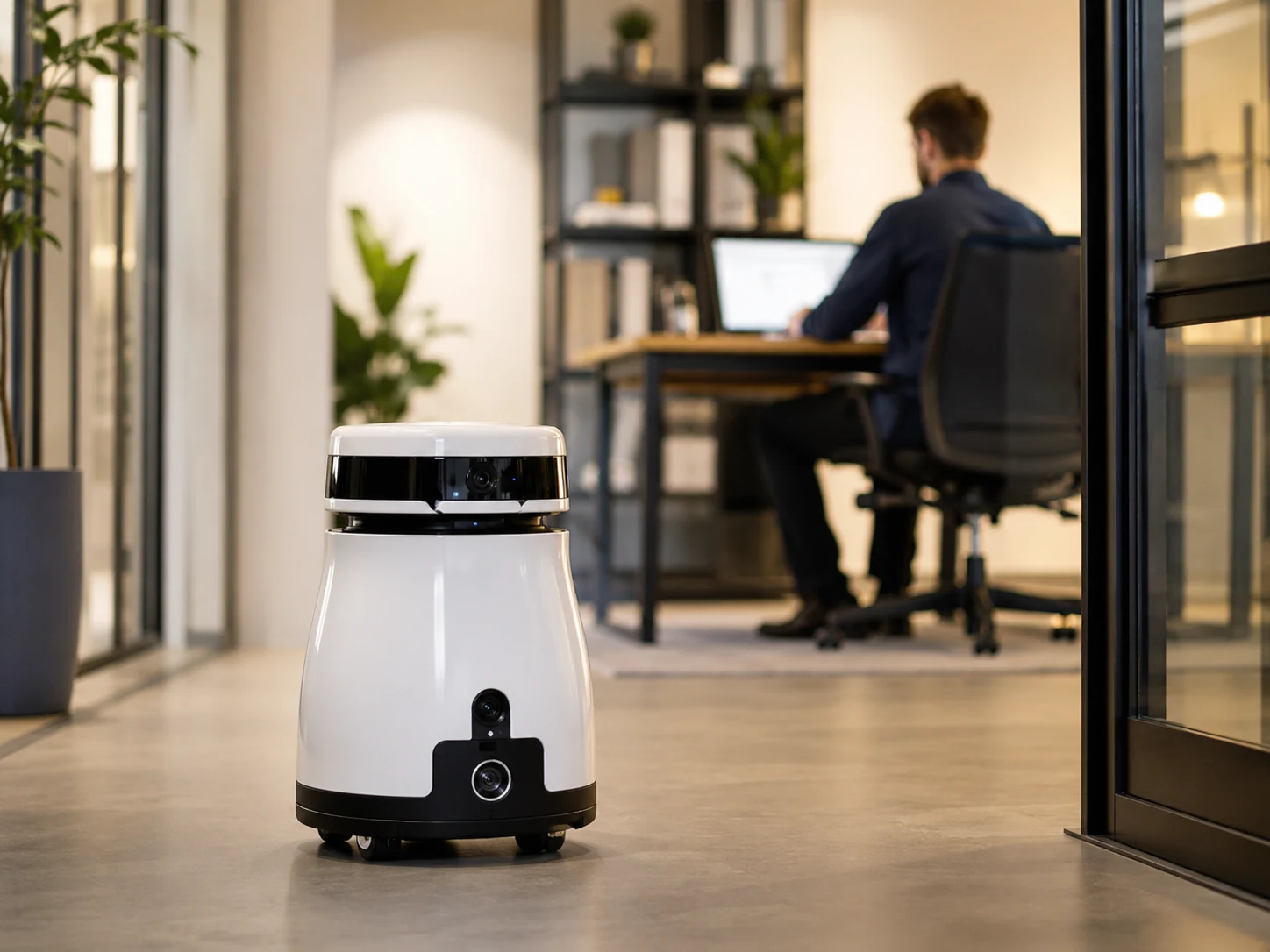
A robot equipped with a camera, microphone and environmental map can process much more information than an ordinary household appliance. At home, he can see household members, documents, computer screen and room layout. The company can register employees, customers, production processes and information constituting a trade secret.
The following material is for information purposes only and does not replace individual legal analysis.
1. Does the robot actually record data?
Not every camera records the image. Some devices analyze it locally and remove it immediately. Others upload frames to the cloud, save recordings or share them with the operator. You need to check the documentation and not rely on the general statement "the camera is only for navigation".
2. What is the purpose of processing?
The goal should be specific: avoiding obstacles, protecting a facility, providing remote assistance, or documenting an inspection. The data should not be subsequently used in an unrelated manner without an appropriate basis and information for the persons concerned.
3. Where does the analysis take place?
Local processing typically limits data transfers, but does not eliminate all risks. The cloud can provide more advanced features, but increases the number of entities, locations and systems that have access to information.
4. Who has access?
It is worth checking user roles, login history, multi-factor authentication and website access rules. Teleoperation requires special attention, during which an external operator can see the robot's surroundings in real time.
5. How long is data stored?
The principle of minimization means that recordings should not be kept longer than the purpose requires. The user should be able to delete the history, map and account, and perform a safe reset before selling the device.
6. Are people properly informed?
In the company, employees and visitors need to know that a recording device is operating in the space. The information should explain the data controller, purpose, scope and rights of the person. The small camera symbol on the robot alone may not be enough.
7. Does the robot recognize face or voice?
Biometric features may involve sensitive data. It is important to distinguish between simply detecting a silhouette and identifying a specific person. The more sensitive the feature, the stronger the justification and security it requires.
8. What happens after support ends?
A device that remains in your home for many years must receive security patches. You need to know whether the cloud will retain basic functionality after disabling it and how to export or delete data.
Home and business
GDPR generally does not apply to purely personal or domestic activities, but the exception does not always include recording public spaces, domestic workers or widely sharing the material. In the enterprise, accountability is clearer: the company must define basis, purpose, retention and safeguards.
Pre-Purchase List
- model specific privacy policy,
- place of data processing and storage,
- ability to disable recording and cloud,
- update period,
- account and map deletion procedure,
- teleoperation principles,
- entities having access to data.
Impact assessment and privacy by design
In high-risk applications, the company may need a data protection impact assessment. It is better to limit data collection already at the design stage: point the camera only at the measurement area, blur people, analyze locally and record the event instead of a continuous video.
Employee data
The employer-employee relationship makes it difficult to base monitoring on consent because consent may not be completely voluntary. Implementation should have a proportionate purpose and not lead to unjustified continuous performance surveillance.
Supplier Agreement
- producer and cloud operator role,
- server location and transfers outside the EEA,
- list of subcontractors,
- incident reporting time,
- return or deletion of data after service,
- audit rights and security information.
Practical Privacy Test
Before starting, walk the robot and see what it actually sees. A camera mounted low can record data other than ceiling monitoring: the contents of desks, documents and screens. The test should also include viewing from a regular user and administrator account.
RoboMorrow assessment
The camera robot should be evaluated as a connected digital device, not just a mechanical machine. The lack of a clear answer to a data question is a serious red flag.