A CE mark does not make every use of a robot safe
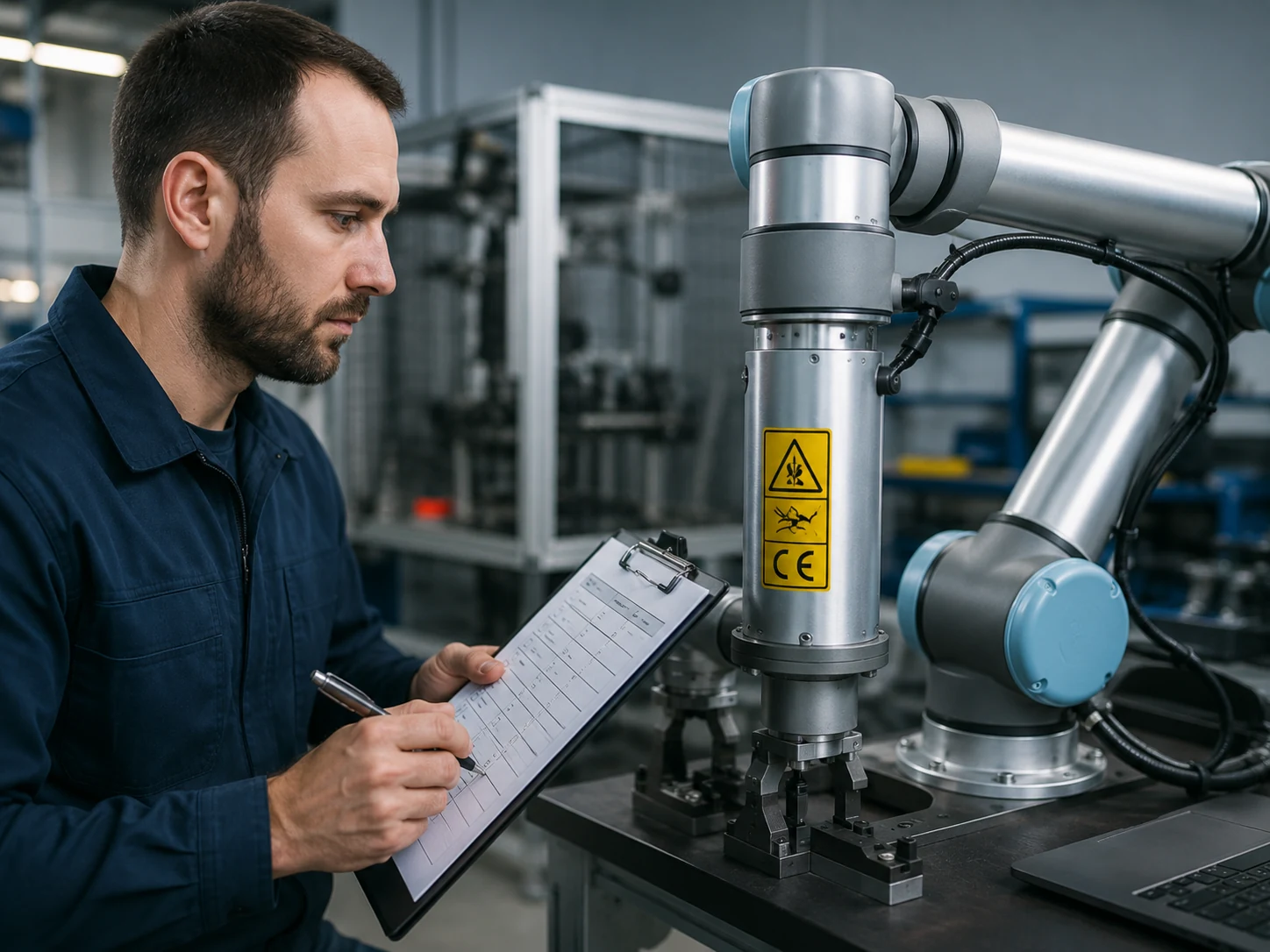
The CE mark is important but often misinterpreted as a universal safety certificate. In fact, it indicates that the manufacturer declares the product's compliance with the applicable European Union requirements and has carried out the appropriate conformity assessment procedure. It does not mean that the device is safe for any use or after any modification.
The material is for informational purposes only and does not replace legal or technical evaluation of a specific implementation.
What does CE say about the product?
Before labeling, the manufacturer should identify the relevant regulations, conduct a conformity assessment, prepare the technical documentation and declaration of conformity, and provide instructions. Depending on the product, regulations relating to machinery, radio equipment, electromagnetic compatibility, low voltage or other areas may apply.
CE is not an EU award. In many cases, the manufacturer himself is responsible for the assessment and declaration, although for certain products the involvement of an external entity may be required.
Purpose matters
The robot may be compatible as a research platform intended for a controlled laboratory setting, but not as an autonomous receptionist in a public space. The manual should specify uses, limitations, required safeguards and prohibited scenarios.
Buyer should verify that his/her plan is within intended use. It is particularly risky to use an imported device as an "educational" device for regular work alongside customers or employees.
Integration may change responsibility
Adding an arm, a new gripper, custom software, or increasing speed can change the risk. If the modification is significant, the entity making it may take over the manufacturer's obligations. It is similar when an integrator builds a complete machine from several compatible components.
What should the customer check?
- EU declaration of conformity and details of the manufacturer or importer,
- instruction in the language required for the user,
- description of purpose and limitations,
- emergency stop procedure,
- installation and maintenance requirements,
- working conditions next to people,
- impact of own software and accessories,
- documentation availability after device update.
CE and product quality
The marking does not guarantee durability, good service or high autonomy. A product may formally meet the requirements and yet be impractical. It does not replace acceptance testing, pilot testing and verification of commercial parameters.
Direct import from outside the EU
When purchasing a robot directly from a supplier outside the EU, you must determine who is the importer and who is responsible for the documentation. No presence in the EU, incomplete instructions or a declaration referring to a different model are serious red flags.
Documents that should match
The model name on the plate, invoice, declaration and instructions must match. A common risk signal is a blanket declaration for a broad family of devices without a clear indication of the purchased configuration. Standard numbers do not replace the description of the applicable regulations.
Technical acceptance
After installation, the company should check emergency stop, speed limits, behavior after loss of power and communication, and access to the work area. It is worth writing down the results and requiring the removal of defects before signing the acceptance.
Update after deployment
A software change may affect security features. The supplier should describe the scope of the update and how the test will be retested. Automatic update implemented without the administrator's knowledge is not a good solution in the production process.
Red Flags
- no complete manufacturer data,
- instruction only in the form of a short leaflet,
- CE only on the packaging,
- declaration for another model,
- no emergency stop description,
- seller refuses to provide documents before purchase.
RoboMorrow assessment
CE is the starting point, not the end of the assessment. The most important question is whether a specific robot, in a specific configuration and process, can safely perform the planned task.