AGIBOT and Chimelong plan a September 24 opening with 300+ robots
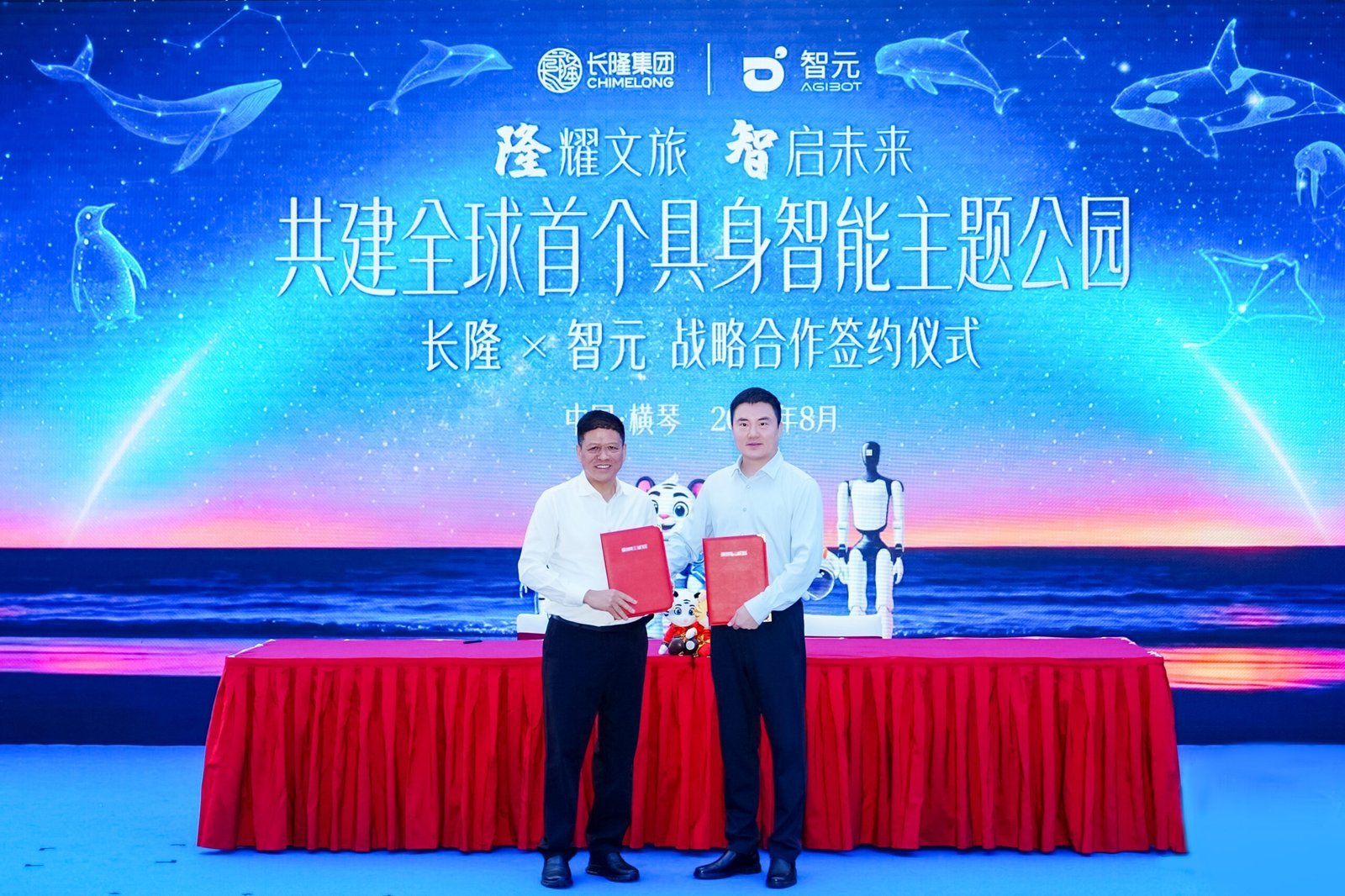
In August, AGIBOT and Chimelong announced a strategic partnership around a robotics theme park and tourism services, but they did not disclose an opening date or fleet scale. On September 20, new details emerged: opening at Chimelong Spaceship Park in Hengqin is planned for September 24, 2026, and the organizers say more than 300 robots will be deployed across more than 100 interaction points. The project has therefore moved from a broad agreement toward near-term launch, although operating KPIs remain absent. Source: AGIBOT.
More than 300 robots does not mean 300 productive autonomous workers
According to the announcement cited by IT Home, robots are planned for performance, education, guiding, retail, hotel and sports scenarios. More than 300 units is a large hardware footprint, but the number alone says little about autonomy. Some machines may operate in tightly prepared show routines, some may function as interactive attractions, and some may perform actual guest-service tasks.
The key question is therefore not how many robots are present but how long they can work without human intervention and which tasks they complete independently. The model mix, teleoperation share, operating hours, operator staffing and exception procedures remain unknown. RoboMorrow will not describe the whole fleet as 300 autonomous employees.
More than 100 interaction points may be the more useful test
The organizers say guests will encounter robots at more than 100 interaction points. That could be more important than the raw fleet size because it creates varied edge cases: children approaching too closely, groups blocking routes, multiple languages, changing light, noise, unexpected questions and the need to enter safe states gracefully.
The park could therefore generate data from situations that are far less controlled than a demonstration hall. At the same time, the operator can design the environment around the robots — routes, charging, backstage areas, waiting zones and show routines. That is not a flaw; it is often how sensible commercialization works. It simply needs to be considered when comparing the project with robots expected to work in completely unmodified spaces.
A joint institute adds a data and application layer
The opening program is also expected to include a joint institute focused on embodied intelligence in tourism. That continues the August plan for a shared laboratory. For AGIBOT, long-term access to real guest interaction data could be highly valuable; for Chimelong, the benefit is an environment where services and attractions can be iterated around the robot fleet.
The partners use marketing language about global scale and “first” status. RoboMorrow does not independently validate those superlatives without a comparable definition covering previous robot attractions. The concrete new facts are the planned date, fleet count and interaction-point scale.
What changed from the August version of this story
The original RoboMorrow article identified date, budget and robot count as the three biggest unknowns. Two are now partly resolved. The planned opening is September 24 and the declared fleet exceeds 300 units. The investment budget remains undisclosed, as do operating cost and the model-by-model task split.
That makes post-opening monitoring much more valuable. If the partners publish uptime, intervention frequency, operating hours and successful-interaction data, we can move from measuring hardware scale to measuring autonomy quality. Without those metrics, the project is a very large demonstration-and-service deployment but not yet a productivity benchmark.
Why Europe should still watch
A comparable fleet operating around families, children and staff in the EU would need careful machinery safety, camera and microphone privacy, cybersecurity and AI-governance analysis. Operator liability in a crowded public venue would also be central.
For hotels, shopping centers, airports and attractions, however, Chimelong may become a valuable case study. It belongs alongside RoboMorrow’s business robotics coverage. If more than 300 devices work continuously with guests rather than merely appearing at launch events, the market will have a rare large-scale test of embodied AI in a public environment.
September 24 is when the real test begins
The opening gives the market a concrete point from which the claims can be verified. After September 24, RoboMorrow will look for evidence from ordinary operating days rather than the launch ceremony: how many robots are active at the same time, which scenarios run every day, how charging and service are handled, and what happens after failures. Separating stage attractions from robots providing an actual service will be particularly useful. If the operator publishes even part of those metrics, the story can move from describing event scale toward evaluating deployment maturity.
Assessing a robot in a crowd rather than on a demonstration stage
A theme park creates a distinctive operating environment: visitors are not trained operators and do not have to follow the intended script. A child may approach from the side, a group may stop in an aisle and several people may start speaking at once. These are examples of situations worth evaluating, not observations from the still-unopened project. Useful performance should describe service for ordinary visitors rather than only repetitions of a carefully prepared demonstration.
Not every role requires the same level of autonomy. A robot on stage can perform a programmed routine and still be a valuable attraction. A machine guiding a guest to a destination needs a different assessment: it should recognize task completion and hand responsibility to a person when it cannot continue. Combining those roles into one success-rate figure obscures the difference between entertainment and service. Neither category needs to be misrepresented for the project to be interesting.
Our analysis of humanoid-market statistics explains why a device count is not automatically a count of productive jobs. Here, a useful report would additionally divide the fleet by role and hours of availability. The number of machines physically present is not enough; it matters how many are simultaneously available to visitors, how long a service takes and how many people support it outside the camera’s view.
The visitor experience should also be separated from the training infrastructure. Gathering data may help improve a system, but it does not mean every interaction is independently controlled by a model. We discuss the presentation of operator involvement in our coverage of Spirit AI’s autonomy claims. For a European hotel or entertainment venue, practical reference points would include procedures for handing tasks to employees, informing visitors and responding to faults. Those details have not been established for Chimelong, so they remain questions for a future operating report. This makes the planned opening a meaningful milestone without turning announced scale into a premature claim of dependable autonomous service.
Sources and verification
Fleet scale and opening date are organizer announcements. The photograph is from the earlier partnership signing. The opening is not described as already completed.