Atlas is designed for enterprise work, not just impressive demos
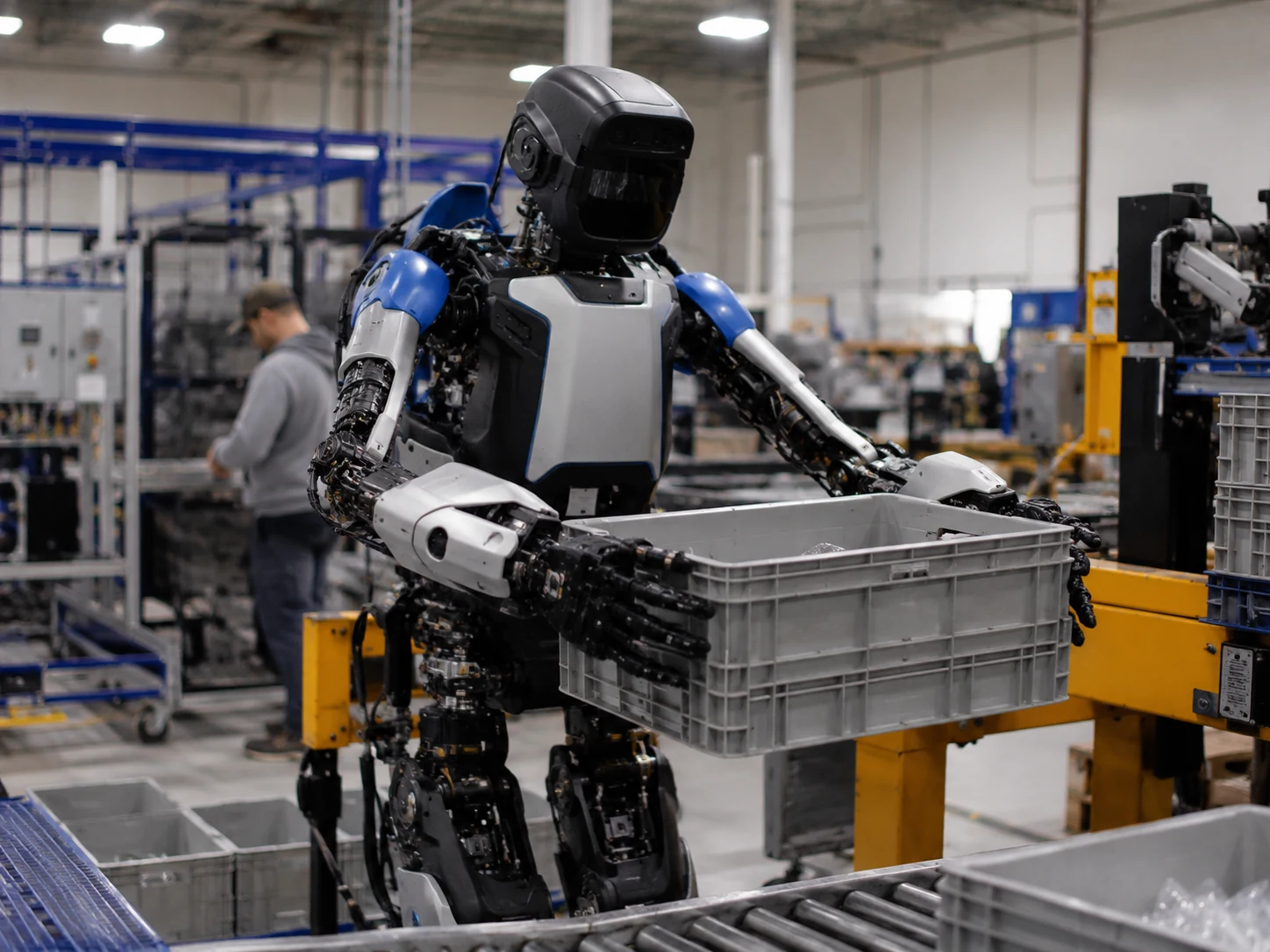
Atlas has been a symbol of the most spectacular humanoid robotics for years. Today, Boston Dynamics is trying to transform it from a research platform into an enterprise product. The manufacturer describes the new electric version as a robot for real industrial tasks, primarily material handling, parts sequencing and intelligent automation.
From Technology Show to Product
The previous Atlas was a hydraulic research robot. His jumps and dynamic movements showed the ability to control the entire body, but did not mean he was ready for multi-shift work. The new design is electric and designed from the beginning with industrial applications in mind.
Boston Dynamics highlights features needed by enterprises: integration with plant systems, fleet management, repeatable behavior, safety, autonomous charging and the ability to transfer learned skills between robots. This is the right direction because the factory doesn't buy a single flashy device - it buys the availability of the process.
Why a humanoid in the factory?
Classic industrial robots are very efficient when the workstation is built around them. The humanoid has the potential to enter a space prepared for humans: use similar passages, containers, shelves and tools. This can reduce the scope for plant rebuilding, especially for processes that change frequently or are difficult to automate with a traditional arm.
This doesn't mean, however, that a humanoid will always be the best choice. If the task can be performed by a conveyor, an autonomous cart, or a simple stationary robot, a specialized solution will likely be cheaper and more reliable.
What will determine the success of Atlas?
- Availability: number of operating hours without failure and time required for repair.
- Repeatability: performing the same task over hundreds of cycles, not just in a short demonstration.
- Exception handling: reaction to a moved container, a person on the route or a missing part.
- Integration: interoperation with production, safety and fleet management systems.
- Economics: full cost of robot, integration, maintenance, energy and supervision.
Tests in the client environment
The manufacturer informs about tests in real facilities and cooperation with Hyundai. Such pilots are more important than lab videos because they reveal problems with production rates, worker movement, contamination, layout changes and unplanned downtime.
However, we should still distinguish between manufacturer claims and independently published results. Measurable data will be important for the buyer: average time between failures, number of operator interventions, efficiency per hour and cost of one correctly performed cycle.
Importance for small and medium-sized businesses
Atlas is not currently a solution for the typical small business. Early implementations will likely be led by large companies with their own engineering teams. However, the technology may reach integrators and a subscription model over time. For SMEs, it is important to observe which tasks mature first: internal logistics, container handling, machine loading or work in dangerous zones.
How should an enterprise prepare a pilot?
The process should be selected based on frequency, ergonomics, and cost of error. A good task has a stable flow, a limited number of variations, and a clear result. Bad piloting tries to simultaneously demonstrate walking, manipulation, communicating with people and working in several parts of the plant.
Before you start, you need to collect baseline data without the robot: cycle time, number of scraps, downtime and employee workload. Without this, after implementation it will not be known whether the project improved the process or merely transferred costs to the engineering department.
Humanoid as part of the fleet
Single robot can be operated manually. With several dozen devices, fleet updates, version control, battery management, task scheduling and central monitoring are needed. Boston Dynamics has experience with Spot and Stretch implementations, which is why fleet management may be one of Atlas's significant advantages.
What can delay scaling?
- large number of parts and container variants,
- pace slower than a worker or simpler machine,
- no local service,
- difficulty in certifying each process change,
- too frequent need for operator assistance.
RoboMorrow Evaluation
Atlas is one of the most serious candidates for an industrial humanoid, but its value will be determined by operational data, not range of motion. Currently, we treat it as an enterprise product in the first implementation phase, not as a solution available in a regular catalog for every company.