Boundary-wire-free robot mowers: convenience depends on signal and mapping
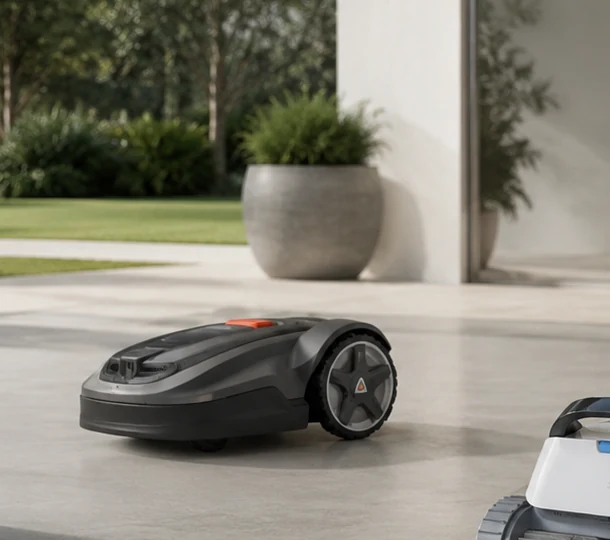
A robotic mower without a boundary wire is much easier to reconfigure, but is not completely installation-free. Instead of a physical cable, it uses a digital map, satellite positioning, correction data and, increasingly, cameras and other sensors. Works great in a favorable garden, but thick trees, walls and narrow passages can limit accuracy.
How do virtual borders work?
RTK systems use satellite signals and correction data to achieve accuracy much higher than regular GPS on your phone. The correction can come from a local reference station or from a cloud service. The user designates work areas and paths in the application.
Husqvarna describes EPOS as a system that allows you to work within virtual boundaries and create several zones with different settings. The manufacturer also indicates the requirements for a view of the sky and a permanent Internet connection in the cloud variant.
Greatest Benefits
- no risk of breaking the cable during gardening,
- fast change of boundaries and zones,
- creating transport routes,
- easier to turn off a freshly sown section,
- ability to mow in patterns instead of a random route.
Where do the problems occur?
Satellites require adequate visibility of the sky. Tall buildings, dense treetops and narrow corridors between walls can cause you to lose your position. A vision system can help, but its effectiveness depends on lighting and the quality of the algorithms.
In gardens consisting of many small zones, it is worth conducting a test before purchasing. Some models also require an additional module or reference station, which increases the price of the entire set.
The map does not replace safety
The robot still needs obstacle, tilt, and lift sensors. The virtual boundary will not detect a left-behind toy, a hedgehog or a newly dug hole. The user should inspect the area regularly and use the device according to the instructions.
Internet and subscription
Before purchasing, check whether cloud correction is included in the price, what happens after loss of coverage and whether the robot can use the local station. It is also important whether the manufacturer guarantees the service for the entire expected period of use.
Garden Checklist
- area and maximum slope,
- sky visibility in the entire area,
- passage width,
- number of separate zones,
- access to Wi-Fi or mobile network,
- charging and reference station location,
- presence of animals and small obstacles,
- local service and availability of blades and batteries.
Installation in practice
The first mapping should be performed under good signal conditions and with accurate boundary bypass. A small mistake near a pond or a slope can have serious consequences. After creating the map, it is worth observing several complete cycles before the device starts operating unattended.
Seasonality and storage
The battery requires proper winter storage and the station and contacts require regular cleaning. Check the inspection cost and warranty conditions when disassembling the device yourself at the end of the season.
Theft Protection
GPS, alarm and code lock reduce risk but do not replace physical security. You should check whether the location works without an active subscription and whether the robot can be assigned to another account after theft.
Common disappointments
- signal loss under trees,
- sliding on wet slope,
- undercut edges,
- too narrow passage to the second zone,
- no internet coverage in part of the garden.
RoboMorrow assessment
Virtual boundaries are real progress, especially in large and open gardens. In difficult terrain, we would not buy a robot without a signal test or return option.