Dreame ECHO S1 and ECHO P1 at IFA 2026: Physical AI moves beyond a single demo
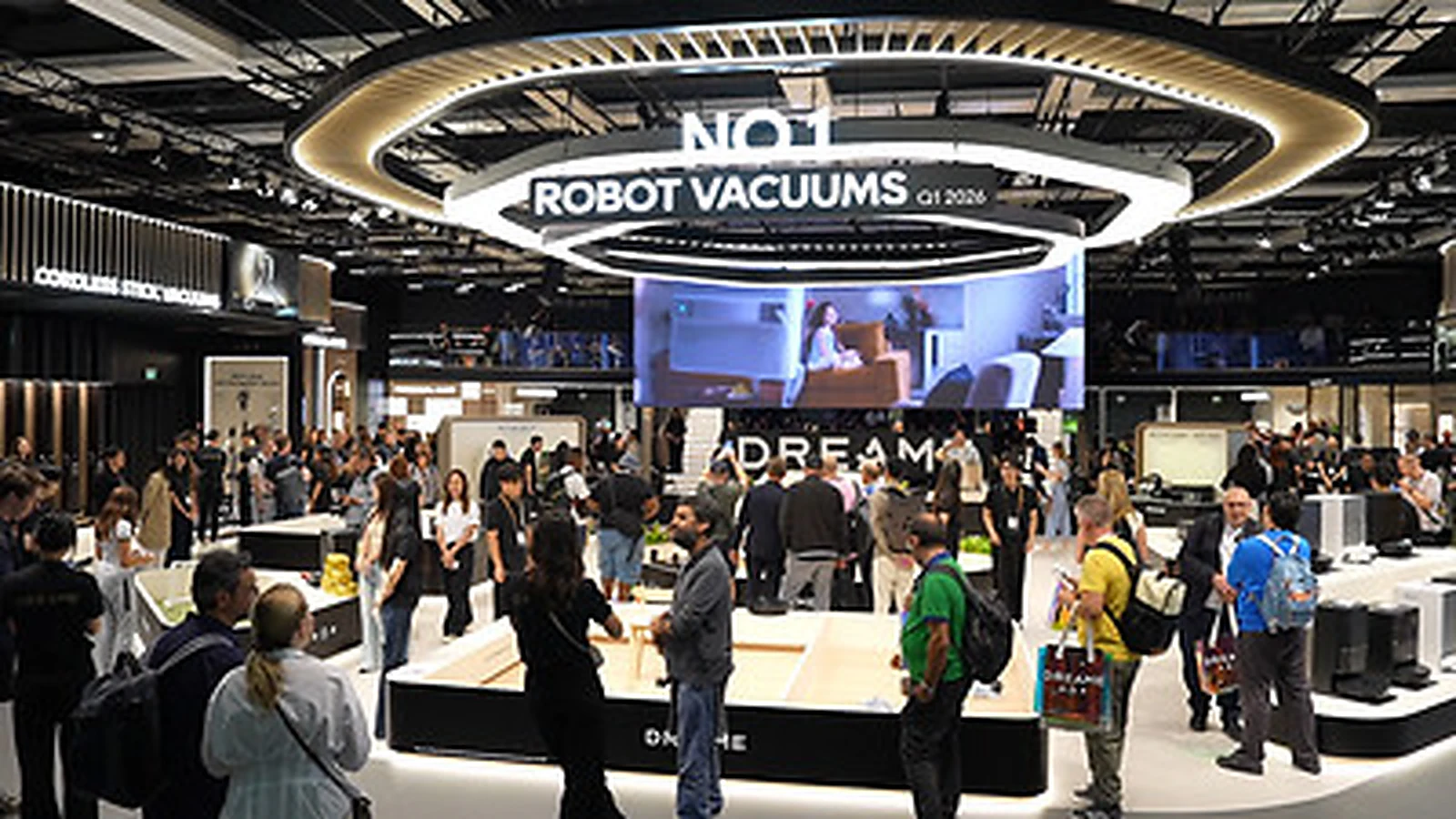
At IFA 2026, Dreame introduced two robotics concepts that matter for more than their visual impact alone: ECHO S1 and ECHO P1. The company is not positioning them as ready-to-buy consumer products. Instead, it describes them as research-stage platforms designed to test how perception, AI models and actuation can move from today’s household devices into more complex, multi-step physical tasks.
That distinction matters. At a trade show, it is easy to mistake a striking demo for a market-ready robot. With ECHO S1 and ECHO P1, Dreame is explicitly talking about technology validation rather than commercial launch. There is no price, launch date, country list, warranty framework or clear statement on how much human supervision is still required. What we do get is a strategic signal: Dreame wants to show that Physical AI does not have to begin with a pure-play humanoid startup. It can also grow out of capabilities already built in robot vacuums, wet-and-dry devices, sensing, algorithms and motion control.
What Dreame actually announced at IFA 2026
In Berlin, Dreame showcased more than 100 products across more than 16 categories while also outlining a shared technology architecture spanning multiple device classes. The company frames that architecture around three Physical AI foundations:
- Omni-Perception System — the sensing and perception layer that gathers information about spaces, objects and device status.
- Unified Home Intelligence Model — the layer that interprets environments, instructions and task goals using MLLM, VLM and VLA capabilities.
- Intelligent Actuation & Control System — the execution layer combining motors, joints, reducers and control algorithms.
On its own, that could sound like standard corporate messaging. The difference is that Dreame did not stop at a slide about the future smart home. It also showed concrete robotics platforms meant to validate how those layers work together. That is where ECHO S1 and ECHO P1 come in.
ECHO S1: laundry as a chain of multi-step tasks
According to Dreame, ECHO S1 is a single-arm wheeled service robot. Its role is not a single party trick but an extended laundry-care workflow. The company lists garment recognition, sorting, washing, drying and transferring dried laundry into a basket.
That is a meaningful scenario choice. Laundry is one of those household domains where a robot does not need to look human to be useful, but it does need to handle multiple stages, varying materials, changing environments and user error. If ECHO S1 is to matter in practice, the key questions will not be about whether the arm moves smoothly on stage. They will be about recognition reliability, exception handling and whether the system can operate safely with limited intervention. Dreame has not provided those answers yet.
From a home-robotics perspective, however, this is still more interesting than another generic “robot hands over a cup” demonstration. Laundry is a repetitive, real task category, which makes it a better test of whether Physical AI is starting to solve something practical rather than simply generating attention.
ECHO P1: tidying, organising and transporting objects
Dreame describes ECHO P1 as a wheeled humanoid service robot. The company highlights three main use cases: tidying, organisation and object transport. That is broader than the S1 scenario, but it is also closer to what many consumers intuitively imagine when they think about a domestic helper robot.
The most interesting part is not the word “humanoid” itself, but the fact that Dreame is still using a wheeled platform. That may prove more pragmatic than a full biped. Wheels simplify mobility in a typical home, reduce mechanical complexity and allow development effort to focus on perception, manipulation and task planning. If the industry is going to deliver genuinely useful home assistants over the next few years, intermediate forms like this — not necessarily “a robot like a person”, but “a robot able to finish a useful task” — may mature faster.
A long list of questions remains. How broad is the manipulation envelope? What are the payload limits? Are tasks completed autonomously from start to finish, or with teleoperation? How does the robot handle clutter, recognition errors, mirrors, obstacles or delicate objects? At this stage, Dreame is offering a direction of travel rather than a complete product specification.
Why the showcase may matter more than the robots themselves
The strongest part of Dreame’s announcement is arguably not the ECHO machines alone, but where the company says its robotics capabilities come from. Dreame argues that its Physical AI architecture was not built separately from its current business. Instead, it evolved out of technologies already deployed in existing products. Active binocular vision has been used in robotic vacuums for navigation and obstacle avoidance. Multimodal large language models are already being applied to better interpret user instructions and usage scenarios. High-speed motors, joint control and motion algorithms form the physical execution layer.
That matters because many humanoid narratives today are evaluated mostly through the lens of demos. Dreame is trying to present a different route: first scale in shipping products, then reusable technology foundations, and only after that more complex service robots. The company says its products have reached more than 190 countries and regions and have served over 42 million households. If even part of that technology base and deployment experience can be translated into new robot form factors, that could become a meaningful advantage.
Amazon and availability: no buy button yet
At the time of verification, there is no confirmed exact Amazon offer for ECHO S1 or ECHO P1. RoboMorrow therefore does not substitute a similar robot, redirect readers to another SKU or silently fall back to Amazon Poland. If a verified offer for the exact model becomes available in a specific market, the local-offer layer can add the appropriate purchase route.
What we still do not know
- Price: Dreame has not provided MSRP or even a likely price band for ECHO S1 and ECHO P1.
- Launch timing: there is no commercial sales date and no confirmation that a retail launch is already scheduled.
- Markets: there is no country list for any future availability.
- Autonomy: Dreame has not disclosed what share of tasks can be completed without teleoperation or active human supervision.
- Safety: there is no independent performance data or detailed safety framework for operating around people or pets.
- Service and support: there is no warranty, support or operating-cost model yet.
RoboMorrow view: less excitement about the stage demo, more focus on the path to a real product
Dreame did not unveil the kind of robot you will buy next month. What it did show is that companies with real consumer-robotics scale are beginning to build their own entry paths into Physical AI. That is exactly why ECHO S1 and ECHO P1 deserve attention.
For readers, the fairest conclusion for now is simple: this is not yet a buying guide product, but it is also not an empty render with no context. ECHO S1 and ECHO P1 are worth tracking as a test of whether major smart-home players can translate today’s strengths in navigation, perception and actuation into robots that complete useful, multi-step tasks. If they can, future IFA editions may look very different from the traditional race for the highest suction power or the strangest mopping mechanism.
See also: IFA 2026 live — robot launches, prices and updates from Berlin.