JD.com Launches CHEFRESH: AI Meal Planning Meets Robotic Cooking
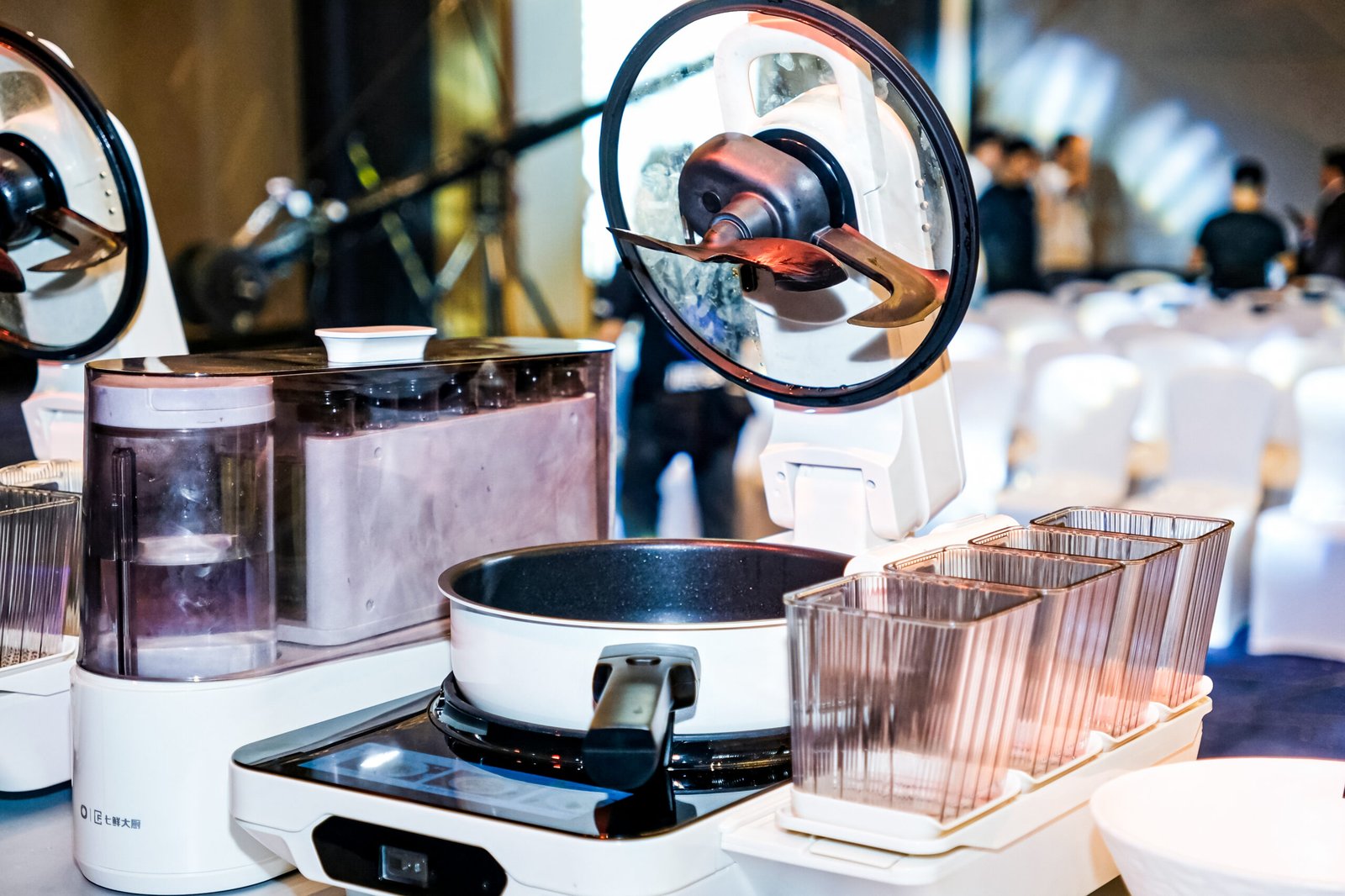
Verified 17 September 2026. JD.com has launched CHEFRESH, a service combining AI meal planning, prepared-ingredient delivery and a home cooking robot. The most interesting point is that the robot is not presented as an isolated gadget. It is the physical endpoint of JD's larger retail and logistics system.
From recommendation to a cooked meal
Users can provide health-check information and dietary preferences. Health Brain AI, powered by JoyInside, creates meal plans. JD selects, washes and portions ingredients, then delivers them through its fresh-food and cold-chain network. The robot handles the final stage: cooking, seasoning and self-cleaning.
A special edition is also designed to record family recipes, including ingredient ratios, cooking sequence, temperature settings and seasoning. The system can then reproduce those dishes later. That is an interesting feature, but still a manufacturer claim; there is no independent long-term test showing quality across different cuisines and recipes.
Preorders, not just a demo
JD confirms that preorders have opened in Beijing, Shanghai, Guangzhou, Shenzhen and other cities, with initial deliveries scheduled in reservation order. That makes CHEFRESH more concrete than a trade-show concept. Order volumes, full availability timing and service capacity remain undisclosed.
Robot as a service
The economics may be the most important part. JD controls e-commerce, logistics, cold chain, purchase data and a recurring customer relationship. The robot becomes another interface into that infrastructure. Hardware sales may be the start of the relationship, while recurring revenue can come from ingredients and digital services.
The model resembles coffee machines and capsules or printers and consumables, but with an AI layer. Customer value will still depend on usage frequency and whether prepared ingredient packs genuinely save time compared with normal cooking or food delivery.
What remains unknown?
JD has not published a full robot specification or identified the hardware maker in the English announcement. Service cost, recipe count, post-credit pricing and European expansion are also unknown. Long-term reliability and safety data under daily household use are not available yet.
Europe: the model matters more than this specific product
CHEFRESH is not confirmed for Poland or the EU. The business model is still worth watching because European retailers and delivery platforms have similar assets: customers, logistics and purchase data. If home robots become recurring services rather than one-off appliances, retailers may gain an advantage over traditional appliance manufacturers.
The key question is usage after six months
In home robotics, capability alone is not enough. Retention matters. If users return to conventional cooking or food delivery after a few weeks, an expensive robot becomes another appliance occupying counter space. CHEFRESH tries to avoid that outcome by tying the machine to recurring ingredient packs and meal plans. The most meaningful future metrics are therefore active households, ingredient orders per user and cooking frequency after three, six and twelve months.
JD has an advantage a normal appliance maker does not
JD controls retail, logistics, cold chain, purchase data, payments and service. RoboMorrow recently covered JD Logistics’ “Wolf Pack” robotics architecture. CHEFRESH shows the consumer side of the same strategy: combine intelligent hardware with an operational ecosystem rather than simply reselling someone else’s appliance.
Health data raises the bar
CHEFRESH uses health information to generate meal plans. That can increase usefulness, but it also increases responsibility. A European implementation would need a clear line between dietary suggestions and medical advice, careful data-consent handling and robust privacy controls. The machine also works around hot cookware, liquids and food, adding physical-safety and hygiene requirements.
What should an independent test measure?
- how much work the user performs before and after each cooking cycle;
- whether self-cleaning actually removes routine manual cleaning;
- performance across different ingredient volumes, textures and temperatures;
- portion and seasoning repeatability;
- end-to-end time across delivery, preparation, cooking and cleaning;
- cost per meal after promotional credits end.
Affiliate and availability status
CHEFRESH has no confirmed Polish or EU sale at verification time and RoboMorrow has no verified affiliate offer to link. Adding an unrelated marketplace link merely to monetise the article would reduce usefulness, so this story intentionally carries no affiliate CTA.
Where can the model break?
CHEFRESH connects several dependent stages. If the AI creates a good meal plan but ingredient delivery is late, the experience fails. If ingredients arrive perfectly prepared but the robot requires ten minutes of manual cleaning after every meal, much of the convenience proposition disappears. If the mechanics work well but the recipe catalogue is too narrow, novelty may fade and usage can fall after a few weeks.
JD is therefore selling a chain of services rather than a single device. Failure at any link reduces the value of the whole product. The same complexity also gives a large retailer an advantage over a hardware startup because JD can optimise ingredient availability, delivery and customer support inside its own network.
Service may matter as much as cooking quality
A cooking robot operates around water, grease, steam, heat and food residue. That is a tougher environment than a living room for a robotic vacuum. Long-term success requires replaceable parts, clear hygiene procedures and fast service. A failure at dinner time is more disruptive than a temporarily unavailable smart speaker.
In Europe, appliance safety, food-contact requirements and data protection would add another layer. Demonstrating robotic cooking is not enough; the product needs a complete support model with clear responsibility across hardware, software and the recurring service.
Featured image: a real CHEFRESH device photo from JD.com’s official launch. The previous AI-labelled promotional visual has been removed from this package.