Nearly 20 million consumer robots sold in a single year
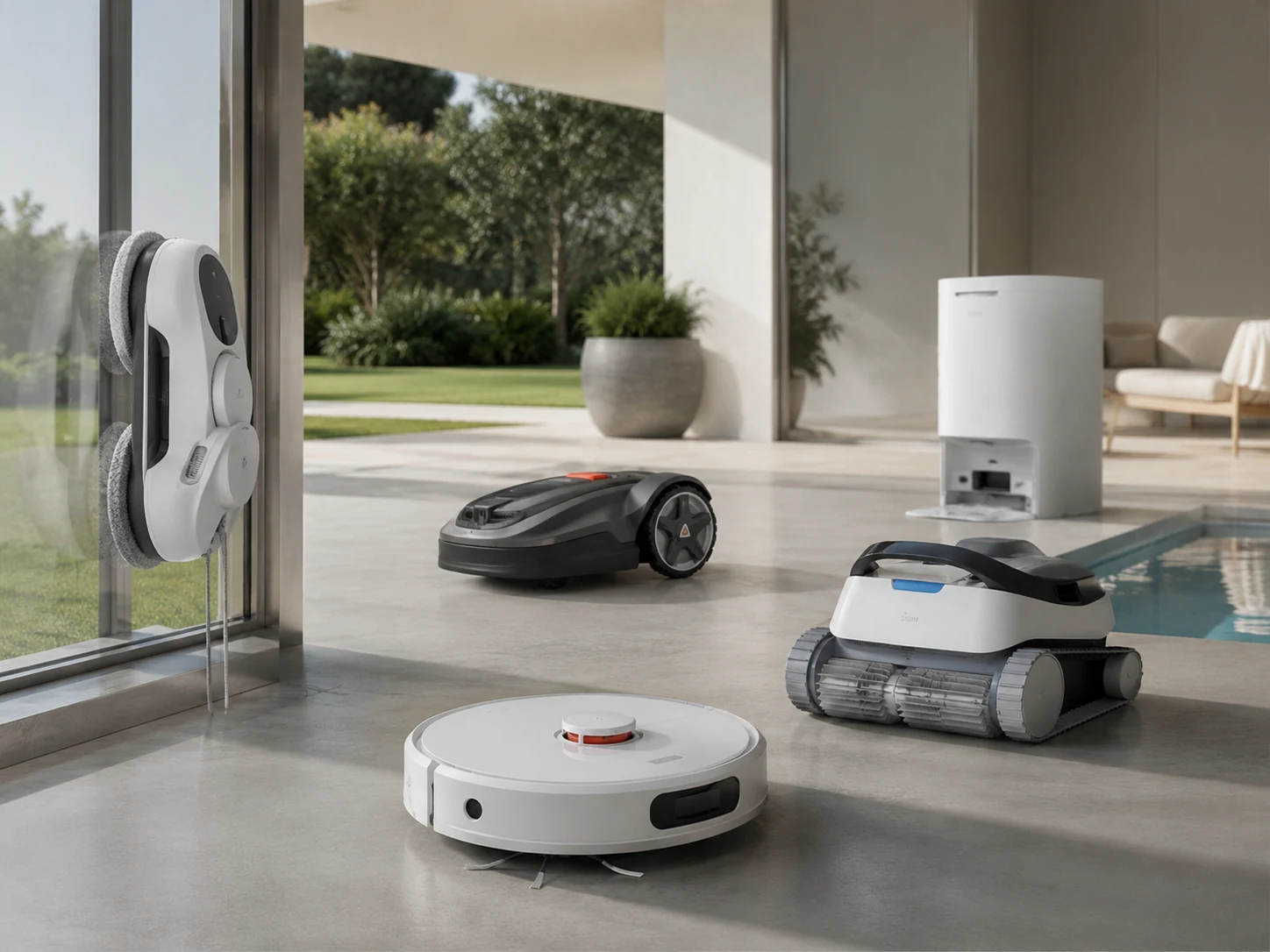
The home robot debate often focuses on humanoids, although a mass market for consumer robotics already exists. According to the International Federation of Robotics, nearly 20 million robots were sold for consumer use in 2024, 11% more than the year before. The largest group were devices for household tasks, especially floor cleaning and lawn care.
The home robot is already a mass product
Robot vacuum cleaners and robot mowers have accustomed customers to several key elements of robotics: space mapping, self-charging, regular performance of tasks, operation via an application and the need to update software. This is a more important foundation for the future market than a single humanoid demonstration.
Millions of households also accepted the restrictions. The cleaning robot does not perform the entire cleaning process, but takes over the repetitive part of it. It will be similar with subsequent categories: a device does not have to replace humans in everything to create real value.
Why did cleaning and mowing win first?
- the task is frequent and repetitive,
- the work area can be mapped relatively easily,
- error most often does not cause serious harm,
- the result can be quickly assessed,
- customer understand time saving,
- the device can work without complicated integration with other systems.
The same criteria will help predict the next winning categories. Robots that solve a narrow, measurable problem will grow the fastest: cleaning a swimming pool, washing windows, monitoring property, transporting small items or caring for specific surfaces.
The number of devices sold doesn't tell the whole story
The statistics cover a wide range of products, from simple devices to more autonomous systems. Not every robot is equally useful, durable or safe. Increasing sales do not eliminate problems related to the cloud, privacy, parts availability, manufacturer closure or loss of application support.
Not only the purchase price is important to the customer, but also the cost of consumables, the frequency of manual interventions and the length of support. A cheap robot that loses its app or battery after two years may be more expensive than a device with a higher starting price.
What does this customer base mean for humanoids?
Humanoid doesn't start from scratch. It is entering a market where consumers already understand docking stations, maps, updates and autonomous operation. At the same time, expectations are higher: the user will compare the robot not with a laboratory, but with a mature vacuum cleaner that operates every day with minimal supervision.
The most likely scenario is a gradual expansion of the scope of work. First specialized devices, then multi-tasking robots on wheels, and only then more universal humanoids - provided they achieve acceptable cost and safety.
Importance for resellers and integrators
Space is being created in Poland not only for stores, but also for installation, service, rental and consulting companies. As the number of categories increases, the customer will need answers: whether the device works in his home, who will repair it, where the parts are and how much it costs to use for five years.
Why does market data require caution?
Manufacturers do not report sales in the same way, and categories may include devices with very different levels of autonomy. IFR bases the data on information from suppliers and clearly describes the methodology. The number close to 20 million shows the scale well, but should not be used to simply forecast the value of the humanoids market.
What will the maturity of the next category mean?
Maturity is not demonstrated by the premiere, but by the presence of several competing manufacturers, falling prices, service network and repeatable user reviews. The spare parts market and the ability to choose a device without being dependent on one store will also be an important signal.
Opportunity for European companies
Europe may not produce most of the low-cost hardware, but it can develop integration, software, service, financing and solutions tailored to local regulations. Services that help the customer assess home compatibility, data security and total cost of ownership will be particularly valuable.
How will RoboMorrow measure this market?
- number of models actually available in the EU,
- prices and price changes,
- support length,
- number of independent deployments,
- subscription services share,
- most common causes of returns and failures.
RoboMorrow assessment
Home robots are already a mass market, but still a market for specialized devices. 20 million products sold should not be equated with 20 million universal robots. However, this scale shows that the foundation for consumer robotics has been built.