NEO enters production. 1X claims capacity for 10,000 humanoids a year
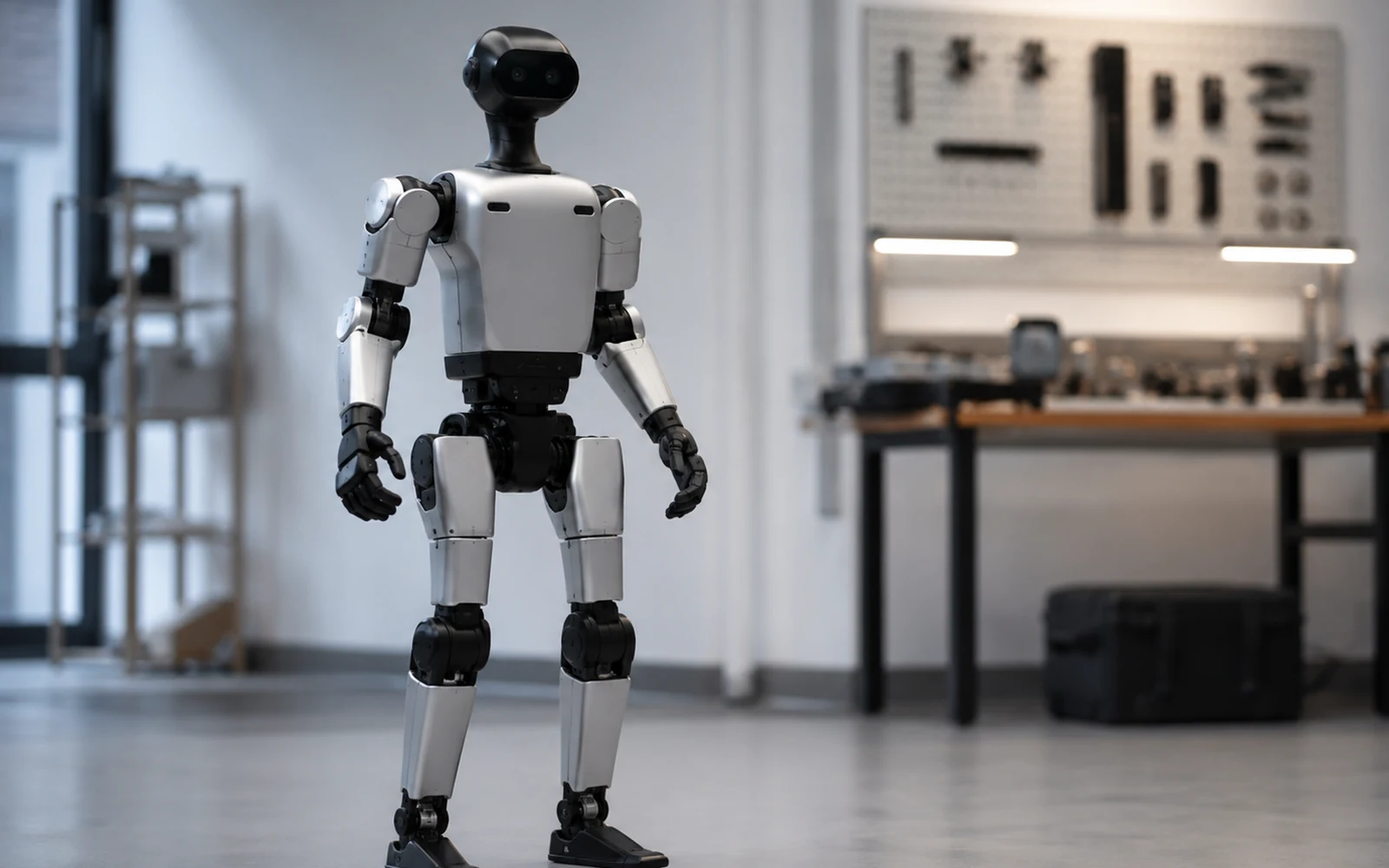
1X moves the NEO project from the demonstration stage to the production stage. The company has launched a plant in Hayward, California, which, according to its declarations, can produce up to 10,000. domestic humanoids per year. This is an important signal for the market, but it does not mean that thousands of fully autonomous robots will be in homes in 2026.
Highlights
- the Hayward plant has approximately 58,000 square feet of space and employs over 200 people,
- 1X declares a production capacity of up to 10,000. NEO per year,
- another plant in San Carlos is expected to increase the scale of operations in 2026,
- the manufacturer announces a target capacity exceeding 100,000. devices per year until the end of 2027,
- first customer deliveries expected to begin in the United States in 2026,
- regular availability in Poland and other EU countries has not been confirmed.
Humanoid factory, not just an assembly plant
1X depicts the plant as a vertically integrated humanoid factory. This means that the company is not limited to importing ready-made components and final assembly. Hayward is to produce, among others, engines, structural elements, gears, cable systems, batteries, hands, sensors and soft outer covers of the robot.
According to the manufacturer, since the start of production, the plant has produced 17,000. engines. The battery line is to be prepared for the production of 10,000. packages per year, and the reliability laboratory has already conducted over 20 million test cycles. This data comes directly from 1X and has not been independently verified, but it shows the company's focus: not only on AI, but also on production repeatability, quality control and durability of mechanical components.
This is important because the transition from a dozen or so prototypes to thousands of devices is one of the most difficult stages of robotics development. A robot operating during a controlled show can be manually refined and operated by a team of engineers. A consumer product, however, must function in a variety of homes, be serviceable, and maintain a similar level of quality from product to product.
Production capacity is not the number of deliveries
The most important distinction concerns the concept of "production capacity". The plant is prepared to produce 10,000 robots per year does not have to actually produce and deliver that number in the first year. The pace may be limited by component availability, design fixes, security testing, software performance, service, or careful user expansion.
1X reports that the pre-sale campaign met planned production capacity for the year within five days. The company also notes that some of the NEO leaving the line is currently allocated to the internal team. Robots working in employees' homes are intended to collect data and reveal problems that are difficult to find in the laboratory.
For the market, the number of devices actually delivered, their operating time without failure, the number of service interventions and the scale of tasks performed independently will be more important than the number of reservations.
What should NEO be able to do at home
NEO is designed as a robot for simple household chores. The manufacturer lists, among others, organizing, moving objects, performing planned activities and responding to voice commands. The robot is approximately 168 cm tall and weighs approximately 30 kg. The declared operating time is up to four hours, and the design uses soft covers and cable drives to reduce risk during human contact.
The specification includes parameters that sound promising: the lifting capacity of a single arm is about 8 kg, the ability to carry about 25 kg and extended hands. However, lifting capacity alone does not determine usability. It is more difficult to reliably recognize objects, grasp correctly, deal with clutter, children, animals, stairs and situations that the robot has not seen before.
Autonomy and remote expert
1X states that NEO will operate autonomously by default, but initial owners will receive the device with a basic range of standalone features. For tasks that the robot does not know, it will be possible to schedule the help of a remote 1X expert. A human can supervise the execution of activities, and the collected data is intended to support further training of the system.
It's a sensible way to implement young technology, but it has consequences. The user should know when the robot works alone, when it is remotely controlled and what access the operator has to cameras, microphones and the house map. There are questions about consent from household members, storage of recordings, account security, connection delays and liability for errors.
The price is only part of the cost
1X accepted reservations with a $200 deposit. The manufacturer previously presented an Early Access variant for $20,000 and a subscription model for $499 per month. Before purchasing in Europe, you should add transport, taxes, possible customs duties, insurance, service costs and the risk related to the lack of local repair infrastructure.
Warranty conditions, availability of parts, the ability to transport a heavy device to the service center and the responsibility of the entity introducing the product to the EU market will also be key. As of today, there is no confirmed schedule for regular deliveries to Poland.
What does this mean for the market
The launch of a factory is a more significant event than another video showing a robot folding laundry. It shows that 1X tries to solve the problems of production, testing, quality and scaling. At the same time, most of the key data still comes from the manufacturer. We do not know the actual number of hours of autonomous operation with external users, the frequency of remote support or the cost of servicing one unit.
RoboMorrow Evaluation
Status: production started, product still in early access. NEO is one of the most concrete home humanoid designs as it combines hardware, factory and delivery plan. However, it should not be treated as a mature household appliance. Independent home testing, data on autonomy, failure rate, privacy and serviceability are needed before assessing cost-effectiveness.
Featured image is an editorial image and does not represent the NEO model.
Sources
1X: NEO Factory - Building Your NEO
1X: Manufacturing
1X: NEO Home Robot - Specifications and Features
Translation correction, 14 September 2026: the historical Early Access price is restored to $20,000, matching the Polish launch report. This corrects an erroneous currency conversion; it is not a current European offer.