Neolix Plans a Level 4 RoboVan Pilot in Central Brussels
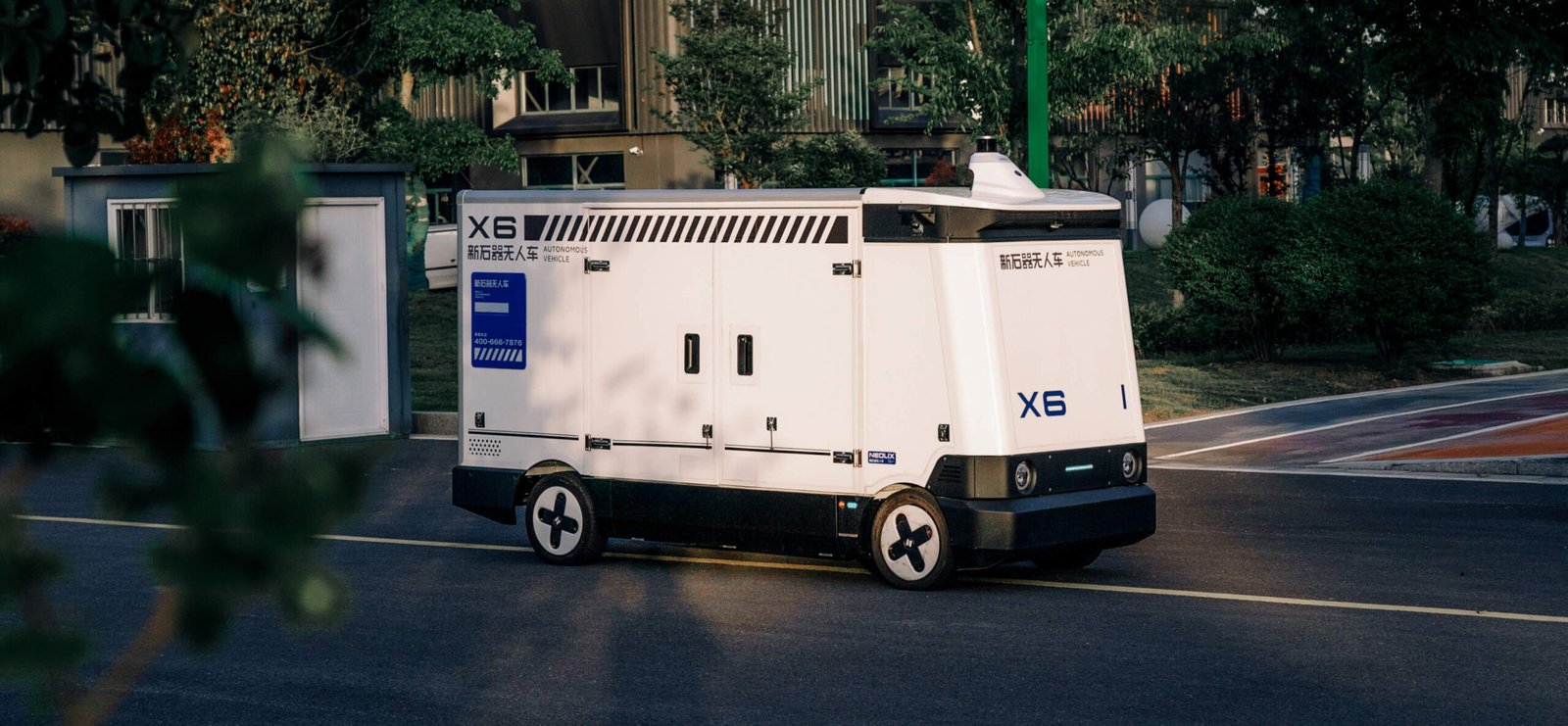
Level 4 autonomous logistics is heading for one of Europe’s more revealing test environments: central Brussels. Neolix and local partners plan to use RoboVans for last-mile delivery and waste collection. The value of this story is not another driverless-vehicle demonstration; it is the combination of a defined route, local operators and a formal regulatory process.
AutoLog: what has been agreed
The project brings together Neolix, Brussels mobility consultancy Espaces-Mobilités and local non-profit STALEM. The pilot is planned for 12 months. Neolix says Xolra RoboVans will operate on a designated route connecting a depot near Gare du Midi with shops on the southern edge of the pedestrianised city centre.
Planned tasks include last-mile delivery and waste collection. The partners say the vehicles are intended to complement rather than replace existing options such as cargo bikes. The question is whether an autonomous vehicle can become part of an existing urban logistics system without creating a new conflict over scarce street space.
The most important caveat: authorisation has not been granted yet
Operations are targeted for Q4 2026, but that date is conditional. The federal testing-authorisation application has been submitted to Belgium’s Federal Public Service Mobility and Transport and is in formal review. Regional and city-level steps are progressing in parallel. The accurate description is therefore “Neolix is preparing a Brussels pilot”, not “RoboVans are already driving commercially in Brussels”.
That distinction matters for the European autonomy market. A permit can define the ODD, speed, hours, supervision and emergency procedures. Only the final conditions will show how broad the test really is and how close it sits to a regular service.
Two logistics staff do not mean two vehicle operators
The release describes an interesting operating model: during the pilot each vehicle is supported by a two-person logistics team — a depot coordinator and a customer-facing specialist. Neolix explicitly says they handle loading, delivery and waste operations rather than vehicle supervision.
This matters economically. Autonomy does not remove all labour from a delivery workflow. Someone still prepares goods, resolves customer issues and handles exceptions. A credible business case therefore needs to measure vehicles per operational employee and the full cost per completed delivery, not simply the absence of a driver’s seat.
Which Xolra configuration will Brussels use?
The AutoLog announcement refers to Xolra RoboVans but does not clearly identify a variant. Neolix’s current Xolra 3 page shows the direction of its portfolio: 3 m³ of cargo space, 520 kg payload, up to 50 km/h, a stated 100–120 km range, 12 cameras and one LiDAR. We do not automatically assign those figures to every AutoLog vehicle until the company publishes the exact pilot configuration.
For central Brussels, maximum speed will matter less than behaviour around pedestrians, cyclists, delivery vehicles, narrow sections and illegal parking. The useful metric is not simply whether the vehicle can drive, but how often it stops, needs remote assistance or must alter the route.
The Luxembourg HQ is part of the same expansion story
On the same day Neolix announced plans to establish its European headquarters in Luxembourg and listed Belgium, Germany, the Netherlands, Portugal, France and Switzerland among its first European markets. RoboMorrow treats that as part of the same expansion cluster rather than a second standalone news event: local organisation, partners, regulation and concrete pilots are all pieces of one strategy.
Neolix says it has deployed roughly 27,000 RoboVans globally and logged more than 230 million kilometres. Those are company figures, not an independently audited European benchmark. Brussels is interesting precisely because it takes operating experience built largely elsewhere and tests it in a dense EU city with different rules and public expectations.
What can Poland learn from the project?
For Poland, the most useful part may be the authorisation and city-integration model. Autonomous delivery can be easier to justify on a campus, industrial estate, port or fixed warehouse-to-store route. A public city-centre route needs clear rules for responsibility, mixed traffic and recovery after a stop.
If AutoLog progresses from authorisation to regular operation and publishes measurable KPIs, it could become a useful European case study. Without those data, it remains a serious but still conditional pilot.
The KPIs we want to see
Useful data would include completed trips, missions without assistance, downtime, route blockages, delivery time, cargo utilisation, energy per trip and employees needed per fleet. For public-road integration, incidents, complaints and interactions with pedestrians and cyclists also matter.
The commercial model can also be compared with RoboMorrow’s Robot-as-a-Service guide. A European customer will be buying more than a vehicle: operational readiness, service, compliance and responsibility for the outcome can be just as important as the hardware.
RoboMorrow decision
PUBLISH. This is not an operating public service yet, but it has named partners, a route, a 12-month plan and a formal regulatory process. The next material update should require authorisation, the start of operations, a named commercial customer or hard operating KPIs.