A loose shoebox lid is a robotics problem. s.Oliver has picked Nomagic to solve it
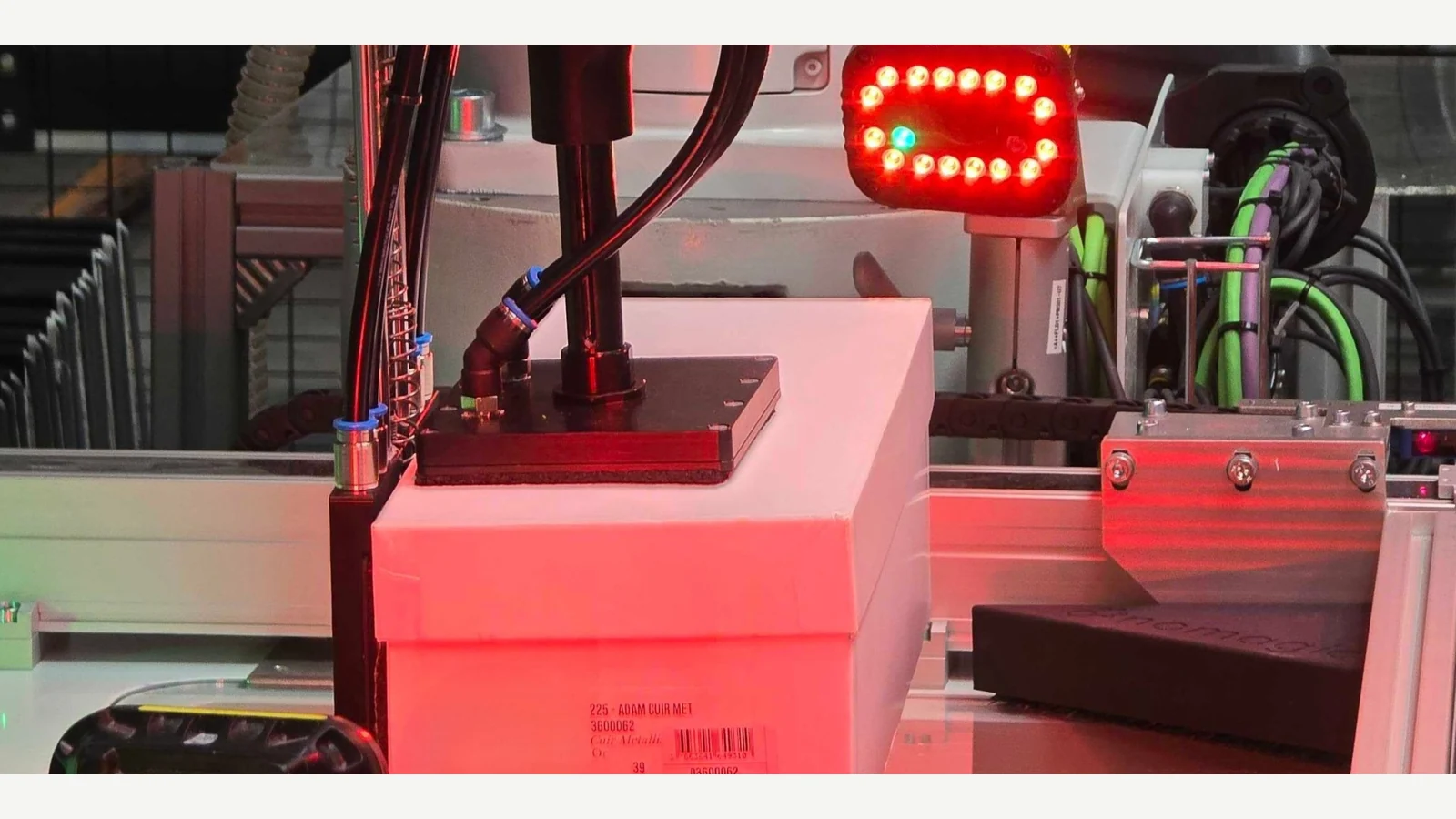
A shoebox looks like an easy job for a robot. The complication is the loose lid. Lift from the top and the base may stay behind; squeeze too hard and the packaging can be damaged. Nomagic has built a system around that physical problem. On 14 October, the company announced that S.OLIVER GROUP had selected its robotics for the retailer’s logistics site in Dettelbach, Germany. Source: Nomagic.
The project covers the induction of different fashion items into downstream processes, including shoeboxes. A key component is Shoebox Picker: a specialized gripper combined with perception software and motion control. It is an engaging example of automation shaped around a problem that appears in an ordinary online order.
Supplier-selection announcement: 14 October 2026. RoboMorrow verification: 18 October 2026. The video demonstrates Shoebox Picker technology; operating results from the Dettelbach project have not yet been published.
Why is a loose-lid shoebox harder than a sealed parcel?
A taped shipping carton behaves as one object. A shoebox can consist of two loosely connected parts. Sizes, materials and storage orientations also vary. A movement that feels straightforward to a person requires a robot to identify where it can grip securely.
The official Shoebox Picker description explains that the system recognizes the box type and orientation, then selects gripping points. Its mechanism secures both lid and base. It is designed to accommodate different storage positions, reducing the need to prepare every object manually before a pick. Watch the complete sequence: recognition, gripping, lifting and controlled placement.
What is s.Oliver planning to automate?
The announcement concerns induction: feeding individual articles into the next stage of automated handling. It covers a broader fashion assortment, with shoebox handling forming an important part of the scope. The retailer’s stated aims are greater efficiency, less repetitive manual handling and logistics that can accommodate future volume growth.
The number of cells and the full go-live date have not been disclosed. The confirmed news is therefore a supplier selection and a defined application. Testing against the customer’s actual assortment will establish how much of the product stream the installation can handle at the required pace.
The gripper already has a record beyond this announcement
Shoebox Picker received an IFOY Award in 2026. The award organizer also published an Innovation Check describing its ability to secure the base and lid simultaneously and change a box’s orientation. That assessment refers to an earlier Zalando application. It provides useful context for the technology now selected by another retailer.
The interesting engineering is the combination of physical handling and perception. Software needs a tool capable of retaining both parts of the package. The gripper needs information about their position. The benefit emerges when those elements work together across different boxes, without someone repeatedly arranging each item in an ideal position.
Assortment coverage is different from pick success
Nomagic’s product information claims coverage of 98% of shoebox SKUs. That is a statement about the range of products the solution is designed to handle. It does not describe s.Oliver’s operating results or the percentage of completed orders in Dettelbach. The customer’s actual assortment and the way products reach the cell will determine its useful coverage there.
A simple example shows why the distinction matters. A system can handle many box types and still need help with damaged packaging. A well-designed operation should route that exception to an operator while allowing the remaining work to continue. Exception handling belongs in an automation assessment alongside movement speed.
The bottleneck may sit between two automated stages
RoboMorrow sees the broader interest in the flow through the warehouse. Automated storage adds limited value to dispatch speed if a substantial product stream must then wait for manual induction. A specialized gripper can help where the packaging itself creates that additional handling step.
This connects with three different tasks covered on our site: sorting Zalando returns, bringing totes to operators with LPP’s planned HaiPick Climb system and packing orders with Ultra OP1. Each addresses a different part of fulfillment. Connecting their output requires coherent process design and integration.
The next test is a complete shift in Dettelbach
Useful future evidence will include the share of articles handled, the number of manual interventions and performance as the assortment changes. Warehouse operators will also want to compare waiting time upstream and downstream of the robotic cell. An improvement at one station should help the complete order move through the building.
No public project price or operating results support a payback calculation yet. What the announcement does provide is a named customer, a specific logistics site and a clear job for the system. That makes this robot worth following: its most consequential skill starts with keeping the lid on an everyday shoebox.
Image: Nomagic, supplied through IFOY AWARD and credited there to Nomagic. The gripper photograph illustrates the technology; it does not show the s.Oliver installation.