Quadruped robots move from labs into security and inspection
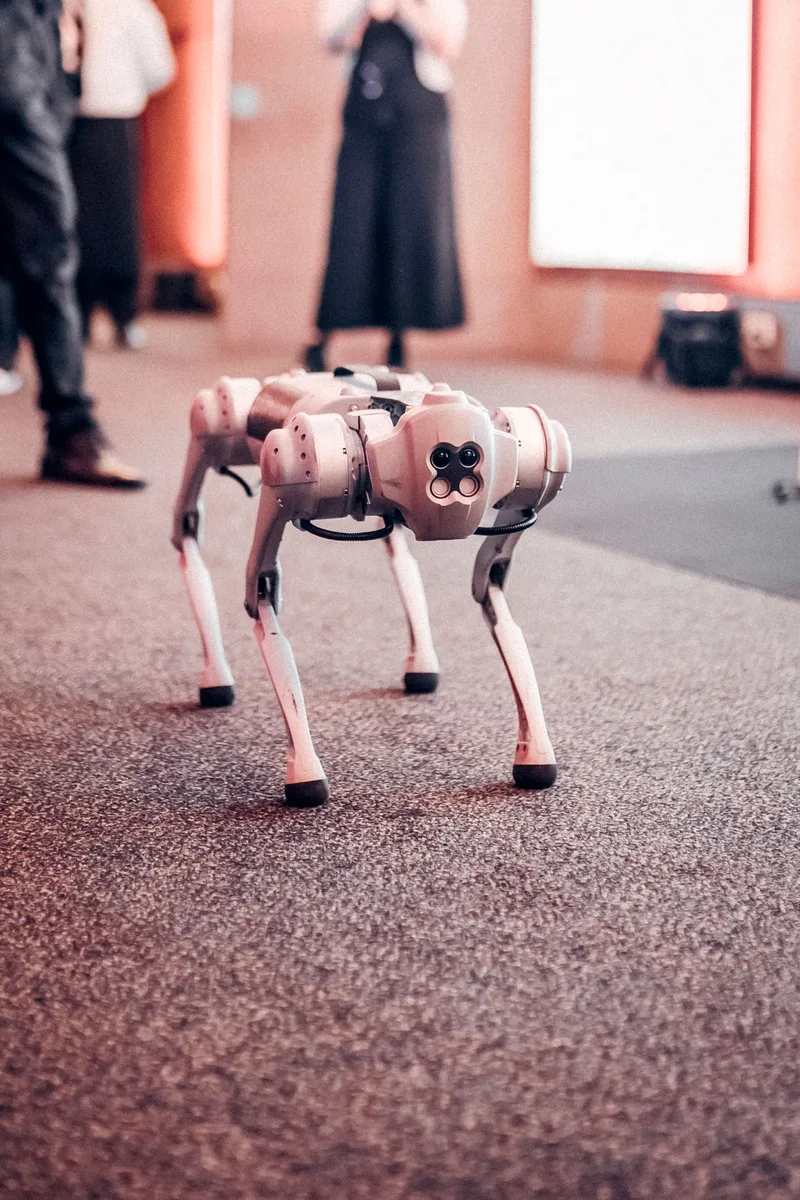
Four-legged robots are no longer just a demonstration of efficient movement. More and more often they perform autonomous rounds, collect thermal and acoustic images, read indicators and reach places dangerous to employees. The most mature applications are in industrial inspection, energy, mining and infrastructure protection.
Why four legs?
Wheels are more efficient on a flat floor, but lose their advantage on stairs, trusses, loose surfaces, and in objects with numerous obstacles. The four-legged robot can use passages designed for humans, without the costly reconstruction of the entire plant.
This does not mean it replaces a security patrol or maintenance specialist. Its basic function is regular and repeatable data collection. The human continues to interpret unusual situations, make decisions, and perform repairs.
What data can the robot collect?
- camera images and detection of changes in the environment,
- temperature of devices and electrical connections,
- sounds indicating component leakage or wear,
- reading analog indicators,
- 3D object maps,
- information about an open door, damaged fence or obstacle.
Boston Dynamics presents Spot as a platform for autonomous missions and visual, thermal and acoustic inspections. The selection of sensors is as important as the robot itself - without the right equipment, the mobile platform does not generate useful information.
Autonomy in practice
A typical deployment starts with manually traversing the route and recording checkpoints. The robot then repeats the tour, stops at specific places and takes measurements. When it encounters an obstacle, it can try to avoid it, report a problem or ask the operator for help.
It is worth measuring the percentage of missions completed without intervention. If an employee has to regularly release the robot or restart a task, the savings may be apparent.
Object Security and Privacy
The camera robot is not a neutral device. It can record employees, visitors, license plates and infrastructure layout. The implementation should include recording purpose limitation, access control, data retention period and clear rules for the use of teleoperation.
In physical security, a robot can detect anomalies and increase the frequency of rounds, but it should not be presented as a stand-alone guard capable of solving any incident.
When does an investment make sense?
The best conditions are a large facility, regular routes, expensive manual inspections and real risk to people. In a small warehouse with a level floor, a simpler wheeled robot or stationary cameras may be cheaper.
Repeating Order Economy
It is easiest to defend your investment when the robot performs a route several times a day and the data allows you to avoid a costly failure. A one-time weekly inspection rarely justifies expensive equipment unless the environment is hazardous or requires special human permits.
Data integration is more important than patrol
Photos and measurements should be sent to the maintenance system, where they can be compared with previous readings and a report created. Without this, the robot only produces a large amount of material for manual viewing.
Preparing the object
- stable connection at key points,
- charging location and safe access to it,
- route designation and procedure for cooperation with employees,
- list of measurement points and tolerances,
- plan in case of fall or loss of communication.
Alternatives
Before purchasing, it is worth comparing wheeled robots, drones, stationary sensors and modernization of the existing monitoring system. A quadruped is best when its mobility solves a real terrain problem.
RoboMorrow assessment
Quadrupedal robots are one of the most mature categories of new professional robotics. Their advantage appears where the terrain makes the use of wheels difficult and frequent measurements have a specific financial or safety value.