Schaeffler's humanoid order book reaches €350 million, including XPeng IRON
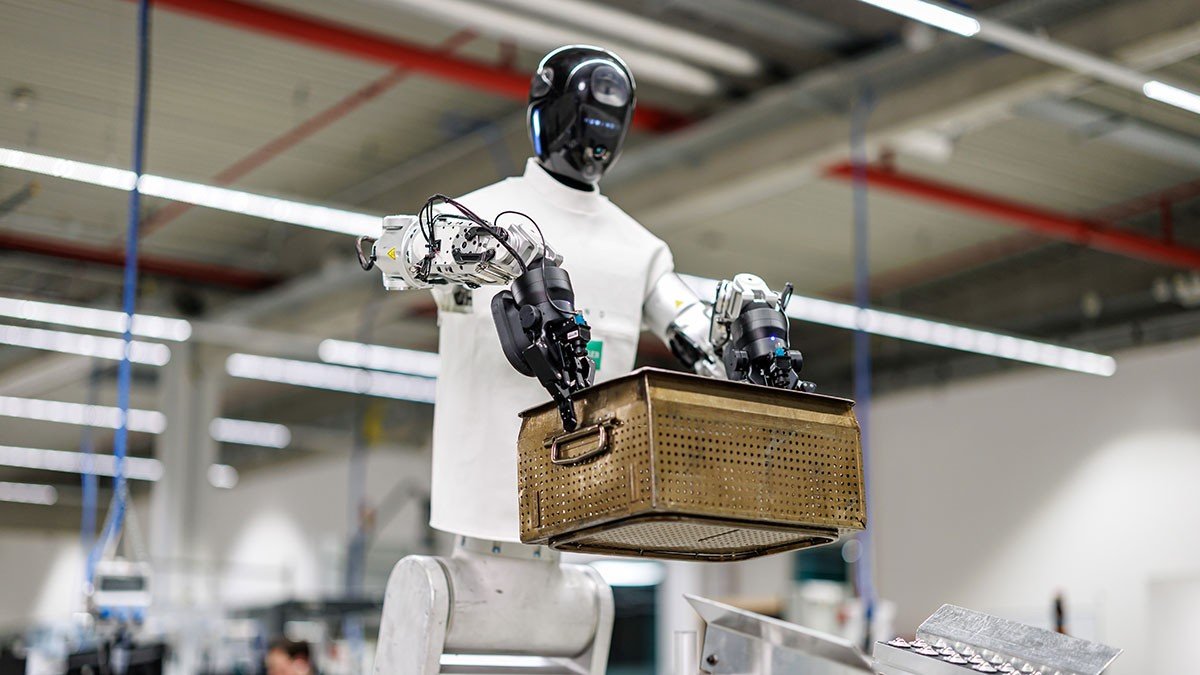
Humanoid robotics is beginning to move from demonstrations and pilot programs toward a real industrial supply chain. Schaeffler has confirmed that its humanoid-related order book reached €350 million by the end of the first half of 2026.
It is one of the more concrete figures showing that a component industry is already forming around humanoid robots. In its official earnings presentation, Schaeffler said the order book covers three major global humanoid OEMs, three regions and seven different products.
XPeng IRON is among the programs
One customer Schaeffler is allowed to identify publicly is XPeng. The German company has been nominated as a component supplier for the IRON humanoid, with start of production planned for the fourth quarter of 2026.
Schaeffler has not disclosed the names of the other two OEMs in the order book. During the earnings presentation, management said they are US customers.
The company is currently working with around 45 humanoid OEMs worldwide. It has already received more than 50 new sample orders in 2026, exceeding the total for all of 2025.
€350 million calculated conservatively
Schaeffler stresses that the order-book figure has been calculated cautiously. Management applied significant haircuts to customer volume assumptions — in some cases at least 50% — to avoid presenting uncertain early-stage humanoid demand as firm future volume.
The €350 million figure also excludes some publicly announced partnerships, including parts of programs involving NEURA Robotics, Humanoid and Hexagon.
Europe as a technology supplier to humanoid robotics
Schaeffler is not attempting to build its own general-purpose humanoid. Instead, it aims to supply motion technologies including actuators, rotary and linear drives, gearboxes, bearings, motors, sensors and control electronics.
This is an important business model for European robotics. Even if many of the most visible humanoid brands are currently based in China and the United States, European companies can still occupy valuable positions in the component supply chain.
Schaeffler is also testing humanoids in its own facilities, allowing it to gather experience from real production environments and feed that knowledge back into component development.
What does it mean for Poland?
For Polish industry, the impact is indirect but tangible. A growing European humanoid supply chain may create opportunities for component suppliers, automation integrators and industrial sites deploying robots in manufacturing and logistics.
The Schaeffler order book does not, however, represent a confirmed order for a specific number of humanoid robots. Attempts to convert the contract value into robot volumes are model-based analyst estimates rather than official shipment commitments.
What is confirmed?
Officially confirmed are the €350 million order book at the end of H1 2026, three major global customers, seven products, planned production launches and Schaeffler's nomination for the XPeng IRON program, with SOP planned for Q4 2026.
Teleoperation is not relevant because this is a supply-chain and production story rather than an autonomy demonstration. No new humanoid prices or consumer availability dates for Poland were announced.