Waymo Launches Driverless Rides in Denver, San Diego and Tampa
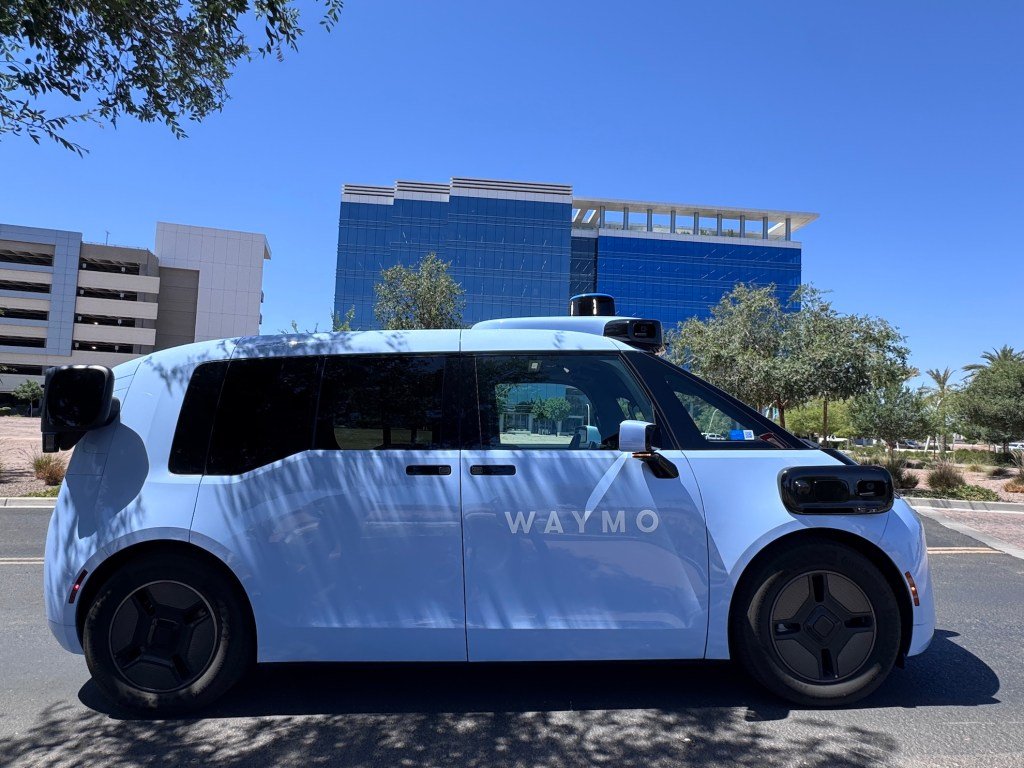
Waymo is accelerating expansion in a way that matters more than another set of test miles. On September 1 the company began welcoming its first public riders in Denver, San Diego and Tampa. Waymo says the move brings it to 14 cities where riders are receiving fully autonomous trips without an in-vehicle safety driver.
That does not mean every resident can immediately download the app and receive unrestricted access. Waymo is opening the service gradually. The company says tens of thousands of people in each city had already expressed interest and it will invite additional riders in waves as it works toward opening the service more broadly.
From employee rider-only operations to public passengers
Today's step is materially different from the earlier rollout stage. In July Waymo said it was preparing fully autonomous operations in Denver, San Diego, Tampa and Las Vegas, initially using rider-only vehicles for employees. Three of those cities have now moved into public passenger access.
This illustrates Waymo's repeatable commercial playbook: map and test with a specialist, remove the in-vehicle operator, run rider-only operations with employees and invited users, then expand public access. It is less theatrical than a single launch event, but repeatability is precisely what makes the model significant for scaling.
Ojai and the sixth-generation Waymo Driver
Waymo says the new-city rollout brings its newest vehicle platform and next-generation driver to more riders. TechCrunch adds an important detail: in Denver and San Diego, the autonomous vehicle available to riders will be the new Ojai minivan using Waymo's sixth-generation Driver. Tampa remains part of a broader fleet mix.
Ojai was designed around autonomous ride-hailing rather than adapting a conventional driver-centric cabin. Waymo has previously said the newer platform should be cheaper to build and operate, while the sixth-generation Driver is intended to extend operation into more demanding conditions. The company has also described its Arizona manufacturing footprint as scaling toward capacity in the tens of thousands of Waymo-enabled vehicles per year.
The fleet is no longer laboratory scale
TechCrunch reports that Waymo's autonomous fleet has now grown beyond 4,000 vehicles. Roughly 300 are said to be in the newer Ojai family, while a large part of the installed base remains Jaguar I-PACE vehicles. At that size, the challenge is no longer simply proving that one car can navigate a city. Manufacturing, charging, cleaning, maintenance, dispatch and fleet operations become core parts of the autonomy business.
Waymo has not disclosed the exact number of vehicles assigned to Denver, San Diego or Tampa, daily ride volume, full service-area boundaries, utilisation by hour or operating cost per ride. We also do not have a timetable for when invitation-based access becomes completely open public availability in each market.
Safety: a strong claim that still needs methodological context
Waymo repeats that its Driver is involved in 94% fewer serious-injury-or-worse crashes than human drivers over comparable exposure. That is relevant evidence, but it is a Waymo-calculated metric based on the company's datasets and methodology. It should not be automatically generalised to every city, operating domain or autonomous-driving system.
Other metrics will matter as the service scales: remote assistance, road-blocking incidents, unusual edge cases, uptime, operating cost, and the ability to maintain safety across new weather and infrastructure conditions. Commercial autonomy succeeds only if those operational layers scale with the driving stack.
Why the rollout matters for Europe
Waymo's ambitions are no longer limited to the United States. The company is preparing expansion into London and Munich. Today's three-city launch therefore acts as a live test of the commercial sequence Europe may eventually see: enter a city, validate locally, work with first responders and officials, begin rider-only operations, invite the public gradually, and then widen access.
Europe adds more regulatory complexity around vehicle approval, liability, cybersecurity, sensor privacy and country-specific road rules. At the same time, an operator that can demonstrate repeatable deployment across thousands of vehicles may create pressure on regulators and local autonomy providers. Poland is not an announced Waymo market, but European Level 4 policy will increasingly be shaped by operators proving that city-by-city scaling is possible elsewhere.
What about Las Vegas?
Waymo's July update listed four new cities entering fully autonomous operations: Denver, Las Vegas, San Diego and Tampa. Today's public-rider announcement covers three of them. Las Vegas remains a separate rollout stage. A later public passenger launch there would be a material update, but it should not be confused with today's three-city event.
The key test: economics of a repeatable rollout
A three-city launch on the same day shows Waymo trying to turn autonomy from a technology project into a repeatable operating process. Every new market requires more than mapping and driving validation: local service infrastructure, charging, cleaning, incident handling, first-responder coordination, fleet management and remote-assistance procedures all have to scale as well. Those layers will determine whether robotaxi operations can expand faster than the organisational cost of supporting them.
That is why RoboMorrow will watch more than the number of cities in future updates. More revealing metrics include rides per vehicle per day, fleet utilisation, downtime, intervention frequency, maintenance and charging cost, service-area expansion and the share of newer Ojai vehicles in the fleet. If Waymo can improve those metrics while expanding geographically, its advantage will be not only a mature autonomous-driving stack but a repeatable operating model for a multi-city robotaxi network.
Sources
Waymo — official Denver, San Diego and Tampa launch · Waymo — July employee rider-only stage · TechCrunch — independent confirmation and fleet context · Waymo Media Resources — image source