Waymo, GO and Nihon Kotsu Target Driverless Tokyo Robotaxis in 2027
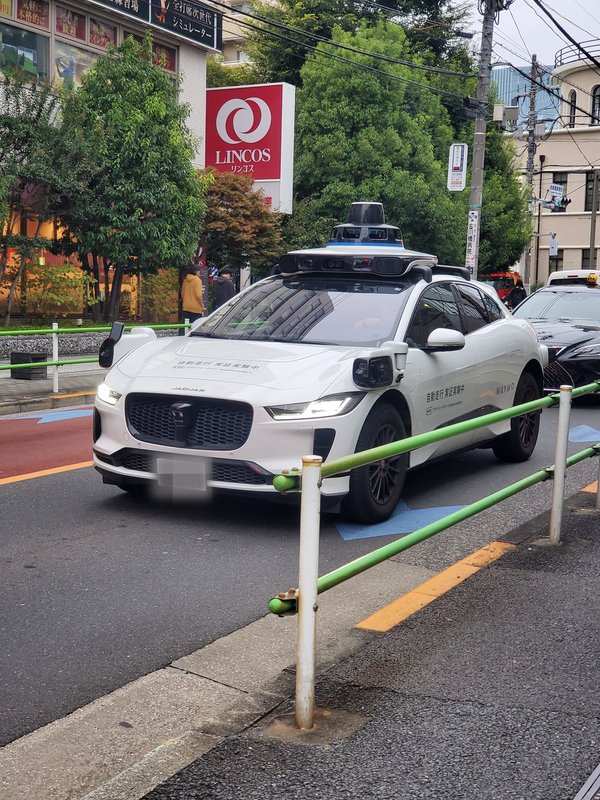
Waymo now has a concrete path toward its first commercial service in Japan. Together with taxi app GO and operator Nihon Kotsu, it intends to serve fully driverless public riders in Tokyo in 2027. This is more significant than another mapping update because the partners describe an operating model, customer channels and an initial scale target.
What was announced on 15 September
GO, Waymo and Nihon Kotsu signed a strategic partnership to commercialise autonomous taxis in Tokyo. The goal is a Level 4 service with no driver in the vehicle during 2027. The Japanese release says the partners aim to scale gradually toward around 100 autonomous taxis, while Waymo says it intends to serve its first fully autonomous public rides in Tokyo within the same timeframe.
Rides are planned to be bookable in both the GO and Waymo apps. GO will integrate the service with Japan’s taxi ecosystem and provide the customer channel, Waymo provides autonomous-driving technology, operational infrastructure and fleet-management expertise, and Nihon Kotsu will run local taxi operations and facilities.
This is not a launch today
The critical caveat is simple: 2027 is a target, not an approved opening date. Waymo explicitly says the timeline depends on national and local regulatory approval plus completion of technology and joint-operations validation. GO likewise says the exact start will be decided after the necessary permits are secured.
That is why the headline should not say “Waymo launches robotaxi in Tokyo”. Today’s news is a formal path to commercial service. The next material update would be a specific permit, an opening date or the start of fully driverless public rides.
Testing with Nihon Kotsu drivers since 2025
The partners are not starting from zero. Since 2025 they have been testing on public roads across seven Tokyo wards. Waymo describes autonomous driving supervised by trained Nihon Kotsu crew members. That is a localisation phase: narrow streets, dense pedestrian and cyclist traffic and local driving behaviour differ materially from U.S. cities.
Moving to rider-only operation will test more than the driving model. The service needs local incident procedures, coordination with authorities, pickup points, cleaning, charging, customer support and remote assistance. In robotaxi, those operational layers can influence customer experience as much as the perception stack.
Around 100 vehicles: large or small?
For Tokyo it is a small fleet, but a credible first phase. The figure should be read as a gradual scale target, not the number available on the first day. Waymo says the service will launch with an initial fleet and then expand toward roughly 100 vehicles across key neighbourhoods.
At that scale the most useful metrics will be rides per vehicle per day, waiting time, fleet utilisation, geofence size, cancellations, remote-assistance events and downtime. Without those numbers, “100 robotaxis” does not tell us whether the economics outperform a conventional taxi operation.
GO may be the most important distribution layer
Waymo is not trying to create every part of the market from scratch. GO gives it access to people who already book taxis through a local app. Conventional taxis and autonomous Waymo rides are intended to appear in the same application, which can reduce customer-acquisition friction and make the two modes directly comparable.
Nihon Kotsu contributes local operations and taxi-market expertise. That partnership model is relevant to Europe too: a global autonomy provider may scale faster if it does not need to build depots, regulator relationships and customer support independently in every country.
Las Vegas and Tokyo are two different rollout stages
RoboMorrow covers Las Vegas public rides separately because the material event there has already happened. Tokyo is an earlier stage: the partners have committed to a 2027 commercial path, but public fully driverless rides still lie ahead.
This distinction is essential for deduplication. A later secondary-media article about the same Tokyo plan should not become a new alert. The next standalone update should require regulatory approval, service launch, a material fleet change or new operating conditions.
Why this matters for Europe
Tokyo shows Waymo developing a partner-led expansion model rather than relying only on its own app and wholly owned local operations. In Europe, where taxi markets and regulation are highly local, working with an existing platform and operator may prove more realistic than entering every city as a completely independent network.
This does not mean Poland is next. What is worth watching is whether the formula — Waymo technology plus a local mobility app plus a local fleet operator — can be repeated. If it works, it may reduce the operational barrier to entering additional markets.
RoboMorrow decision
PUBLISH. The new information is not another Tokyo test; it is a formal agreement targeting a commercial fully driverless service in 2027 and gradual expansion toward roughly 100 vehicles. Headlines must keep “plans”, “targets” or equivalent language until the service actually begins.