Bosch to Start Humanoid Robot Production in Germany in 2027
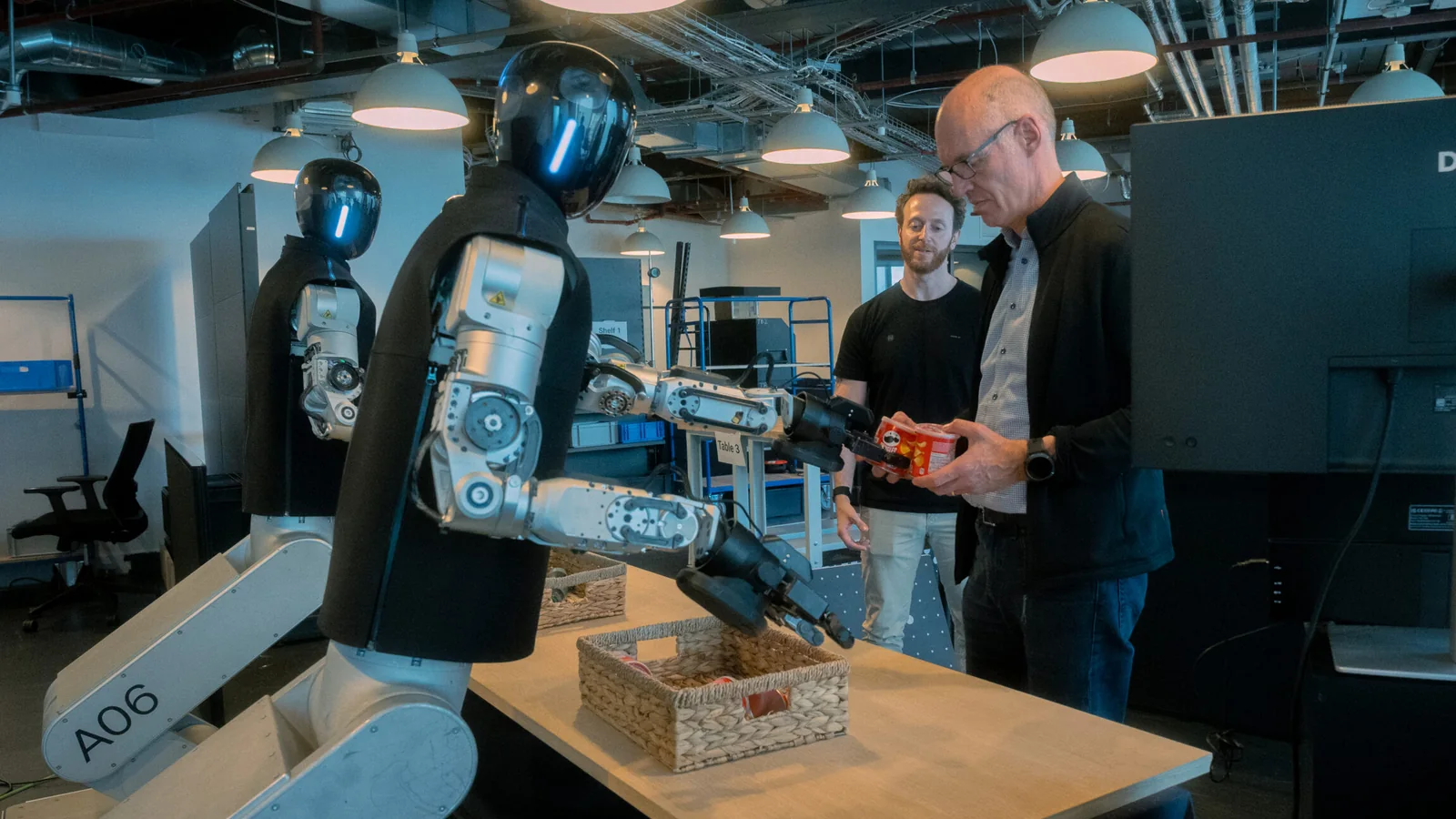
Bosch has put a concrete production timeline behind its humanoid manufacturing partnership with UK robotics company Humanoid: robots are due to start coming off a line at Bosch’s Bühl site in Germany in 2027. The latest confirmation matters more than the partnership itself, because the manufacturing agreement was already announced in May. What is new is the clearer location, timing and initial scale — plus Bosch’s direct confirmation that it will manufacture humanoid robots as a contract producer for the first time.
The most defensible way to describe the move is as a transition from pilot work and an industrialisation agreement toward planned low-volume series production. Bosch has not confirmed robot volumes or staffing. The more precise August 2027 timing and an initial target of several hundred units come from German reporting on the Frankfurter Allgemeine Sonntagszeitung, citing Humanoid. Those figures therefore need to be separated from what Bosch itself has formally confirmed.
Bosch confirms Bühl production from 2027
The strongest current confirmation comes from a Bosch spokesperson quoted by dpa-AFX on 21 August. Bosch says humanoid production will begin in 2027 at its Bühl plant in the Black Forest, with the company acting as a contract manufacturer. Bosch declined to disclose planned unit volumes or the number of employees involved in the programme.
This is strategically important because Bosch is not launching its own humanoid brand from scratch. The robot platform remains the responsibility of London-based Humanoid, while Bosch contributes industrialisation capability: design for manufacturing, quality processes, supply-chain expertise and experience in ramping repeatable production. The companies are also evaluating Bosch technologies for future robots, including actuators, motors, sensors and other components.
The manufacturing agreement is not new — it was announced in May
One piece of context is essential. The partnership itself did not appear on 21 August. Humanoid announced its agreement with Bosch on 21 May 2026 after a joint proof of concept completed in March. At that point Humanoid already described the deal as a move toward scaled production of HMND 01 robots for the European market and identified Bosch as a contract manufacturing partner covering production, hardware design, supply chain and cost optimisation.
That means today’s development should not be framed as “Bosch has just partnered with Humanoid”. A more accurate reading is that an existing manufacturing agreement now has a more concrete execution plan: Bühl and a 2027 production start. For the market, that is more useful than another memorandum without a location or timeline.
The proof of concept focused on real intralogistics
The May agreement followed a trial at Bosch’s Bühl logistics environment. According to Humanoid, HMND 01 robots autonomously moved boxes from a conveyor to a trolley. The proof of concept involved five box sizes with different footprints, heights and weights, while the system also had to manage inputs from multiple conveyors.
Humanoid presents the result as evidence of technical readiness and scalability, but that remains a manufacturer assessment. No independent public benchmark currently shows cycle time, intervention rate, MTBF, sustained uptime or full process economics. A successful proof of concept is a valid reason to continue industrialisation, but it is not yet evidence that hundreds of robots can work full shifts across many sites without substantial human support.
August 2027 and “several hundred” units still need a qualifier
German reporting based on the FAS account says Humanoid is targeting August 2027 for the production start and an initial scale of several hundred robots. Bosch has not independently confirmed those figures. Its spokesperson confirmed 2027 and Bühl, while explicitly declining to provide current numbers for output or staffing.
RoboMorrow therefore does not treat “several hundred” as an audited Bosch production commitment. It is a Humanoid target relayed through the press. It is also still unclear which exact platform configuration will dominate the first production batch, what share of components will be sourced from Bosch or other European suppliers, and how quickly the line could increase takt after launch.
Schaeffler gives the project a real industrial customer
The most interesting part of the emerging ecosystem is that the production plan is not being built only around an abstract market forecast. Reuters reported in May that Humanoid plans to deploy an estimated 1,000 to 2,000 robots across Schaeffler’s global plants by 2032. An initial rollout is scheduled earlier, from December 2026 to June 2027, at sites in Herzogenaurach and Schweinfurt.
Schaeffler is more than a future user. The companies also signed a five-year actuator supply agreement under which Schaeffler is expected to cover more than half of Humanoid’s joint-actuator demand for wheeled platforms through 2031. Reuters reported that the agreement is expected to cover a seven-digit number of actuators, meaning at least one million units. That creates an unusual European value chain: Humanoid develops the platform and software, Bosch industrialises manufacturing, and Schaeffler is both a customer and a supplier of critical motion components.
Europe is trying to leverage industrial depth, not only create new robot startups
This is why the Bosch move matters strategically. Europe still trails China in finished-humanoid hardware volume. In RoboMorrow’s H1 2026 humanoid market analysis, the leading public trackers are dominated by Chinese vendors, while a large share of current shipments still serves research, data production and demonstration. Europe’s strengths remain automation, drives, safety, system integration and high-quality serial manufacturing.
Bosch acting as a contract manufacturer illustrates one possible European response. A robotics startup does not necessarily need to build every factory capability itself if it can tap an established automotive industrial base with mature quality systems, supplier networks and production engineering. That could shorten the path from prototype to repeatable product — provided the robot and its software become reliable enough for that manufacturing scale to matter.
What it means for Poland and the EU
For Polish customers, this does not mean HMND 01 will suddenly be available from a public price list in 2027. There is no published price, Poland-specific service model, final integration cost, detailed conformity package for the shipping configuration or confirmed local availability. Humanoid remains an enterprise deployment proposition rather than a retail product.
Still, manufacturing in Germany could become relevant for Central and Eastern Europe. If Bosch establishes repeatable output and the wider ecosystem develops European service and integration capacity, logistics and support barriers for Polish industrial users could be lower than with imported platforms that have little regional infrastructure. RoboMorrow’s 2026 humanoid availability guide treats service, geography and a real commercial path as just as important as robot specifications.
RoboMorrow view: the manufacturing contract matters more than the word “mass”
This is a strong development without requiring exaggerated language. Bosch confirms a real factory location and production year, and the earlier manufacturing agreement gives the project continuity. At the same time, the first phase appears modest compared with current Chinese hardware volumes, while cost, reliability and ramp-rate data remain private.
The best way to describe the event is therefore: a European robotics startup is using the infrastructure and industrial know-how of one of the world’s largest automotive suppliers to move from pilots toward series production of humanoid robots. If that model works, it may matter more for Europe’s robotics competitiveness than another isolated demonstration of a new robot generation.