Circus starts CA-1 commercial operations in the UAE
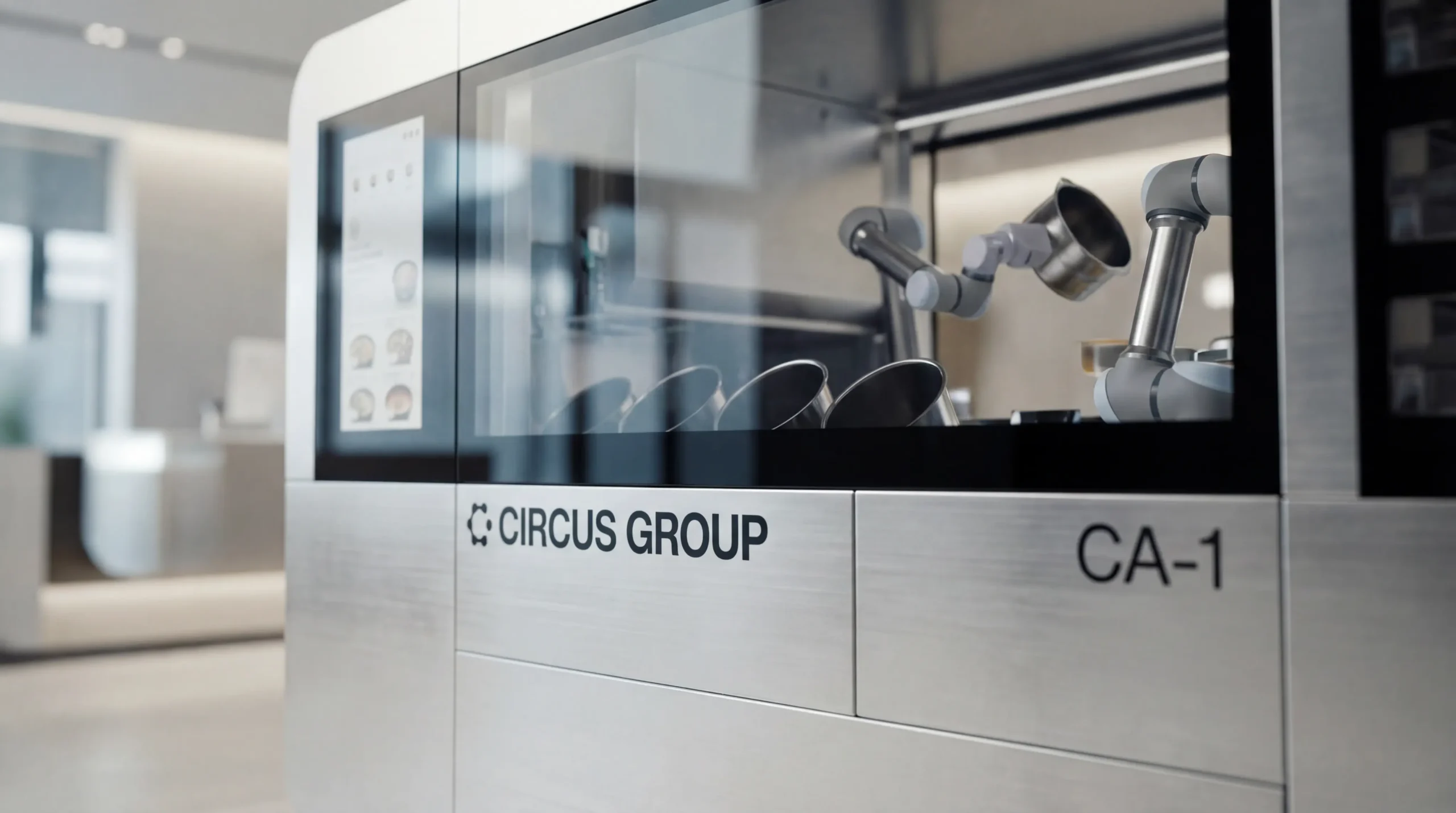
Circus says CA-1 commercial operations have started in Abu Dhabi with Royal Prestige Food Contracts. The company has not disclosed the number of active robots, contract value or live meal throughput.
Germany's Circus SE has started commercial operations of its CA-1 autonomous kitchen system in the United Arab Emirates. It is the company's first operational market outside Europe and a stronger signal than another trade-show demonstration: the launch partner is named, operations are said to be running in Abu Dhabi, and Dubai is planned as the next city.
The launch partner is Royal Prestige Food Contracts. Circus describes the company as a major local caterer producing more than 3 million meals per year. Royal Prestige serves large institutional and corporate customers, but that does not mean CA-1 is operating for every client named in the caterer's portfolio. RoboMorrow separates the scale of the partner from the scale of the robot deployment itself.
What changed
Circus had previously announced ECAS certification and a plan to enter the UAE. The new statement says commercial operations have started. That is a material status change: the project has moved from regulatory preparation and launch planning into market operation. A regional press event is scheduled for October 6, but the company says the robots are already operating.
Circus also says ingredients are locally sourced through Royal Prestige and that Circus Pods are intended to be produced locally. If this model scales, the company is not merely exporting a machine. It is trying to create a repeatable infrastructure package for autonomous meal production.
Why food robotics is a useful automation test
Contract catering has several characteristics that can favor automation: recipes are repeatable, inputs can be standardized, and performance can be measured through cycle time, cost per meal, waste, availability and process consistency. At the same time, food production is difficult because of hygiene, cleaning, ingredient variability and safety responsibility. A live deployment therefore tells us more than a controlled demo.
CA-1 should not be evaluated like a humanoid or a conventional industrial arm. It is a vertical system built around a specific workflow. Its commercial success will depend on meals produced per hour at a defined intervention rate, cleaning and service time, ingredient logistics and whether integration with the wider kitchen creates new bottlenecks.
What we still do not know
- how many CA-1 units are active in Abu Dhabi today;
- the exact location of the first installation;
- daily meal output under real operating conditions;
- contract value and commercial model;
- agreed KPIs, SLA and service requirements;
- when local Circus Pod production will reach serial scale.
Why it matters for Europe
Circus is a German company, making the UAE expansion an interesting example of European service-robotics exports. Europe remains strong in industrial automation, while service and consumer robotics face intense competition from the US and China. If Circus can build a repeatable deployment model in the Gulf, it would support the case that European vertical B2B robotics can still create defensible value.
Buyers should nevertheless avoid jumping from “commercial operations” to an assumed business case. As with the Richtech DUST-E fleet contract, hardware is only one part of TCO. Integration, service, spare parts, cleaning, monitoring, staff procedures and downtime contingencies all matter.
RoboMorrow take
The important part of today's news is not that CA-1 exists. It is that Circus says the system is commercially operating with a named local partner. That is enough to track the project as a real deployment. It is not enough to call it a large fleet or proof that autonomous kitchens already have superior economics. The next meaningful update will be active unit count and operational performance data.
How to judge the next deployment data
With an autonomous kitchen, nominal throughput is easy to confuse with end-to-end process throughput. A robot may prepare portions quickly, but the business also pays for ingredient preparation, replenishment, cleaning, quality checks, service and exception handling. The most useful future Circus data will therefore be average production across a full shift and system availability, not a peak meals-per-hour figure.
The second metric is operational autonomy. If a person frequently corrects the process, tops up small ingredient quantities or restarts the system, some labor savings disappear. A supervised system can still make sense if one operator manages several units instead of performing the whole workflow manually. The correct comparison is cost per correctly delivered meal at a defined SLA, not robot purchase price alone.
European operators should also watch hygiene and service requirements. The UAE and EU have different compliance processes, so a successful Abu Dhabi rollout does not automatically prove identical deployment readiness in Poland or Germany. Circus is European and has regulatory experience, however, making it worth watching whether CA-1 can remain a common product across markets without expensive local redesign.