Richtech reports a 200-robot DUST-E deal with a national retailer
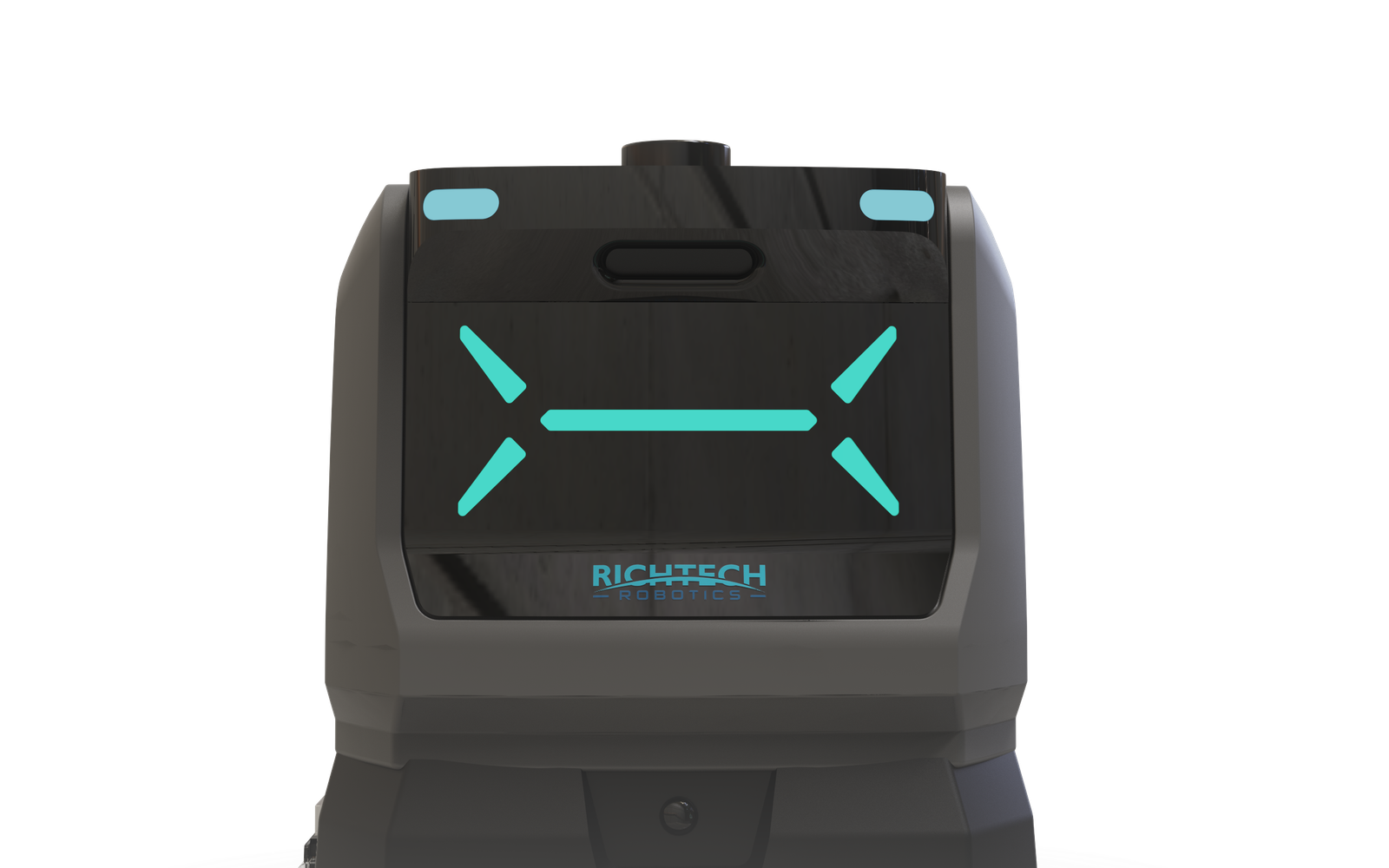
Richtech Robotics disclosed in a Form 8-K filed with the U.S. SEC that a national retailer agreed to purchase and deploy 200 DUST-E autonomous cleaning robots. This is more concrete than an open-ended pilot: a Statement of Work received on September 18, 2026 specifies the robot count and a five-year deployment period. The customer name and contract value were not disclosed, so RoboMorrow is not assigning the order to any specific retail chain. Source: company SEC filing.
Two hundred robots is concrete, but it does not mean 200 robots are operating today
The SEC filing says the customer will purchase and deploy 200 units over five years. That distinction matters. The volume is stated in a formal Statement of Work, but the filing does not provide a delivery cadence, store count or go-live dates for individual robots. It would therefore be misleading to describe the full fleet as already active or to multiply 200 by a catalogue price and call the result the contract value. The stronger signal is that a broader master agreement from 2025 has now produced a defined deployment project.
Richtech also says the scope includes ongoing ancillary services such as automated reporting and remote support. That makes the commercial model more interesting than a hardware shipment alone. In service robotics, fleet monitoring, maintenance, software support and exception handling frequently determine whether a robot remains a limited pilot or becomes a repeatable operational tool.
What DUST-E is — and what the filing does not specify
Richtech markets DUST-E as a commercial floor-cleaning family. Current official product materials describe the smaller DUST-E S and the larger DUST-E MX. The S combines sweeping, vacuuming, scrubbing and mopping with sensors and automated docking, while the MX is positioned for larger commercial and industrial areas. The 8-K, however, only says “DUST-E autonomous cleaning robots” and does not disclose the model mix. RoboMorrow will not infer a split that the filing does not provide.
The same caution applies to theoretical fleet productivity. Catalogue performance belongs to specific machines under specified conditions. A five-year rollout can involve different configurations, product revisions and very different stores. For a retailer, the operational metrics that matter will include uptime, area coverage, obstacle handling, quality of cleaning and the amount of employee time required for exceptions.
Why an SEC filing carries more weight than a normal marketing announcement
The disclosure appears in a current report filed with the SEC. That does not prove that the project will deliver attractive economics, but it is a firmer basis than a sales slide or a trade-show demonstration. Richtech formally states a national-retailer client, a 200-unit commitment, a five-year horizon and associated support services.
The retailer remains unnamed. Richtech has other visible retail relationships, which makes online speculation tempting, but the current filing does not identify Walmart or any other chain as the buyer. Until the client or Richtech provides that name, the responsible description is simply “national retailer.”
The operating questions that still matter
A 200-unit number alone cannot show whether the automation is financially successful. The useful follow-up data would include the number of stores, average area per robot, daily operating hours, autonomous completion rate, frequency of human interventions, service cost and the rollout milestones. A five-year program can represent careful scaling through acceptance gates rather than an immediate fleet-wide installation.
A purpose-built cleaning robot also has an important advantage over a general-purpose humanoid: the problem is narrower. That reduces the range of perception and manipulation challenges. Retail is still difficult — people, carts, changing displays and spills create continuous edge cases — but the business case can be measured in square feet cleaned, labor time and service cost.
Why this matters in Europe
The disclosed program is American and does not establish Polish or EU availability for DUST-E. It is still a useful benchmark for how a more mature part of service robotics moves from single machines to multi-year fleets. European buyers will care less about the spectacle of the robot and more about SLA, remote monitoring, local service, spare parts and integration with workplace safety and facility-management procedures.
RoboMorrow’s For business coverage separates device price from deployment economics. This deal illustrates the point well: 200 robots make the headline, but reporting, maintenance, reliability and actual reduction of manual work will determine the long-term value. Only operating data can show whether contractual scale becomes productive autonomy.
What RoboMorrow will verify next
The strongest next confirmation would come from the customer itself or from a later Richtech filing that provides rollout milestones and contract economics. We will also look for clarification on whether the 200 units use one DUST-E configuration or a mix of S and MX models. Fleet utilization will matter more than the headline count: a robot can be formally deployed without producing the expected savings if it spends too much time idle, requires heavy manual preparation, or creates additional service work. The multi-year commitment is therefore a meaningful commercial signal, but not yet proof of return on investment.
Accept the cleaning process, not just the delivered hardware
A useful purchasing baseline would describe the work before automation: which aisles need daily cleaning, where difficult dirt accumulates and when each area is available. Without that baseline, a route-completion report can look convincing without demonstrating cleaner floors or less manual work. “The robot travelled the route” should be a different measure from “the floor was cleaned to the standard accepted by the facility operator.” Neither outcome can be inferred from the announced fleet size.
An illustrative acceptance process could have three parts: navigation on the intended route, inspection of cleaning quality and operation across a complete shift. These are suggested evaluation criteria, not disclosed terms of Richtech’s agreement. The final part should include preparation, fluid handling, cleaning the working elements, emptying tanks and any repeat passes. Adding the time spent by people and the machine provides a more useful comparison with the existing process than measuring unattended movement alone.
Our PUDU CC1 versus Gausium Phantas comparison explains why the building’s operating profile matters more than a single headline specification. It is not a ranking against DUST-E: the retailer’s chosen configuration remains unknown. It is useful, however, for framing questions about aisle widths, floor area, docking and tasks that still need an employee. The correct alternative may differ between a spacious supermarket and a smaller location with dense merchandising.
The reporting vocabulary also deserves attention. A stop caused by a shopper, an empty water tank, a localization problem and a wait for service should not disappear into one undifferentiated downtime category. Otherwise the operator cannot distinguish a workflow problem from a machine fault. Our guide to interpreting robot-market numbers separates purchasing, commissioning and productive operation. The same distinction applies here: signing the agreement is one milestone, acceptance inside a store is another, and a repeatable shift-level result is a third. That framework preserves the importance of the order without claiming results that have not been reported.
Sources and verification
The agreement is documented in the company’s SEC filing, not an independent customer confirmation. Product descriptions are from Richtech; acceptance scenarios are editorial analysis.