PUDU CC1 vs Gausium Phantas: Which Fits Your Site?
BUYING IN YOUR MARKET
Availability in your country
Sales, delivery and support can differ by country and exact model. Choose your market to see the evidence we have checked.
PUDU CC1
United States
Local sales channel — request a quote
- Seller / sales channel
- Inland Global
- Price
- Individual quote; no verified public local price
- Delivery
- Confirm stock and the delivery date for your address with the seller
- Warranty and service
- Confirm written warranty terms, parts and service coverage for your address
Inland Global lists this model in its US sales catalogue with a quotation route. Confirm the exact configuration and fulfilment before payment.
Evidence checked: · Not a live stock feed
Inland Global: request a quote ↗Germany
Local sales channel — request a quote
- Seller / sales channel
- JK Robotik
- Price
- EUR 18,950 excluding VAT and shipping
- Delivery
- Confirm stock and the delivery date for your address with the seller
- Warranty and service
- Confirm written warranty terms, parts and service coverage for your address
JK Robotik lists this exact model for this market. A listing is evidence of a buying route, not a delivery commitment.
Evidence checked: · Not a live stock feed
JK Robotik: request a quote ↗Netherlands
Local sales channel — request a quote
- Seller / sales channel
- Fulin Robots
- Price
- See the linked offer for the current price, configuration and taxes
- Delivery
- Confirm availability and delivery to your address with the seller
- Warranty and service
- Confirm warranty territory, local service and return shipping with the seller
This supplier lists the exact model. Request a written offer with the exact configuration, delivery date and service coverage.
Evidence checked: · Not a live stock feed
Fulin Robots: model offer ↗Spain
Local sales channel — request a quote
- Seller / sales channel
- Intec Robots
- Price
- See the linked offer for the current price, configuration and taxes
- Delivery
- Confirm availability and delivery to your address with the seller
- Warranty and service
- Confirm warranty territory, local service and return shipping with the seller
This supplier lists the exact model. Request a written offer with the exact configuration, delivery date and service coverage.
Evidence checked: · Not a live stock feed
Intec Robots: model offer ↗Portugal
Local sales channel — request a quote
- Seller / sales channel
- Intec Robots
- Price
- See the linked offer for the current price, configuration and taxes
- Delivery
- Confirm availability and delivery to your address with the seller
- Warranty and service
- Confirm warranty territory, local service and return shipping with the seller
This supplier lists the exact model. Request a written offer with the exact configuration, delivery date and service coverage.
Evidence checked: · Not a live stock feed
Intec Robots: model offer ↗No verified local offer in this dataset
No country-specific offer for this exact model has been established in our current sources. This is a gap in our research, not a statement that the robot cannot be bought here. Use the manufacturer’s sales contact to request a supplier serving your address; confirm configuration, imports, warranty and service.
- Price
- No verified local price in this dataset
- Delivery
- No confirmed date for your address
- Warranty and service
- Local coverage not verified
Gausium Phantas
No verified local offer in this dataset
We have not verified a current local sales offer, delivery date or service coverage for this exact model in the selected country. Unverified does not mean unavailable.
- Price
- No verified local price in this dataset
- Delivery
- No confirmed date for your address
- Warranty and service
- Local coverage not verified
PUDU MT1 Vac
United States
Local sales channel — request a quote
- Seller / sales channel
- Inland Global
- Price
- Individual quote; no verified public local price
- Delivery
- Confirm stock and the delivery date for your address with the seller
- Warranty and service
- Confirm written warranty terms, parts and service coverage for your address
Inland Global lists this model in its US sales catalogue with a quotation route. Confirm the exact configuration and fulfilment before payment.
Evidence checked: · Not a live stock feed
Inland Global: request a quote ↗Germany
Local sales channel — request a quote
- Seller / sales channel
- Rabotics
- Price
- Individual quote; no verified public local price
- Delivery
- Confirm stock and the delivery date for your address with the seller
- Warranty and service
- Confirm written warranty terms, parts and service coverage for your address
Rabotics lists this exact model for this market. A listing is evidence of a buying route, not a delivery commitment.
Evidence checked: · Not a live stock feed
Rabotics: request a quote ↗Netherlands
Local sales channel — request a quote
- Seller / sales channel
- Fulin Robots
- Price
- See the linked offer for the current price, configuration and taxes
- Delivery
- Confirm availability and delivery to your address with the seller
- Warranty and service
- Confirm warranty territory, local service and return shipping with the seller
This supplier lists the exact model. Request a written offer with the exact configuration, delivery date and service coverage.
Evidence checked: · Not a live stock feed
Fulin Robots: model offer ↗Spain
Local sales channel — request a quote
- Seller / sales channel
- Intec Robots
- Price
- See the linked offer for the current price, configuration and taxes
- Delivery
- Confirm availability and delivery to your address with the seller
- Warranty and service
- Confirm warranty territory, local service and return shipping with the seller
This supplier lists the exact model. Request a written offer with the exact configuration, delivery date and service coverage.
Evidence checked: · Not a live stock feed
Intec Robots: model offer ↗Portugal
Local sales channel — request a quote
- Seller / sales channel
- Intec Robots
- Price
- See the linked offer for the current price, configuration and taxes
- Delivery
- Confirm availability and delivery to your address with the seller
- Warranty and service
- Confirm warranty territory, local service and return shipping with the seller
This supplier lists the exact model. Request a written offer with the exact configuration, delivery date and service coverage.
Evidence checked: · Not a live stock feed
Intec Robots: model offer ↗No verified local offer in this dataset
No country-specific offer for this exact model has been established in our current sources. This is a gap in our research, not a statement that the robot cannot be bought here. Use the manufacturer’s sales contact to request a supplier serving your address; confirm configuration, imports, warranty and service.
- Price
- No verified local price in this dataset
- Delivery
- No confirmed date for your address
- Warranty and service
- Local coverage not verified
“Listed” confirms a product page or sales route, not stock, delivery to every address or local service. “Pre-order” is not immediate availability. Unverified means we lack evidence; it does not mean unavailable. Prices belong to the named market and currency. Confirm the exact version, tax, shipping and support before ordering.
Decision update · 12 October 2026
Compare CC1 and Phantas on the same acceptance route, including the narrowest passage, mixed floor transitions and a dock visit. Phantas’s compact form matters only when the actual passage and turning manoeuvre work. A four-mode feature list does not establish the cleaning result for your soil and floor.
| Decision | Pilot check |
|---|---|
| Aisles | Passage, turning, occupied aisles and safe stopping |
| Mixed floors | Mode change, recovery and accepted finish |
| Routine care | Human minutes per accepted shift, including dock care |
| Support | Named provider, parts and a written downtime process |
Short verdict: Gausium Phantas is the stronger fit for a typical small or midsize facility where compact dimensions, narrow passages and mixed hard/carpet floors matter. PUDU CC1 is a larger, more infrastructure-oriented robot with 15-litre clean/waste tanks, a mature workstation ecosystem and a long-standing commercial positioning. Both are sold as 4-in-1 machines, but the same label does not create the same deployment model.
This comparison deliberately focuses on specifications, process architecture and pilot questions rather than claiming a cleaning-quality winner. RoboMorrow has not run CC1 and Phantas side by side on the same floor. A manufacturer rating of 700 m²/h does not mean a robot will deliver exactly that result in your store or hotel. The goal is to choose the better pilot candidate.
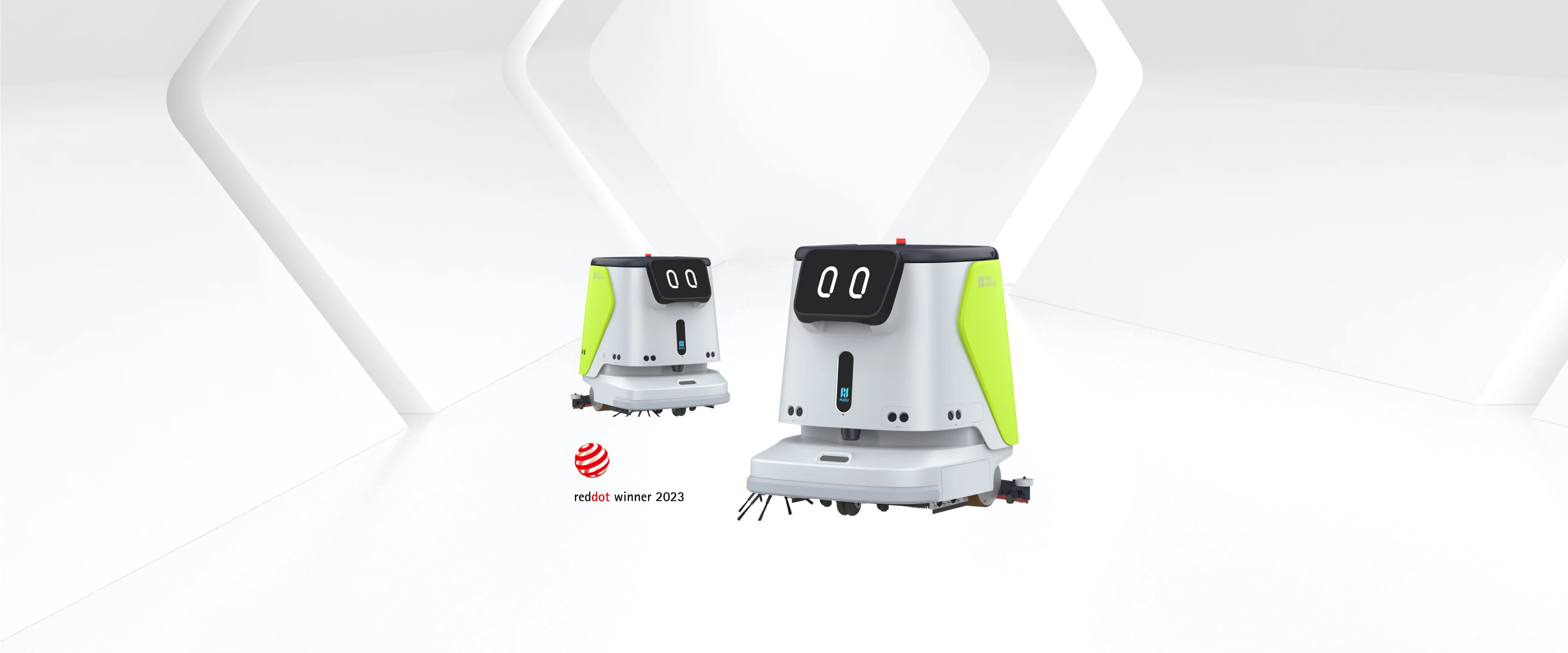
Buying update: 21 September 2026. Featured image: PUDU CC1. Manufacturer imagery, not a RoboMorrow test photograph. Image source.
CC1 vs Phantas: compare reachable area, not body dimensions alone
The question is not which catalogue contains the largest number. Establish whether Phantas's compact layout reaches zones that would otherwise remain manual, and whether CC1's working cycle reduces interruptions on a longer route. Both hypotheses require measurements with the actual furniture arrangement and cleaning equipment.
| Result | How to record it |
|---|---|
| Coverage | Quality-accepted area, without counting overlapping passes twice |
| Preparation | Minutes spent moving chairs, mats and obstacles before starting |
| Interventions | Cause, human handling time and mission delay |
| Completion | Manual finishing, tank handling and cleaning of components and workstation |
Specify the Phantas version
Identify the generation, software configuration and workstation model in the proposal. The current family page also discusses Phantas Extra features; do not automatically assign them to every machine called Phantas. Likewise, CC1 and CC1 Pro are not interchangeable equipment names. Ask which demonstrated functions will exist in the delivered configuration and whether additional charges apply.
How should automated water handling be valued?
During the pilot, measure the manual cycle and the cycle with the proposed workstation, if both options are available. Subtract the workstation's own upkeep from the time saved. Then account for equipment, utility preparation and service costs. Do not extend a single measured refill saving into an entire staff shift.
“Optional workstation” leaves important questions unanswered: is permanent water and drainage required, who prepares the installation, what happens when water is unavailable, and can the machine continue in a restricted mode? Include these answers in the quotation rather than waiting until delivery.
What settles the choice?
Prefer the configuration that passes the site's access, cleaning-quality and shift-completion requirements, then compare the full-process cost in EUR. If the outcome depends on regular human help, include it in staffing. A “mission completed” notification is not proof that the facility manager accepted the floor. Price and local support still require a country-specific proposal; this article is not an offer from either manufacturer.
Manufacturer sources checked on 21 September 2026; worksheets and purchasing conclusions are editorial analysis, not shared test results: puduCC1, phantas.
Describe your deployment needs
Contacting RoboMorrow is not a sales offer or a guaranteed quotation. We do not claim authorised reseller status. Confirm price and local service with your supplier.
PUDU CC1 vs Gausium Phantas — comparison table
| Feature | PUDU CC1 | Gausium Phantas |
|---|---|---|
| Positioning | general-purpose commercial 4-in-1 | compact cleaner for small and midsize spaces |
| Modes | sweeping, mopping, scrubbing, vacuuming | vacuuming, sweeping, scrubbing, dust mopping |
| Water tanks | 15 L / 15 L | 11.5 L / 10.5 L |
| Productivity | 700–1000 m²/h stated by PUDU | 350–700 m²/h practical stated by Gausium; higher theoretical figures by mode |
| Runtime | 5 h scrub; 5 h sweep+vac+mop; 4 h carpet; 9 h silent mop | 4.5 h scrub; 4.5 h vacuum; 6 h sweep; 10 h dust mop |
| Minimum passage | no directly comparable single figure highlighted on the CC1 product page; verify on site | 650 mm width and height |
| Working width | depends on module; main page does not publish one comparable width | 465 mm vacuum/sweep; 330 mm scrub/dust mop |
| Navigation | PUDU SLAM: visual SLAM + laser SLAM | 2D LiDAR + 3D depth cameras + RGB camera |
| Workstation | optional charging and water-management stations | optional workstation; water/charging/self-cleaning depending on configuration |
| Noise | <70 dB(A) stated by PUDU | quiet mode ≤60 dB stated by Gausium |
Where manufacturers do not report a metric in the same way, RoboMorrow does not fill the gap with reseller data. An honest blank is better than false precision.
Footprint and geometry — Phantas starts with an advantage
Phantas measures 585 × 445 × 619 mm and weighs 65 kg. Gausium specifies a 650 mm minimum pass width and height. That is a tangible advantage around dense retail fixtures, restaurant tables, reception zones and furnished offices. It reduces the number of excluded map areas and improves the chance that the robot can reach the same zones currently cleaned by a person.
CC1 is conceptually a larger professional machine and carries larger tanks. PUDU does not highlight one minimum passage dimension on the main product page in the same way Gausium does for Phantas. That does not mean CC1 cannot handle narrow areas; it means the narrowest point in your building must be included in the pilot. Do not accept a demonstration limited to a wide lobby.
Water and autonomy — CC1 has the capacity advantage
PUDU provides 15 litres each for clean and waste water. Phantas has 11.5 litres clean and 10.5 litres waste. This does not determine cleaning quality, but it can reduce tank-service frequency during long scrubbing routes. The trade-off is size and mass. In a small business, passage access may be more valuable; in a larger hotel or store, fewer tank interventions can matter more.
Both products can use workstation infrastructure. PUDU describes separate charging and water-management options, including a mobile water solution intended to reduce plumbing work. Gausium offers workstation and mobile-water options for Phantas. A quotation must state what is included versus optional. Comparing bare robot prices is not useful if one deployment includes a workstation and the other does not.
Productivity — do not compare 1000 and 700 without context
PUDU states 700–1000 m²/h for CC1. Gausium publishes 350–700 m²/h as practical efficiency for Phantas and separately gives theoretical maxima of 1188 m²/h for scrubbing/dust mopping and 1674 m²/h for vacuuming/sweeping. These numbers do not prove that either machine is faster in your facility. Test conditions and working widths differ.
During a pilot, use a common KPI: area completed per calendar hour including travel, obstacle avoidance, docking, interventions and rework. Then measure quality. A robot that covers 900 m² but leaves streaks for a person to fix may be less productive than a slower machine.
Carpet — both have arguments, but CC1 needs a separate assembly
PUDU explicitly states that soft-carpet vacuuming requires a separate carpet vacuuming assembly. That matters for both cost and operator workflow. If 70% of a hotel is carpet, confirm the module price, the switching process and whether staff need to change hardware between zones.
Phantas is positioned for hard and soft floor types with separate vacuum, sweep, scrub and dust-mop modes. In practice, verify how your chosen configuration transitions between carpet and hard floor and whether any mechanical module change is needed. Four icons in a brochure should not be interpreted as fully automatic physical reconfiguration without confirmation.
Scrubbing and wet stains — no winner without a test
Phantas has a stated 10 kg cleaning pressure and 330 mm scrubbing width. CC1 has a dedicated scrubbing mode and larger tanks, but PUDU does not publish a directly comparable pressure figure on the main page. We therefore do not create an artificial scrubbing score. For food service, entrances or difficult floors, a pilot should include the real soil you see: dried drinks, shoe marks, winter salt or light grease film.
Navigation — different sensors, same business objective
CC1 uses PUDU SLAM combining visual and laser SLAM. Phantas lists 2D LiDAR, 3D depth cameras and an RGB camera. Sensor count does not automatically equal better autonomy. What matters is behaviour around glass, chair legs, trolleys, dark materials, changing light and moving people.
A useful test deliberately introduces normal change: move a display stand, leave a housekeeping trolley, change two chairs. Observe whether the robot safely detours and continues or stops the mission and asks for help. That is the autonomy level a facility manager actually buys.
Noise — Phantas has a clearer argument for operation around people
Gausium states a quiet mode at ≤60 dB. PUDU lists CC1 operating noise below 70 dB(A). These are not independent measurements under identical conditions, but Phantas at least has a dedicated quiet mode. That can matter in hotels, clinics and offices more than in a store cleaned at night. During the pilot, measure sound at a normal human distance and consider warning sounds as part of safety.
Manual handling matters on day one
CC1 includes an extendable steering handle for manual operation and mapping. Gausium also highlights an integrated handle for switching between autonomous and manual movement. This sounds minor until staff need to reposition the machine, clear a zone or teach a new route. With several employees sharing responsibility, ergonomic handling affects adoption.
Reporting and management
PUDU describes reporting of cleaning time/area and visualisation of robot status. Gausium provides remote management and reporting in its ecosystem. Before buying, ask to see a real export from a demo fleet: which fields are available, whether data can be exported, retention period and user permissions. If the robot will be used to audit a cleaning contractor, a pretty dashboard is not enough.
Workstation and 'unattended' operation
Both robots can reduce daily handling with workstation options, but neither removes people completely. Tanks, brushes, squeegees, filters and areas not fully cleaned by an automatic rinse still need attention. Mobile water stations also require refilling and emptying. Include daily maintenance minutes as a pilot KPI.
Local service and availability by country
Both brands operate internationally through partners and integrators. A global or regional product listing is not enough to establish availability at your site. Ask for the actual service entity covering your location, response time, common parts stock, replacement-unit policy, maintenance cost and responsibility for software configuration. This can change the business result more than a 100 m²/h brochure difference.
Total cost: compare like-for-like local quotes
There is no verified universal price for both robots in the same configuration. Request like-for-like quotes from suppliers serving the country of deployment. We therefore do not use random reseller prices from different markets. Ask for quotations with identical scope: robot, required cleaning module, workstation, deployment, training, first-year service, consumables and any lift/door integration.
Then use our model: how to calculate cleaning-robot ROI →. A robot that costs 20% less but requires twice as much operator time can quickly lose its advantage.
Scenario 1: 800 m² office with chairs and some carpet
We would start with Phantas because of its compact footprint and specified 650 mm passage. The pilot should include open office, kitchen and corridor zones. If carpet dominates and wet cleaning is rare, we would also compare a specialised PUDU MT1 Vac rather than limiting the choice to 4-in-1 machines.
Scenario 2: 2500 m² store with wide aisles and hard floor
CC1 has stronger arguments here: larger tanks, stated 700–1000 m²/h and a mature workstation ecosystem. Phantas may still fit dense zones better but can need more frequent service. We would also shortlist CC1 Pro in a large store because its AI spot-scrubbing and result-monitoring features could add value around frequent spills.
Scenario 3: 60-room hotel
We would not automatically pick one robot. Phantas can make sense in lobby and mixed zones; CC1 in larger open areas. Long carpet corridors may justify a separate dry-cleaning robot. Lift integration and housekeeping workflow become more important than the headline feature comparison.
Scenario 4: restaurant or food court
Wet spills, frequent service and tight passages matter. Phantas may win on footprint; CC1 on tank capacity. In both cases the test should happen after a real service period, not on a spotless demo floor. Safety around staff and guests must also be evaluated.
How to run a fair CC1 vs Phantas pilot
If both robots are available from integrators, the best tie-breaker is not another specification table but two trials on the same route. Define five to seven KPIs in advance and keep them identical. At minimum track actual area cleaned, missions completed without intervention, operator time before and after a mission, areas requiring manual rework, water or consumables used, and downtime for charging or service.
Add one “difficult day”: chairs positioned differently from the mapping session, several people crossing the route, a wet spill and one temporarily blocked aisle. The goal is not to sabotage the robot but to see whether the system resumes useful work without repeated service calls. In a commercial facility, these small changes often determine real autonomy.
Finally, translate the pilot into process cost rather than purchase price alone. A more expensive robot can still be cheaper if it saves twenty minutes of operator time every day and completes more missions without assistance. If a lower-priced machine is equally stable, paying for extra features may create no value. The correct winner is the robot that performs in your facility under your SLA, not the one with the strongest brochure.
Choose CC1 when…
- You have a larger, more regular floor plan.
- 15-litre tanks reduce meaningful operator interventions.
- You want to use PUDU's workstation ecosystem.
- Routes are wide and footprint is not a problem.
- Your local PUDU integrator offers the stronger SLA.
Choose Phantas when…
- Compact dimensions and roughly 65 cm passages are critical.
- The site has mixed floors and moderate area.
- The robot will work around people and quiet mode matters.
- Smaller tanks do not cause excessive intervention.
- The Gausium partner offers the better local support or RaaS deal.
RoboMorrow verdict
On paper, Phantas is the better pilot candidate for a typical small or midsize site because its compact dimensions and explicitly stated passage requirement reduce spatial risk. PUDU CC1 makes more sense as the site grows and larger tanks/workstation automation begin to influence uptime. We do not declare a cleaning-quality winner without a side-by-side test.
The best next step is to run both candidates on the same real zone for several days with identical KPIs. If one completes 95% of missions without intervention and the other 70%, you have a far more valuable answer than any specification table.
PUDU CC1 database card → · Gausium Phantas database card → · Best commercial cleaning robots 2026 →
CC1 and Phantas: a shared pilot record
Quotes become comparable when both machines receive the same accepted area, working window and cleanliness criterion. Record demonstration equipment, including station, attachments and carpet configuration. An optional component in the trial must be identified in the quote.
- Define net zones, excluding furniture and areas outside the task.
- Measure complete task time separately from hands-on minutes.
- Record remote and physical interventions plus manual corrections.
- Confirm local service, parts conditions and restoration time.
Do not decide from an app’s m²/h figure alone. Recleaning a zone increases time, not unique area accepted as clean. Agree acceptance conditions before the trial and record departures in the protocol. Compare the complete costs after both configurations meet the same criteria.
Sources
- PUDU CC1 official product page
- Gausium Phantas official product page
- Gausium Phantas official specifications
Continue with the exact decision
Source scope: the decision block was checked on 12 October 2026. Earlier dated source statements retain their dates. Seller listings establish an enquiry route, not live stock or a delivery promise. No new affiliate offer has been verified or added.
Image: manufacturer material already published by RoboMorrow; illustrative, not evidence of an editorial hands-on test.