Cleaning robot for narrow aisles: body width is not enough
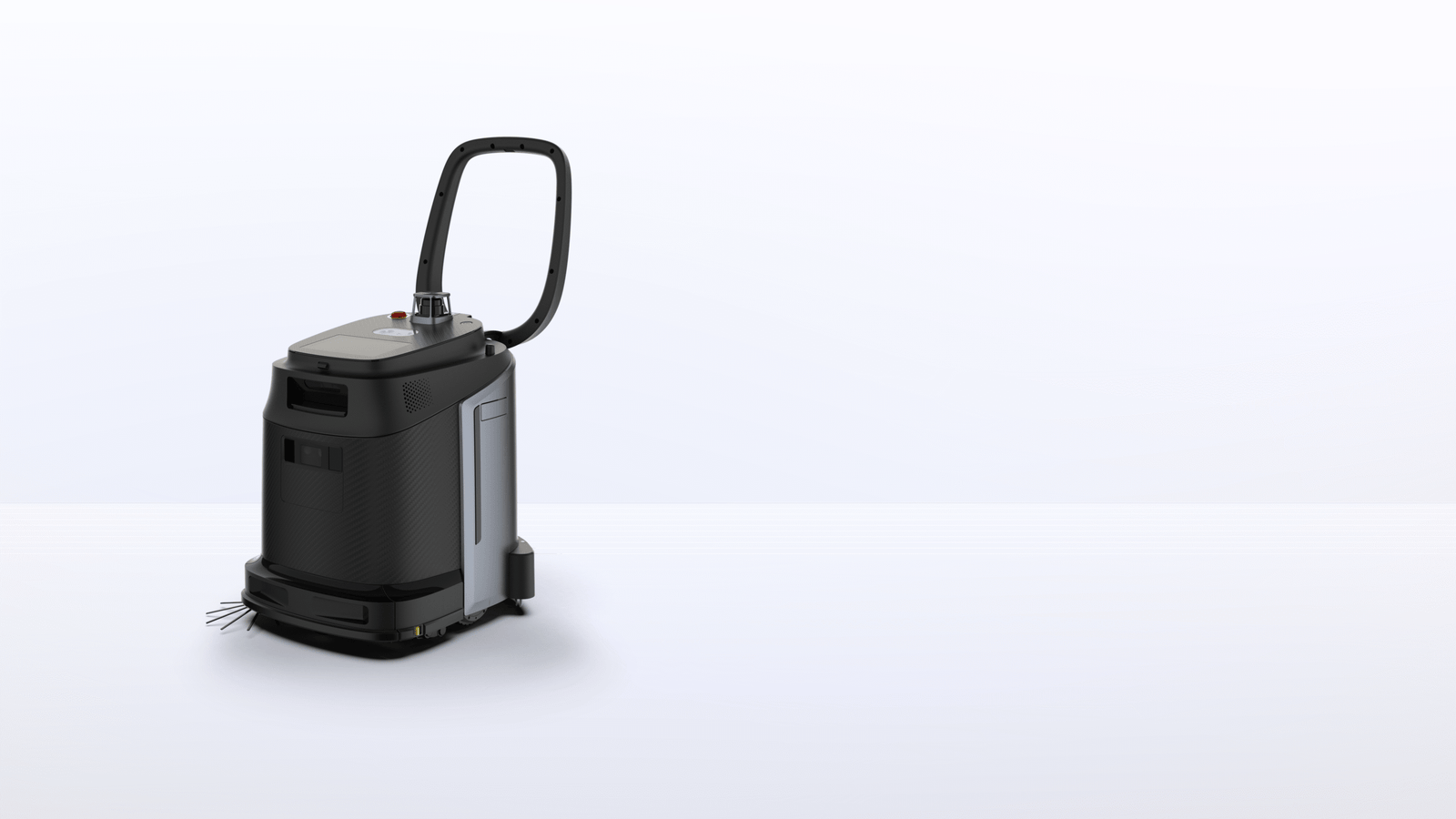
A cleaning robot narrower than an aisle may still be unable to service it. Check passing clearance, cornering, turning and dock access separately. The most demanding point on the complete route matters more than average shelf spacing. Start with site measurements and documentation for the exact variant.
On this page
Phantas illustrates why a model name is insufficient
Our documentation check found different dimensions published under the Phantas name. Gausium’s global specification lists 585 × 445 × 619 mm, while Gausium New Zealand lists 540 × 440 × 617 mm. We do not combine these into one specification or assume they describe an identical variant without confirmation.
| Document | Length × width × height | Quotation implication |
|---|---|---|
| Gausium global Phantas specification | 585 × 445 × 619 mm | Match the quote to an exact code and drawing |
| Gausium New Zealand Phantas page | 540 × 440 × 617 mm | Confirm market, generation and document currency |

Both sources are linked below. The discrepancy is not a reason to select the smaller figure because it is convenient. Request the variant identifier, dimensional drawing and manoeuvring requirements for the actual machine being offered. Recommending it for a tight site before resolving that point would be premature.
Body width, passage and turning are different measures
Body width describes the physical envelope. Required passing clearance accounts for how the machine navigates its surroundings. Turning needs a different geometry from straight travel. Doors, projecting shelf feet and areas where the robot must clean rather than merely pass add further constraints.
For a geometric example, a 700 mm aisle and a 445 mm body leave a difference of 255 mm. That is total unoccupied width, not an established navigation margin or a guarantee of passage. Do not automatically divide it into two safe side clearances without manufacturer requirements and a route assessment.
A measurement sheet for the working site
| Location | Measure | What changes it |
|---|---|---|
| Straight aisle | Narrowest unobstructed width along the route | Stock, pallets and projecting shelf feet |
| Corner between shelves | Both approaches and the corner geometry | Column protection or a display stand |
| Aisle end | Space to finish the task and change direction | A blocked cross aisle |
| Doorway | Actual opening and threshold | Closer, door leaf and access hours |
| Overhead clearance | Lowest object above the route | Protruding stock or signs |
| Dock | Approach, manoeuvring and service space | A trolley left during deliveries |
Mark the locations on a plan and add photographs showing the measurement. Assess the normal working layout, rather than only an empty site before opening. If displays change weekly, assign responsibility for maintaining the required passages.
The demonstration must include cleaning
Passing through once does not establish that the machine can clean along edges and change direction. Agree a complete route trial on compatible flooring with ordinary equipment in place and controlled arrangements for people. Include departure, critical corners, actual work and return to the station.
Record interventions and surfaces left for manual cleaning. Do not force access by reducing protective settings or manually placing the robot inside a difficult section. If passage depends on staff repeatedly moving stock, include that work in the operating plan.
Write a useful purchase condition
Attach the exact variant, accepted route plan and demonstration record to the order. Identify the aisles to be cleaned, obstructions staff must remove and areas outside the task. This is more meaningful than a general claim that the machine suits small shops.
If the requirements are not met, compare a layout change, another model or a division of tasks. A narrow body is valuable when the complete intended cycle works repeatably. Assess dimensions together with navigation and everyday space management.
Your next step
Measure the critical points and request a complete-route demonstration. Attach the matching variant code, drawing and acceptance record to the quote.
Sources and method
Documentation checked on 12 September 2026. Model information comes from manufacturer materials. Acceptance sheets, comparison procedures and worked examples are RoboMorrow editorial analysis, not results of our hands-on device tests. Confirm requirements for the exact variant and market.