Commercial cleaning robot pilot: an acceptance protocol
A pilot should establish whether a robot can complete an agreed task in your building. A successful demonstration proves less. This protocol is a RoboMorrow proposal to agree with the supplier, not an industry standard or a report of a test we performed.

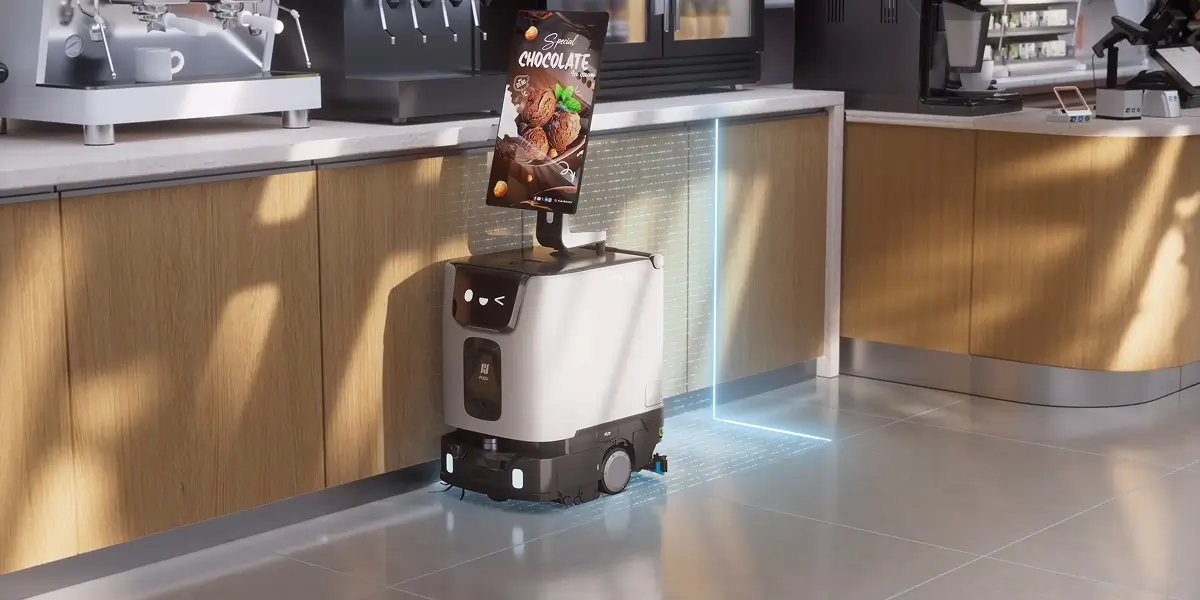
Buying update: 21 September 2026. Featured image: PUDU ET1. Manufacturer imagery, not a RoboMorrow test photograph. Image source.
Before the pilot: five operational approvals
A demonstration begins with site readiness, not switching on the robot. Identify who approves floor treatment, workstation installation, network access, working hours and acceptance criteria. A purchasing contact may not be authorised to make every one of these decisions.
| Area | Confirmation before starting | Owner |
|---|---|---|
| Floor and chemicals | Compatibility with the material and its care requirements | Cleaning/facility lead |
| Workstation | Location, service access, approved utilities and handling procedure | Facilities engineering |
| Network | Connections, accounts, remote access and offline behaviour | IT |
| People nearby | Trial boundaries and safe operating plan | Site safety owner |
| Acceptance | Quality, timing and permitted human assistance | Buyer and supplier |
What belongs in each shift record?
Date, configuration, software version, route, starting conditions, accepted area, complete process time and human time. Give each intervention a cause and timestamp every settings change. Otherwise a better second day may describe a different task rather than better performance under equivalent conditions.
Disruption tests need an agreed scope
Plan a response to a normal, safe limitation with the supplier: an unavailable zone, changed schedule or temporary loss of an approved network service. Never improvise a safety test by standing in front of the robot or disconnect utilities against the instructions. The aim is to understand procedures and operator duties, not create a hazardous failure.
A failed criterion is useful evidence
If an essential area remains dirty or handling time exceeds the agreed limit, record the failure. Specify a possible change and the cost of repeating the trial. Do not sign unconditional acceptance on the basis of a promised future feature. Keep unmet requirements visible in the decision record.
Before the supplier leaves, agree handover of accounts, documentation, maps and service contacts. Verify that the nominated operator can perform a normal start, instruction-compliant stop and fault report. A successful presentation operated entirely by the supplier's technician does not demonstrate that the site's team is ready to run the system independently.
Manufacturer sources checked on 21 September 2026; worksheets and purchasing conclusions are editorial analysis, not shared test results: et1, phantas.
Describe your deployment needs
Contacting RoboMorrow is not a sales offer or a guaranteed quotation. We do not claim authorised reseller status. Confirm price and local service with your supplier.
Agree one task card before starting
| Field | Agreement before the pilot |
|---|---|
| Scope | Zones, floor types, net area and exclusions |
| Working window | Hours and normal pedestrian activity |
| Quality acceptance | Who checks cleanliness and residual water, and how |
| Human assistance | What counts as intervention, who helps and how time is recorded |
| Configuration | Model, software, attachments, station and chemicals |
Manufacturers describe different modes and optional stations. For example, Gausium presents an optional workstation for Phantas. Record what actually arrives for the trial. Do not evaluate one demonstration configuration and buy another without checking the differences.
Stage 1: establish a baseline
Measure the current method in the same zones. Separate travel, floor work, corrections and equipment servicing. If the existing job also includes furniture or washrooms, do not count all of that time as potential savings from a floor-cleaning robot.
Stage 2: commissioning and learning
Allocate the first day, or another agreed period, to setup and training. Record integrator and employee time. This phase reveals deployment effort; label it separately from stable operation. Agree safe operating arrangements, site restrictions and conditions for stopping the trial.
Stage 3: repeat representative tasks
Repeat the agreed route under several representative conditions. Record display changes, blocked passages and unusual soiling. Remote help from a technician counts as intervention too, not only a member of staff physically moving the robot.
Give every mission an identifier, start and finish time, acceptance result, area and interruption log. Photograph the same locations without unnecessarily recording people or customer information. Compare app exports with the operator’s notes.
Decide: accept, revise or reject the fit
- Accept: the previously agreed criteria were met and the full costs are known.
- Repeat: a specific configuration needs correction and the same zone will be retested.
- Poor fit: the task cannot be completed in the required window with acceptable assistance.
Do not silently change the acceptance threshold after seeing the results. Fewer interventions with worse cleanliness is not automatically a success.
The handover record
Keep the accepted zone map, mission log, remaining manual tasks, configuration, training plan and service quote. Use measured labour time and agreed costs in the economic assessment. That makes the purchase discussion about a completed job rather than a demonstration video.
Continue with the next step
Sources and scope
Documentation checked on 11 September 2026. Worked examples and worksheets are RoboMorrow editorial work, not results from hands-on device tests we performed.