Best commercial cleaning robots for small businesses 2026
Short answer: a small business should not choose a cleaning robot from a single square-metres-per-hour number. An office may be dominated by carpet and chairs, a shop by people and changing displays, a restaurant by wet spills, and a larger facility by water management, charging and reporting. That is why this ranking does not name one universal winner. It matches different robot architectures to different operating processes.
The commercial cleaning market in 2026 is much broader than a few large autonomous scrubbers for shopping centres. PUDU, Gausium and KEENON now offer relatively compact machines that combine sweeping, vacuuming, dust mopping and scrubbing, while specialised dry-cleaning robots address carpet-heavy sites. This makes automation relevant to offices, hotels, stores, restaurants, showrooms and clinics—but only when the robot actually fits the floor mix, aisle width, traffic pattern and service model.
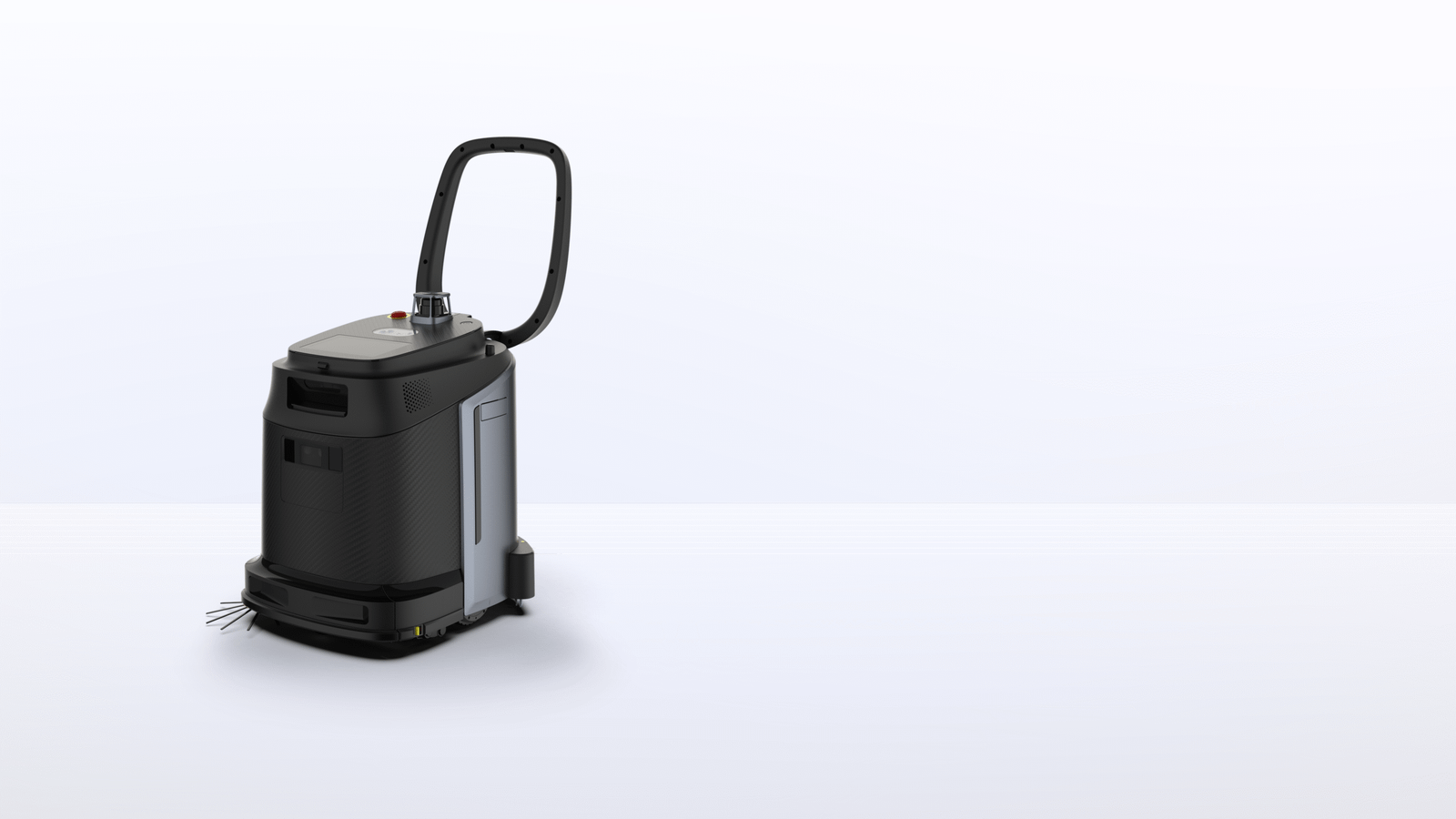
Buying update: 21 September 2026. Featured image: Gausium Phantas. Manufacturer imagery, not a RoboMorrow test photograph. Image source.
From ranking to shortlist: three buying gates
First eliminate machines that do not perform the required process. Carpet vacuuming, hard-floor scrubbing and loose-debris collection are different jobs. Then assess access and throughput. A “4-in-1” label does not establish that every accessory and workstation is included, or that every type of contamination is suitable.
| Gate | Evidence required | Reason to stop |
|---|---|---|
| Process | A demonstration on the relevant floor with normal dirt | Required work remains manual but is counted as automated in the proposal |
| Site | The complete route and docking return during the intended shift | A critical zone is inaccessible or installation remains unapproved |
| Economics | Comparable quotations and measured handling time | Payback removes labour hours that someone still has to work |
Which two machines should enter the pilot?
For a small furnished building, start by comparing access with ET1 and Phantas. For larger continuous areas, assess CC1's complete working cycle; tie any CC1 Pro premium to an actual need to detect incomplete cleaning. This is not a best-to-worst order. Route layout, accepted results and available support determine qualification. A machine that cannot reach an essential zone cannot compensate merely by having a larger tank.
Give every supplier the same cost worksheet
Separate purchase or lease payments, workstation, accessories, utility preparation, commissioning, training, subscriptions, consumables, servicing and replacement equipment. Compare quotations in EUR on the same tax basis; request a dated conversion if a supplier quotes another currency. For a lease, include the initial payment, term and buyout. A low monthly instalment is not the machine's purchase price.
Ask suppliers to list the human work that remains: floor preparation, edges, stairs, excluded contamination and machine cleaning. Separate released staff capacity from cash savings. Capacity can improve service without reducing payroll. A staffing cost disappears only when the organisation can actually avoid it.
Choose an outcome after the pilot
Record one of three outcomes: purchase within the accepted scope, repeat a defined test after a specified change, or reject the proposal. A further demonstration is useful only when the change and acceptance criterion are clear. A promise of a future software update does not close a failed acceptance condition.
Manufacturer sources checked on 21 September 2026; worksheets and purchasing conclusions are editorial analysis, not shared test results: puduCC1, phantas, cc1-pro.
Describe your deployment needs
Contacting RoboMorrow is not a sales offer or a guaranteed quotation. We do not claim authorised reseller status. Confirm price and local service with your supplier.
Best commercial cleaning robots for small businesses — quick comparison
| Model | Best fit | Modes | Manufacturer productivity | Main limitation |
|---|---|---|---|---|
| Gausium Phantas | small and midsize mixed-floor sites | vacuum, sweep, scrub, dust mop | 350–700 m²/h practical efficiency stated by Gausium | smaller tanks and narrower scrubbing module |
| PUDU CC1 Pro | larger offices, retail, hospitality and frequent missions | 4-in-1 plus AI spot scrubbing | 700–1000 m²/h full coverage; 1500–3000 m²/h targeted | 75 kg and a stronger business case at greater scale |
| KEENON KLEENBOT C40 | hotels, offices and supermarkets where operator time matters | 4-in-1 | up to 1100 m²/h stated by KEENON | local service and workstation configuration need confirmation |
| PUDU MT1 Vac | carpet, corridors and mainly dry debris | sweep, vacuum, dust mop | up to 1400 m²/h stated by PUDU | no wet scrubbing |
| PUDU CC1 | mature 4-in-1 reference point | sweep, scrub, vacuum, mop | 700–1000 m²/h | carpet requires a separate kit; stations are optional |
These figures come from manufacturer materials and are not directly comparable lab results. People, chairs, doors, lifts, charging and tank handling can change real productivity substantially.
1. Gausium Phantas — the most natural starting point for a small or midsize business
Phantas is the most compact, site-friendly candidate in this group. It measures 585 × 445 × 619 mm and Gausium specifies a minimum pass width and height of roughly 650 mm. In a real office or store, this can matter more than theoretical top speed: a robot that cannot pass a reception desk, table layout or narrow aisle will not deliver the route assumed in a sales presentation. At 65 kg it is still professional equipment, but its footprint is much closer to a smaller commercial environment than a large warehouse scrubber.
Gausium combines four cleaning modes: vacuuming, sweeping, scrubbing and dust mopping. The company publishes a practical cleaning efficiency of 350–700 m²/h in addition to theoretical maxima. That is a more useful starting point for a business case, although it still needs validation on site. The 11.5-litre clean-water tank, 10.5-litre waste-water tank and six-litre dust bag reveal the trade-off: compact size means more frequent service on intensive jobs.
Sensing includes 2D LiDAR, 3D depth cameras, an RGB camera, anti-drop and anti-collision systems. An optional workstation can automate charging and water handling. The key buying question is therefore not whether the product has “AI”, but whether it can complete a night or daytime mission without a human. For a regular 500–1500 m² site with moderate traffic, Phantas is a strong pilot candidate.
Best for: offices, showrooms, stores, smaller hotels, clinics, education and mixed floors. Less suitable for: a very large warehouse or factory where 330 mm scrubbing width and compact tanks will limit throughput.
View the Gausium Phantas database card →
2. PUDU CC1 Pro — when consistency, data and scale matter
CC1 Pro evolves the original PUDU CC1 concept. It still provides four cleaning functions, but adds an AI layer focused on verifying the result. PUDU says a rear camera can detect residual stains, trigger targeted re-cleaning and create performance heatmaps. That is potentially more valuable for facility management than another headline suction figure: a business needs to know not only whether a robot moved through an area, but whether recurring problem zones are visible and actionable.
PUDU states 700–1000 m²/h for full-coverage cleaning and 1500–3000 m²/h for targeted cleaning. The company positions its VSLAM-plus-LiDAR system and AI spot cleaning for sites in the 5000–8000 m² range. This is not a guarantee that one robot can service every facility of that size. Multi-floor layouts, lift access, traffic, charging windows and soil load can change the result more than the specification sheet.
CC1 Pro weighs 75 kg, carries 15 litres of clean and waste water, has a 500 mm cleaning width and requires around 70 cm path clearance. Runtime varies by mode: PUDU states five hours for scrubbing and sweep-plus-vacuum work, four hours on carpet and nine hours for silent mopping. An optional docking system can add charging, water refill/drain and cleaning-component self-cleaning.
Best for: larger offices, hotels, healthcare, retail and public sites that benefit from reporting. Watch out: on a very small floor the cost and integration may be harder to justify than a more compact machine.
View the PUDU CC1 Pro database card →
3. KEENON KLEENBOT C40 — an interesting balance of throughput and operator convenience
KLEENBOT C40 is notable for how much attention KEENON gives to routine servicing. The company claims a modular design, roughly 35 seconds of daily care and a five-second battery swap. Those are manufacturer figures rather than RoboMorrow measurements, but the direction is important: small-business automation often loses money not because navigation is poor, but because cleaning tanks, filters and brushes consumes more staff time than expected.
C40 uses a triple-brush system intended to separate dry and wet waste and supports sweeping, vacuuming, scrubbing and dust mopping. KEENON states up to 23,500 Pa maximum suction within the system, 400 mm vacuuming/scrubbing width, 560 mm sweeping width and up to 1100 m²/h cleaning efficiency. Tanks hold 16 litres of clean and 14 litres of waste water, with an eight-litre dust bag. The company quotes up to five hours of scrubbing and up to twelve hours of sweeping.
Digital management through app/web, battery swapping and claimed support for doors, lifts and fleet scheduling can be useful in a hotel or office building. Their value depends on actual integration: confirm compatibility with your infrastructure, cloud/security requirements and the local integrator’s responsibility.
Best for: hotels, supermarkets, offices and service sites where operator time and easy maintenance matter. Before buying: confirm workstation, consumables, batteries and local SLA.
View the KEENON KLEENBOT C40 database card →
4. PUDU MT1 Vac — best when dust and carpet are the problem, not wet floors
Not every business needs a 4-in-1 robot. If most of the job is dust, crumbs, hair, paper and carpet, carrying clean and dirty water can add cost and daily service without solving a real need. PUDU MT1 Vac is built around dry cleaning: sweeping, vacuuming and dust mopping, with floor recognition intended to adjust operation between carpet and hard surfaces.
It offers 55 cm vacuuming width and 70 cm sweeping width, 14 litres of dust-bag capacity plus a six-litre trash bin. PUDU states up to 1400 m²/h, 3–6.5 hours of runtime depending on mode and under 3.5 hours charging. Minimum pass width is 75 cm and minimum clearance height 52 cm, so it can enter some under-rack or low-furniture zones, though it is not comparable to a domestic low-profile robot.
MT1 Vac is particularly logical for hotel corridors, carpeted offices, showrooms, libraries and sites dominated by dry debris. It will not remove sticky spills or replace periodic scrubbing. In some businesses it should therefore be viewed as one layer of a fleet rather than the single machine for every task.
View the PUDU MT1 Vac database card →
5. PUDU CC1 — a mature 4-in-1 benchmark
The original CC1 remains useful because it shows what is already established in professional automation: sweep, mop, scrub and vacuum modes, 15-litre clean/waste tanks, stated 700–1000 m²/h productivity, around five hours in common operating modes and optional automated charging/water handling. RoboMorrow already has a dedicated database card, so we use it as a baseline against both the newer CC1 Pro and Gausium Phantas.
One important limitation is that PUDU says soft-carpet vacuuming requires a separate carpet assembly and workstation components are optional. This is why a headline “robot from X” price is rarely enough. The business-case cost should include the cleaning module, station, deployment, training, consumables, service and any lift or door integration.
View the existing PUDU CC1 card →
Office: start with carpet, cables and after-hours operation
An office often rewards the robot that can handle carpet, chair layouts and reliable unattended work rather than the machine with the highest headline productivity. MT1 Vac makes sense where carpet and dry debris dominate. Phantas or CC1 Pro are more versatile if the site also includes hard-floor corridors, a lobby or a kitchen. Before a pilot, set rules for chairs, cables and bins: automation will not fix an environment that changes randomly every night.
Retail: dynamic people matter more than laboratory speed
Retail involves customers, pallets, displays and changing routes. Test a robot under partial real-world traffic as well as after closing. Phantas has a footprint that suits narrower areas; C40 and CC1 Pro offer stronger service and automation infrastructure. Also evaluate wet-floor risk and how the robot signals its operation around customers.
Hotel: one robot rarely solves the entire cleaning process
Hotels combine carpet corridors, hard-floor lobbies, lifts, housekeeping carts and guest traffic. A sensible architecture may be “dry robot plus existing wet process” rather than the most complex all-in-one machine. If the robot must change floors, ask whether integration with your specific lift system is already supported or a custom project. PUDU and KEENON advertise lift/door integration in their ecosystems, but local compatibility must be verified.
Restaurant: wet spills and hygiene change the ranking
Restaurants and food courts combine spills, grease, crumbs and short turnaround windows. Dry vacuuming alone is not enough. Scrubbing, waste-water pickup, washable tanks and targeted cleaning matter. CC1 Pro is interesting because of AI spot scrubbing, but real stain performance should be tested on site. C40 emphasises dry/wet separation. Phantas can be easier to place in a compact venue if its tanks and width are sufficient.
What does a commercial cleaning robot cost?
Many professional robots do not have a public Polish list price. The quote depends on workstation, service, accessories, deployment and purchase/RaaS model. RoboMorrow therefore does not invent a price simply to complete a table. Compare total cost: purchase or subscription, dock, installation, mapping, batteries, consumables, service visits, staff time and downtime.
For the financial model, see our separate guide: how to calculate whether an office cleaning robot can pay back →. The correct comparison is the cost of the specific process a robot really replaces, not the entire cleaning-company invoice.
How to run a pilot that answers a business question
- Use a real zone with people, chairs, narrow passages and typical soil.
- Count interventions: unblocking, water service, emptying, route corrections and manual rescue.
- Measure quality: remaining debris, streaks and complaints, not only area per hour.
- Test service: response time to a fault or consumable problem is part of productivity.
- Count operator time: 20 minutes every day becomes more than 120 hours a year.
- Review data and security: accounts, cloud, cameras, roles and software-update policy.
RoboMorrow verdict
For a small or midsize mixed-floor site, we would start a pilot with Gausium Phantas when compactness and four modes matter. PUDU CC1 Pro makes more sense when scale justifies a workstation, reporting and cleaning-performance feedback. KEENON C40 is compelling where easy servicing and battery swapping can reduce operator time. PUDU MT1 Vac is the logical dry-cleaning option for carpet and dust. The standard CC1 remains a solid reference and may be sufficient if the Pro layer does not create measurable value.
We would not buy any of them without a pilot. In commercial cleaning, the winning robot is not the one with the strongest brochure but the one that completes scheduled missions with the fewest interventions—and has local service when something eventually fails.