Figure 03 at BMW: a humanoid takes on logistics beyond basic pick-and-place
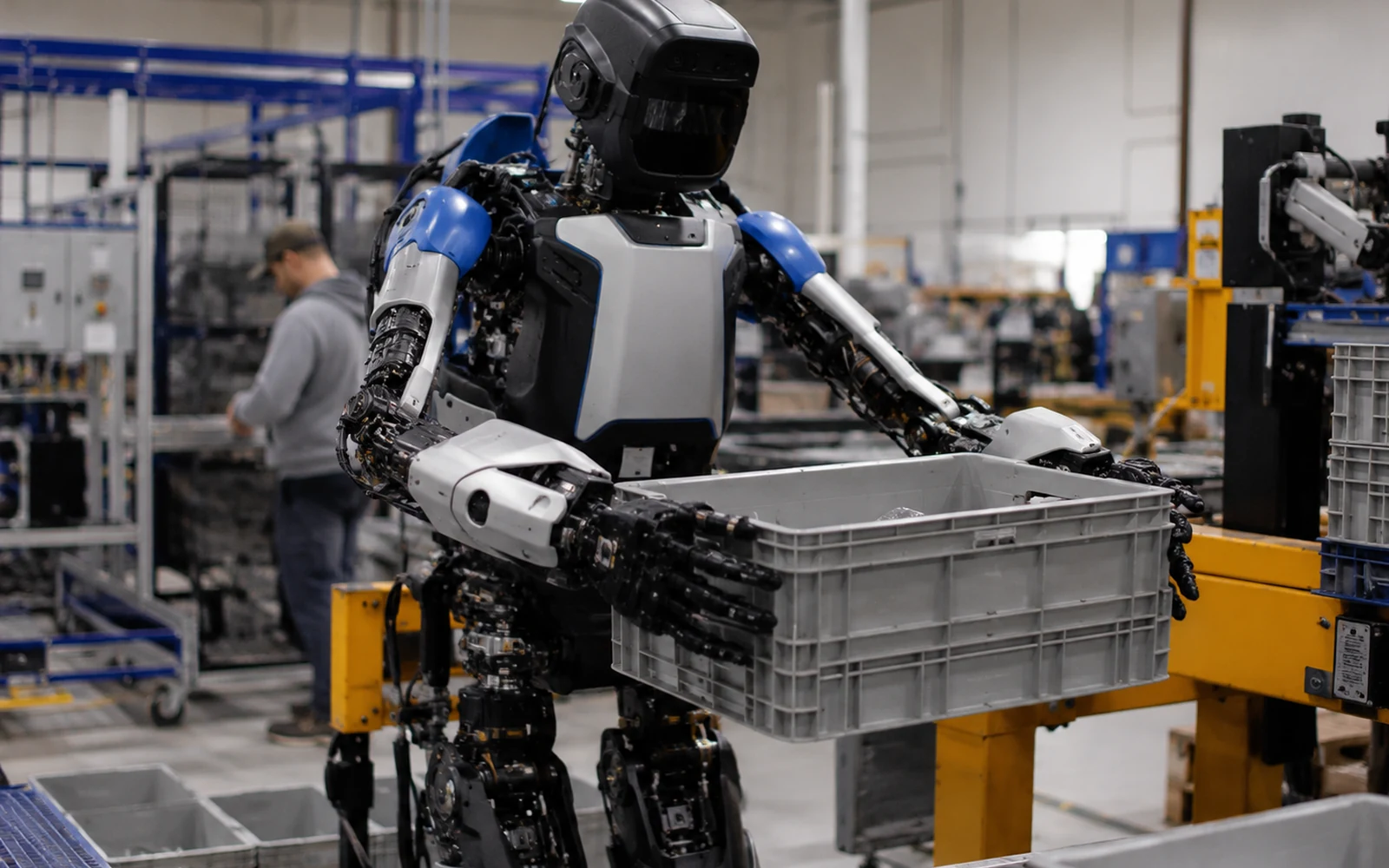
Figure 03 appeared at the BMW Group Plant Spartanburg to demonstrate a logistics process that is much more variable than the classic transfer of parts between two fixed points. The robot is to select components from containers, arrange them in the right order and move a heavy cart, combining manipulation with walking and changing the position of the entire body.
Highlights
- Figure 03 is in demonstration operation in Assembly and Logistics Hall 52 in Spartanburg,
- the task is sequencing, i.e. preparing parts in the order needed by the assembly line,
- The Helix 02 system is designed to coordinate the hands, arms, torso and legs of the robot,
- previous Figure 02, according to the company, participated in the production of 30,000. BMW cars in 2025,
- no data on cycle time, technical availability or number of operator interventions has been published yet.
Why sequencing is more difficult than pick-and-place
A classic industrial robot copes well with a task in which the part is always in the same place and the movement trajectory is precisely programmed. In the sequencing process, the situation is less orderly. The container may stop a few centimeters away, the component may be rotated, partially obscured, or moved by a previous operation.
The robot must recognize the situation, correct its grip and place the element in the appropriate slot. Figure states that F.03 simultaneously repositions its feet and torso to maintain reach and balance. Once the manipulation is complete, he is to use his entire body to pull a large metal cart on wheels.
This combination of precision and strength is one of the arguments for the humanoid. One machine can theoretically perform activities that in a traditional system would require several stations, conveyors and a separate mobile robot.
Helix 02 and full body control
Figure describes Helix 02 as a vision-language-action system that transforms images and instructions into robot actions. In the case of BMW, the system is supposed to coordinate not only the hands, but also locomotion, posture and balance. Therefore, the robot does not recreate one saved sequence of movements, but responds to small differences in the position of elements.
In practice, the most difficult problem is not the single successful lift of a part. What matters is repeatability over hours: recognizing exceptions, stopping safely, recovering from errors, and maintaining appropriate cycle times. Material Figure shows the direction of development, but does not provide complete data to assess production performance.
Figure also scales robot production
BMW isn't the only part of this story. In April 2026, Figure reported that the BotQ facility had produced over 350 third-generation robots and had increased the rate from one per day to one per hour. The company also provided over 50 inspection points during assembly and over 80 functional tests performed before the robot is allowed to work.
According to the manufacturer, the final first-time test pass rate exceeded 80 percent, the battery line reached 99.3 percent, and the plant produced over 9,000. actuators. This data is not an independent audit, but shows that Figure is trying to develop its hardware, AI, fleet management system and service facilities in parallel.
The larger fleet is expected to generate more data for Helix training. This can create a feedback loop: more robots means more hours of work, more failures detected and more examples needed to improve the models. At the same time, rapid scaling increases the importance of quality, spare parts and fleet-wide upgrade procedures.
Is a humanoid really better than classic automation
Figure claims that some dynamic tasks are structurally difficult to perform by a fixed six-axis robot. This may be true in processes where components are distributed, you have to move between stations and use infrastructure designed for people.
This does not mean that a humanoid is always the best solution. An industrial fixed arm is typically faster, cheaper, and easier to secure in a repeatable process. A mobile robot on wheels can carry loads more efficiently, and a simple manipulator can be more reliable. The humanoid has an advantage when the flexibility and ability to exploit the existing environment are worth the additional complexity.
What data is still missing
- average full cycle time and comparison with employee,
- number of operating hours without intervention,
- percentage of operations completed correctly,
- stop rates and error recovery procedures,
- impact on the safety of people working in the same zone,
- cost of robot, integration, service and parts,
- information whether the demo will go into permanent production deployment.
Importance to European industry
BMW is a natural training ground for humanoid robots because automotive plants have many processes with a large number of parts, containers and manual logistics operations. If the humanoids achieve adequate reliability, they may first go to large factories that have their own automation teams and the budget for long pilots.
This type of solution remains little available for small companies today. There is a lack of explicit pricing, integrators and a simple service model. A more realistic first step for SMEs may be mobile robots, cobots or specialized cleaning and warehousing systems.
RoboMorrow Evaluation
Status: advanced demonstration in real plant, no public long-term results. Figure shows a specific process and develops the production of its own fleet, which distinguishes the project from purely laboratory demonstrations. However, we still need operational data. Until we know cycle time, availability and cost, it is impossible to determine whether Figure 03 is economically superior to alternative automation methods.
Featured image is an editorial image and does not depict the Figure 03 or the BMW plant.
Sources
Figure: F.03 Arrives at BMW
Figure: Ramping Figure 03 Production
Figure: Deployment and Helix Information Archive