Figure Index has 16M videos: building an “internet of physical behavior” for humanoids
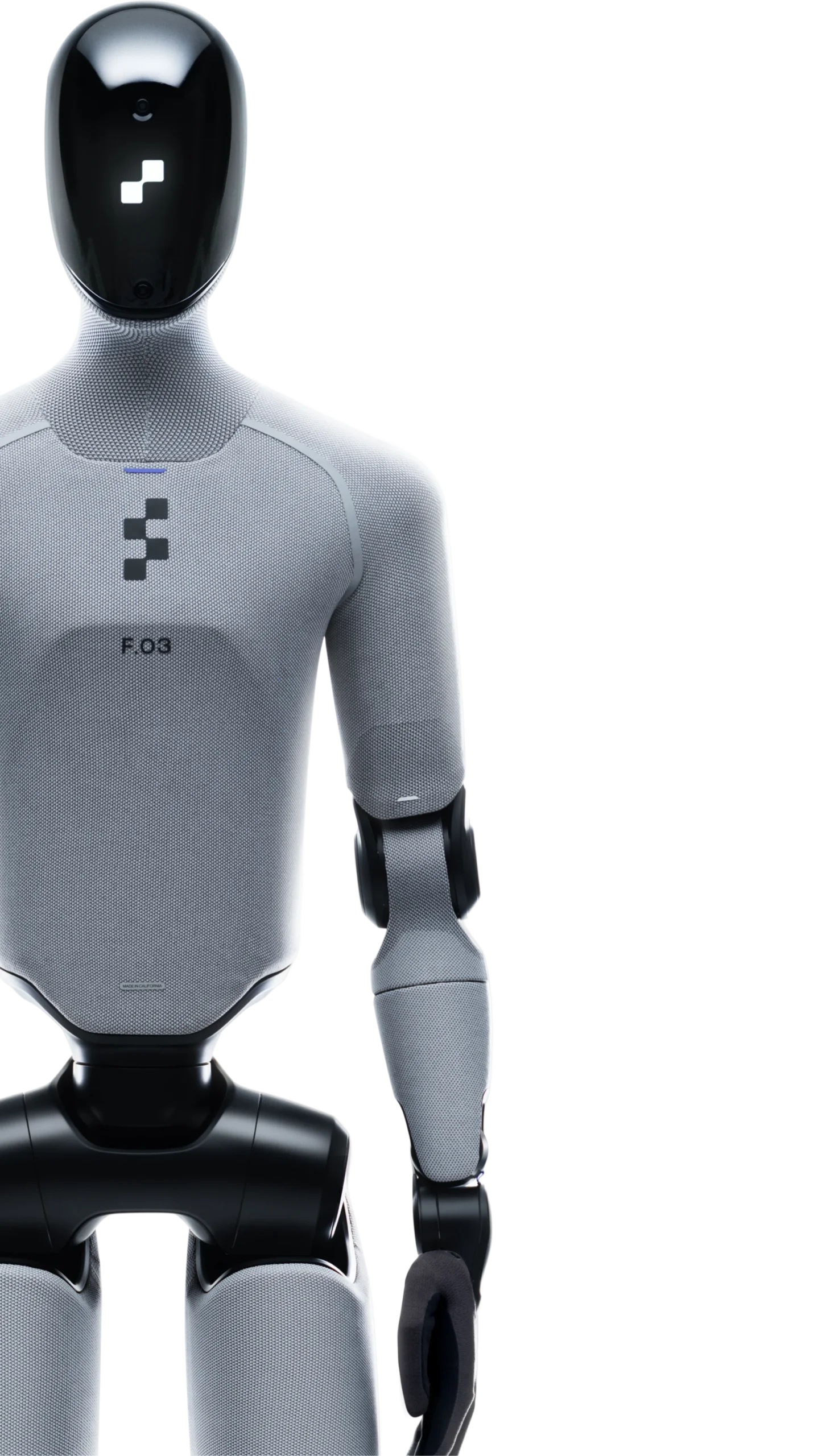
Figure did not unveil another humanoid. It unveiled something that may matter more: a machine for producing physical-world data. Index is designed to turn hundreds of thousands of people into a global network of training-data creators for Helix. If the strategy works, robotics advantage may increasingly come from the quality and scale of the data flywheel, not only from the mechanical platform.
Sixteen million videos instead of another flashy demo
Figure says Index operated for roughly four months in stealth. According to the company, the app has passed 264,000 downloads across 108 countries, has more than 44,000 weekly active users, and has received over 16 million videos. Figure says the pipeline is currently ingesting 30 minutes of video every second. Those are unusually large numbers for a robotics data operation, but they remain company-reported metrics rather than independently audited figures.
The content matters as much as the volume. Figure lists cooking, laundry, cleaning, restaurant work, logistics, factories, offices and retail stocking among the collected activities. Per 1,000 hours of accepted data, the company reports 373 unique tasks, 1,146 manipulated objects and 116 environments. That long tail of ordinary physical variation is exactly what laboratory datasets struggle to reproduce.
Why data is becoming the bottleneck for Physical AI
Large language models benefited from an internet-scale corpus of text and images. Robots do not have an equivalent repository showing how people physically act across millions of homes, warehouses and workplaces. Teleoperation produces valuable trajectories, but it is expensive and geographically difficult to scale. Index attempts a different model: instead of relying only on closed teleoperation farms, Figure pays ordinary people to document physical work.
The company says it has already paid Creators about $15 million and is committing more than $1 billion to data and compute over the next 12 months. That illustrates how the economics of general-purpose robotics are shifting away from hardware alone toward data engines, processing infrastructure and foundation-model training.
The pipeline matters as much as the raw count
Figure describes a five-stage pipeline covering quality filtering, fraud review, deduplication, rebalancing and hierarchical text annotation. A huge dataset is not automatically useful if millions of clips repeat the same easy actions in similar environments. For Helix, diversity of objects, geometry, grip strategies and failure modes may matter more than the headline clip count.
Figure says internal Helix results are already validating the thesis, but it has not yet published an independent benchmark quantifying how much Index improves generalization. That is the most important evidence gap. RoboMorrow will treat performance gains as a manufacturer claim until comparable external evaluation appears.
Europe: richer data meets stricter privacy requirements
From a European perspective, Index has two sides. A global contributor network could bring European homes, products, warehouses and work practices into the training distribution, potentially improving robot generalization outside U.S.-centric environments. At the same time, recording homes and workplaces can capture bystanders, confidential documents, screens and employee data.
For EU companies the question is therefore not only whether the data improves the model, but whether collection, consent, retention and downstream processing are compliant. GDPR, employment law and trade-secret protection could become meaningful constraints on a global physical-data factory. Figure publishes platform terms, but the scale of the system makes privacy an issue worth following closely.
What this changes in the humanoid race
Index strengthens the case that the humanoid race will not be won only by the company with the best actuator or hand. A compounding loop may become decisive: more robots and contributors produce more diverse examples; better data improves the model; better models unlock more deployments; deployments generate more data. That resembles the flywheel of internet platforms, now applied to the physical world.
For a buyer in 2026 this does not prove Figure 03 is more autonomous than every competitor on every task. It does mean that a manufacturer’s learning infrastructure deserves to be evaluated alongside hardware. Our 2026 humanoid buying guide therefore separates hardware availability from autonomy maturity and the supporting data engine.
Sources and methodology
Sources: Figure — Introducing Index, Aug. 25, 2026 and Figure 03 official product page. Index scale, user, video and payout figures are reported by Figure and have not been independently audited by RoboMorrow. RoboMorrow has not physically tested Helix or Figure 03.
RoboMorrow Reality Check: data is not autonomy yet
Index is a strong strategic signal, but it should not be confused with proof that Figure 03 can work unsupervised. A video of a person performing a task may help a model learn semantics, action order and object relationships, yet the path from observation to a reliable robot policy still includes embodiment transfer, safety constraints, real-time perception and recovery from mistakes. The meaningful test for Index will therefore be whether future Helix releases show measurable gains on unseen tasks and environments, not simply whether the video counter keeps rising.
It is also a reminder that data advantage can be harder to copy than hardware. Mechanical designs can be reverse-engineered, suppliers can be shared and actuator prices tend to fall. A well-designed dataset, quality-evaluation pipeline and deployment-to-learning loop can compound month after month. If Figure sustains Index at global scale, competitors may need equally strong data engines, partnerships or synthetic-data strategies rather than relying on better mechanics alone.
The careful conclusion today is that Index does not settle the humanoid race. It changes the question from “who has the most impressive robot?” to “who can continuously teach a fleet about the physical world?” That infrastructure may ultimately separate a compelling demonstration from a product that works every day.