The mystery warehouse is LPP’s. Over 1,500 climbing robots are heading to Poland
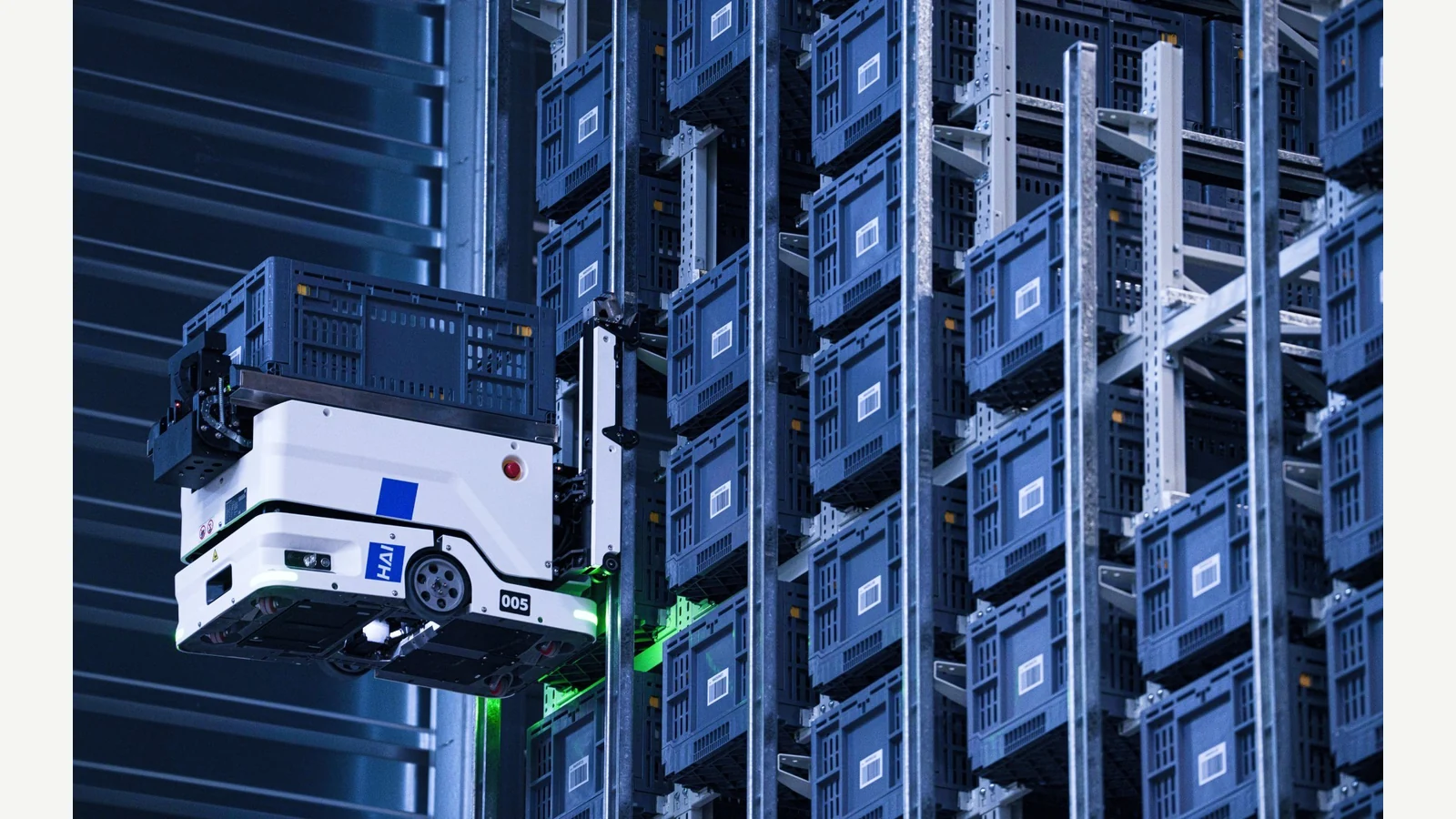
More than 1,500 robots are headed for the racks of LPP’s new warehouse in Tczew, Poland. On 13 October, the fashion group identified the customer and location behind the huge HaiPick Climb project previously announced without a retailer’s name. LPP Logistics has signed an automation agreement for its new e-commerce fulfillment center. The facility is scheduled to open around the end of Q1 and beginning of Q2 2027. Source: LPP.
The fleet is eye-catching. The more interesting challenge is keeping products moving: a robot travels between racks, climbs to a storage level and brings a tote to an operator. At this scale, matching thousands of movements to the needs of picking stations becomes central to the project. That coordinated flow is intended to support the group’s expanding online business.
Editorial update: 18 October 2026. New LPP announcement: 13 October 2026. This article updates our September report on the same project.
The September mystery warehouse now has a name and location
Hai’s earlier announcement described a leading European fashion retailer. LPP’s disclosure adds the customer, the Polish location and an opening window. The figures belong to one investment: Hai’s release of 8 September already specified more than 1,500 robots and 1.2 million storage locations.
LPP previously used Hai systems at facilities near Bydgoszcz and in Bolintin-Deal, Romania. Tczew therefore expands an existing relationship. The new step is the size and architecture of the next installation, designed to support multiple brands and higher order volumes.
| Project element | Announced scale |
|---|---|
| HaiPick Climb fleet | More than 1,500 robots |
| Automated zone | 30,000 m² |
| Storage locations | 1.2 million, double-deep configuration |
| Designed system throughput | More than 24,000 totes per hour |
| Planned facility opening | Around the Q1/Q2 2027 boundary |
Project figures: LPP and Hai Robotics. Throughput describes the system’s design target.
The robot climbs; an operator picks the order
HaiPick Climb combines retrieval from storage with transport to a workstation. One robot performs both vertical and horizontal movement. In a goods-to-person process, products arrive at the operator, reducing walking through the warehouse. Double-deep storage allocates more of the available volume to inventory. The official HaiPick Climb product page explains the configuration.
This matters when comparing systems. Moving a pallet, towing a cart and retrieving a tote from a tall rack are different jobs. Our AMR and AGV guide helps establish those distinctions before comparing individual robot models or headline fleet sizes.
With 1,500 machines, the queue becomes part of the engineering
Hai describes Tczew’s approach in a technical article published on 13 October. Combining retrieval and transport in one robot reduces handovers between separate fleets. Software allocates work, sequences tote arrivals and responds to congestion. The planned operation also accommodates different inbound streams, including returns.
A useful route is one that helps finish an order. The shortest trip for one machine achieves little if the next tote waits in a queue or a picking station lacks a required product. Evaluating the project will therefore mean looking at robots, warehouse software and operators together. A smooth demonstration of one climb explains the mechanism; a full shift shows the demands on the complete system.
What could change for LPP’s online customers?
LPP connects the investment with e-commerce growth and the Sinsay marketplace. A broader assortment brings more order combinations, different stock turnover patterns and the need to return goods to sale efficiently. Automation can help preserve the flow through the building as both parcel volume and product variety increase.
The useful outcome for a shopper would be familiar: an order dispatched when promised, including during peak periods. Another example of robots handling a specific part of that journey is Zalando returns sorting in Świebodzin. That case starts with the returned item. Tczew’s project addresses a much larger storage and tote-delivery layer.
24,000 totes per hour needs the right unit of comparison
The figure describes designed throughput across the system. It is neither a parcel count nor the output of one robot. An order may require products from several totes, while packing and dispatch have their own constraints. A meaningful comparison with another warehouse must measure the same process stage and a similar order mix.
The record claim needs equally precise wording. Hai describes the project as the largest deployment of rack-climbing warehouse robots. Comparing its robot count with Amazon’s robotics in Dobromierz would not establish which facility performs a particular task more effectively.
The next test arrives with the opening
After opening, useful evidence will include order timeliness, system availability and the time required to resolve exceptions. The ramp-up will be particularly revealing: can additional robots and workstations absorb more demand without increasing waiting time elsewhere?
Neither the contract price nor the full robot commissioning schedule has been disclosed. The present update still adds substantial information. A major project now has a named customer, a Polish location and a planned facility opening window. Those details materially advance the September story.
Image: LPP / Hai Robotics — official HaiPick Climb technology photograph. The image illustrates the robots; the new Tczew warehouse is scheduled to open in 2027.