Humanoid Robot TCO 2026: What Deployment Really Costs
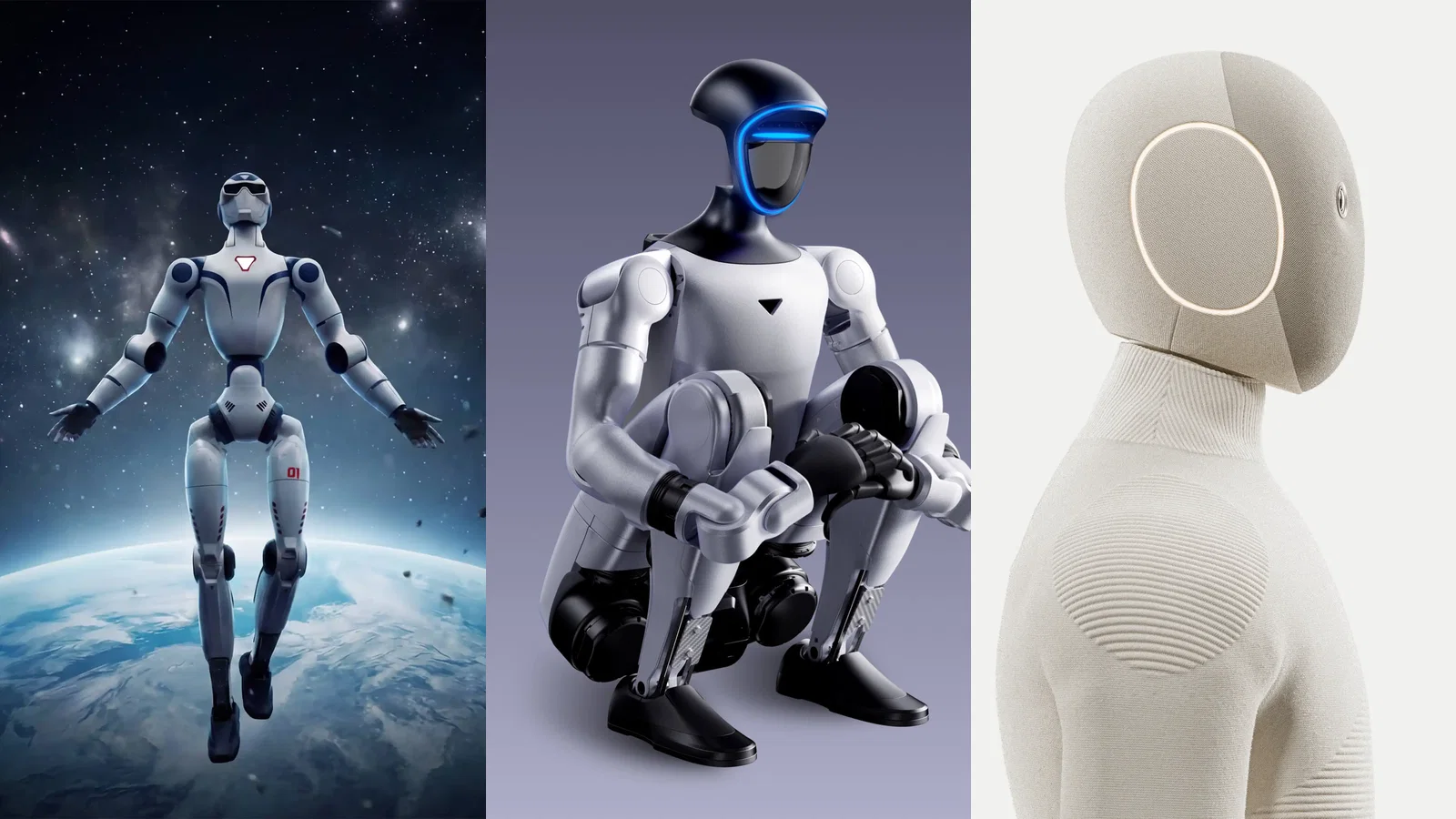
A humanoid can cost tens of thousands of dollars as a research platform or hundreds of thousands as an enterprise system. Neither figure alone tells you the cost of useful work. Humanoid TCO should include hardware, integration, infrastructure, software, service, spares, teleoperation and downtime. Only then should the total be divided by successful cycles or productive hours.
The shortest TCO formula
Five-year TCO = hardware + integration + infrastructure + software/licences + service + spares + remote operators + energy + downtime − residual value. Then: cost per successful cycle = TCO / correctly completed cycles.
1. Hardware is only the starting line
The base price may exclude hands, extra compute, batteries, charging, developer interfaces, a safety package or task-specific tooling. Ask for the minimum complete configuration for your workflow rather than a generic robot price.
2. Integration
Factories and warehouses may need WMS, MES, PLC and task-orchestration links plus safety zones and maintenance procedures. Mapping, fixtures, testing, training and engineering time belong in the investment. A pilot in an empty demo area is not equivalent to a live process.
3. Interventions and teleoperation
A robot that autonomously completes 95% of a workflow can still create substantial labour if the remaining 5% requires long takeovers. Measure interventions per 1,000 cycles, average intervention time and teleoperation share during a normal working day.
| Metric | Definition | Why it changes TCO |
|---|---|---|
| Task success | correctly completed cycles / all attempts | shows how much hardware time creates useful output |
| Interventions / 1,000 | every takeover, reset or physical recovery | reveals hidden operator labour |
| MTBF | mean time between failures | drives availability and fleet redundancy |
| MTTR | mean time to repair/recover | captures service organisation and downtime |
| Fleet availability | ready time / planned operating time | combines reliability, charging and service |
4. Software and licences
Check fleet management, APIs, AI models, updates, data storage, teleoperation and per-robot/per-site fees. A small annual licence on one robot can become a major OPEX layer across a fleet.
5. Service and spares
Hands, actuators, sensors, compute and batteries are modules with different lifetimes. Ask what can be replaced on site, how recalibration works, where spares are stocked and whether the vendor commits to multi-year parts availability.
6. Energy and charging infrastructure
Energy is unlikely to dominate TCO, but charging affects uptime. More important questions are whether batteries swap, whether charging is autonomous, cycle duration and whether the process needs extra infrastructure or a human operator.
7. Downtime
Downtime cost depends on the process. A stopped production workstation can cost more than the repair itself. A warehouse may have more task flexibility. Build base, cautious and stress cases rather than one optimistic number.
8. The illustrative Digit model
RoboMorrow’s main humanoid guide covers Agility Robotics’ disclosed illustrative Digit economics: roughly US$200k hardware, about US$20k one-time deployment and around US$36k per year for software/maintenance, reaching roughly US$400k over five years under the stated assumptions. This is not a public list price; it is an illustrative economic model that usefully shows how large the non-hardware layers can become.
9. R1/G1/G1+ are a different purchase
A lower-cost research platform can have attractive CAPEX but needs your own team, safety work, integration and development. Do not compare a US$15k developer platform with a US$200k enterprise deployment as if they were the same product. Compare the cost of reaching the same operational outcome.
10. Five pilot acceptance conditions
- defined task and objects
- target task-success rate
- maximum interventions per 1,000 cycles
- cycle-time and availability target
- pre-agreed scale/stop decision after the pilot
11. Europe and Poland
Add import, VAT/duties, lithium-battery transport, local service, spares and integrator responsibility. A nearby service team can be worth more than a 10% hardware discount if the robot is used on a critical shift.
12. What to compare instead of body price
The useful metric is the cost of correctly completed work: cost per cycle, tote, machine tended or productive hour. Compare that result with human labour, a cobot, an AMR or specialised automation.
Related RoboMorrow resources
See Humanoid robots 2026: prices and availability and the Digit, Unitree and other profiles in the Robot Database. RoboMorrow separates hardware price from real deployment cost.
Verdict
Do not procure a humanoid from the body price. Define a measurable workflow, required uptime, intervention ceiling and ownership horizon. TCO can then tell you whether a humanoid is the right architecture or whether simpler automation is economically stronger.
13. Use three financial scenarios, not one forecast
The business case should include at least three cases. Base uses pilot evidence. Cautious assumes more interventions, slower ramp-up and some service burden on the customer. Stress includes material downtime, replacement of a critical module and slower scaling. If the project works only in the most optimistic case, that risk should be explicit before contract signature.
14. Depreciation and residual value
Humanoid platforms are evolving faster than many conventional industrial assets. A five-year useful-life assumption does not mean the robot is worth zero after five years, but neither should buyers assume a strong resale value. New hardware generations and reduced software support can erode economic value faster than mechanical wear.
Model the project both with and without residual value so the investment decision does not depend on an assumption that cannot yet be validated.
15. Contract clauses where TCO hides
- Are software updates included and for how many years?
- Can fleet-manager fees change after the pilot?
- Who pays for remote operators and during which support hours?
- Which components are warranty items versus consumables?
- Does the SLA measure response time or actual return to production?
- Can an approved firmware version be frozen and rolled back?
- What happens to data and configuration when the contract ends?
16. Cost-per-cycle example
As a purely illustrative calculation, US$400k five-year TCO divided by 1.5 million correctly completed cycles is about US$0.27 per successful cycle before surrounding process costs. If lower task success produces only 900,000 successful cycles, the figure rises to roughly US$0.44. Reliability and intervention rates therefore have direct economic value.
Do not treat this example as a Digit or any other robot price. It only demonstrates the mechanism: identical CAPEX/OPEX produces a very different outcome when the number of correctly completed tasks changes.
17. When a humanoid can lose to simpler automation
If the task is highly repetitive, the environment can be redesigned and you do not need mobility plus manipulation in one body, a cobot, fixed arm, conveyor or AMR may deliver lower TCO. Humanoids are strongest where value comes from using human-designed infrastructure and adapting to changing workflows.