Roomba Duo at IFA 2026: two robots instead of one
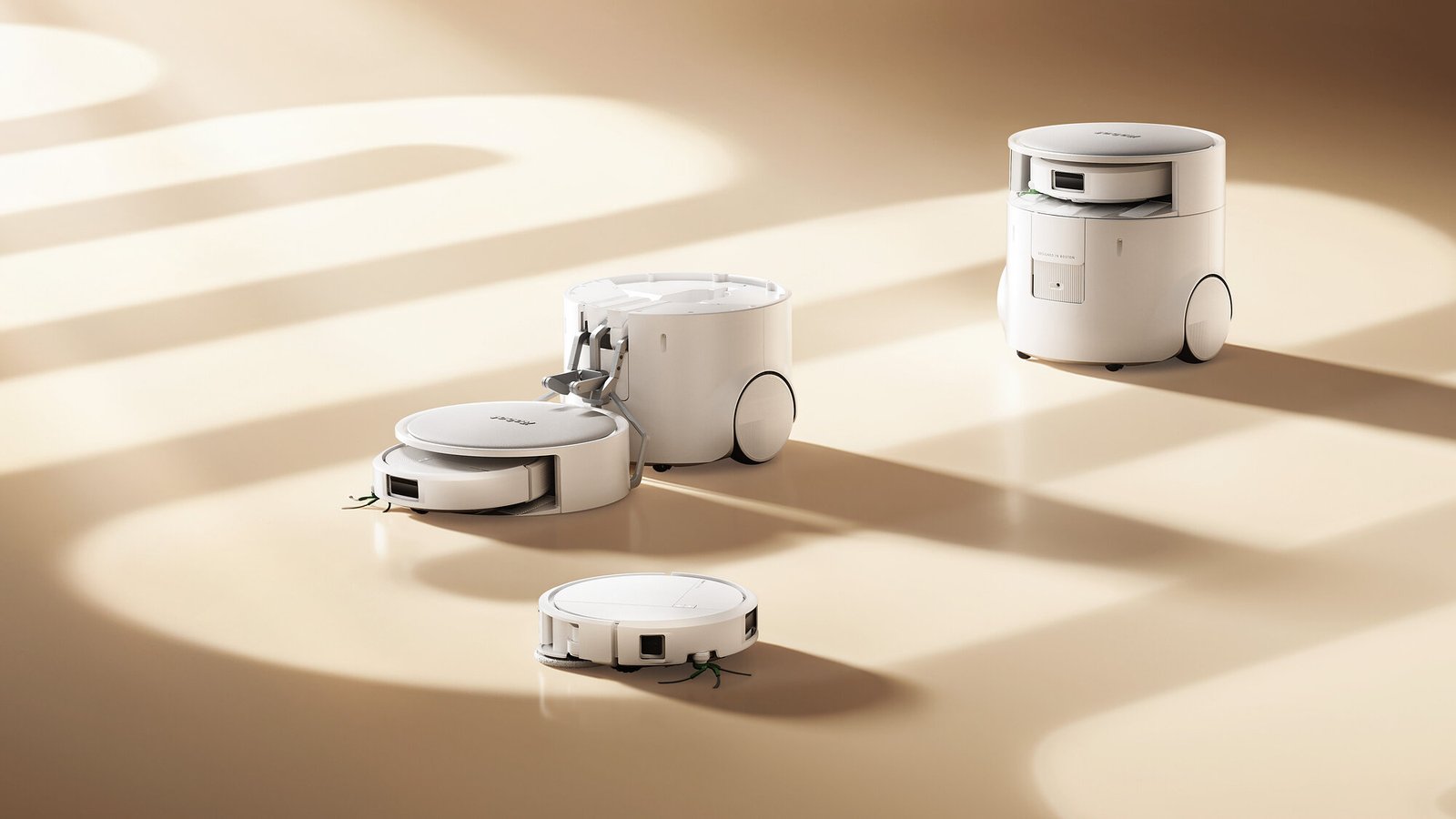
A robot that brings another robot to work: Roomba Duo is iRobot's most intriguing idea at IFA 2026. A larger machine takes on floor washing while a smaller companion reaches spaces that the main body cannot. The essential caveat is simple: this is a prototype, not a product you can order.
Checked: 4 September 2026. Analysis of a manufacturer announcement, not a RoboMorrow hands-on review. Lead image: official iRobot visualization showing configurations of the Duo system.
What has iRobot actually announced?
According to iRobot's announcement, Roomba Duo pairs a vacuuming, steam-mopping main unit with a compact companion. A mechanical arm lowers the smaller robot to the floor, and the two share a map. The company has not announced a price or sales date for the complete system.
That distinction matters. This is not an announcement of an arm that picks up every toy on the floor. Its role here is to handle the second unit. Nor does an image of the mechanism demonstrate stair-climbing ability. We are not adding either claim to the specification.
Why could two robots make sense?
The interesting idea is specialization. From a design perspective, a larger body can give engineers freedoms that a flat machine built to fit beneath a sofa does not have. Yet every increase in height restricts access under furniture. A cooperating pair is an attempt to accommodate competing requirements rather than choose one compromise for the entire home.
That does not automatically mean better cleaning. In our view, the system should be judged on the complete result: dirt removed, floor area missed and the number of times somebody has to intervene. An impressive deployment sequence does not answer those questions on its own.
For an apartment owner, space and time matter as much as the engineering. An additional mechanism needs to save more effort than it creates. In a small living room, better access beneath a sofa could still come with an awkward parking problem for the main unit. That is something to measure in a future review, not a fault we have established.
Five tests that matter more than a stage demonstration
Before making a buying recommendation, we would want to see an uninterrupted cleaning mission in an ordinary home. These are the checks we would prioritize:
- A moved chair: does the system finish after its surroundings change, without somebody resetting the scene?
- A failed rendezvous: can the machines resume coordinated operation without assistance?
- Cleaning after a meal: how much manual work remains when the wet-cleaning cycle ends?
- A narrow passage: does the larger unit obstruct normal movement through the room?
- A week of ownership: what is the combined burden of emptying, washing, charging and intervention?
We would also examine operation around children and pets, stopping the arm and manually recovering the smaller robot. This is not a claim that safeguards are missing. It is a request to understand them before moving machinery becomes part of somebody's daily routine.
Should you delay a purchase?
We would not postpone a necessary purchase solely because of Roomba Duo. Without pricing, a release schedule and independent evaluation, the cost of waiting cannot be assessed. If your current cleaner works, following the project is reasonable. If you need help now, compare available products against your home's actual constraints.
Start with clearance beneath furniture and room for a dock. Do not treat a future promise as a solution to a present problem. When a commercial offer appears, the comparison should include the complete system price, replacement parts, service arrangements and the time genuinely saved each week.
RoboMorrow's take
Roomba Duo earns attention as a design concept, not a best-robot-vacuum award. The question is whether dividing the workload reduces compromises or introduces more things to maintain. Only use beyond a controlled demonstration can settle that.
Follow the wider event in our IFA 2026 Live Desk. For another direction in domestic robotics, see MOVA's garden arm and touch-sensing technology.