Best low-profile robot vacuums for low furniture (2026)
BEFORE YOU BUY
Check three places before buying a robot vacuum.
Low furniture, thresholds and the dock. Check the dimensions of 12 models against your home.
Check my home- Under furniture
- Across thresholds
- Room for the dock
BUYING IN YOUR MARKET
Availability in your country
Sales, delivery and support can differ by country and exact model. Choose your market to see the evidence we have checked.
Roborock Saros 10R
United States
Local store offer — check checkout availability
- Seller / sales channel
- Roborock US
- Price
- See the local offer for the current price and exact bundle
- Delivery
- Confirm stock and the delivery date for your address with the seller
- Warranty and service
- Confirm written warranty terms, parts and service coverage for your address
Roborock US lists this exact model for this market. A listing is evidence of a buying route, not a delivery commitment.
Evidence checked: · Not a live stock feed
Roborock US: check local offer ↗No verified local offer in this dataset
No country-specific offer for this exact model has been established in our current sources. This is a gap in our research, not a statement that the robot cannot be bought here. Use the manufacturer’s sales contact to request a supplier serving your address; confirm configuration, imports, warranty and service.
- Price
- No verified local price in this dataset
- Delivery
- No confirmed date for your address
- Warranty and service
- Local coverage not verified
Dreame X60 Ultra Complete
No verified local offer in this dataset
A current local sales offer, exact regional variant, delivery date and service coverage have not been verified for this country in the regional dataset. This does not mean that the robot is unavailable.
- Price
- No verified local price in this dataset
- Delivery
- No confirmed date for your address
- Warranty and service
- Local coverage not verified
Dreame X50 Ultra Complete
Germany
Local store offer — check checkout availability
- Seller / sales channel
- Dreame Germany
- Price
- See the local offer for the current price and exact bundle
- Delivery
- Confirm stock and the delivery date for your address with the seller
- Warranty and service
- Confirm written warranty terms, parts and service coverage for your address
Dreame Germany lists this exact model for this market. A listing is evidence of a buying route, not a delivery commitment.
Evidence checked: · Not a live stock feed
Dreame Germany: check local offer ↗No verified local offer in this dataset
No country-specific offer for this exact model has been established in our current sources. This is a gap in our research, not a statement that the robot cannot be bought here. Use the manufacturer’s sales contact to request a supplier serving your address; confirm configuration, imports, warranty and service.
- Price
- No verified local price in this dataset
- Delivery
- No confirmed date for your address
- Warranty and service
- Local coverage not verified
Roborock Saros 20
United States
Official US listing and purchasing routes
- Price
- Check the current US store or named retailer; no verified current checkout price in this dataset.
- Delivery
- Stock and delivery for your address require retailer confirmation.
- Warranty and service
- Confirm warranty eligibility, local repair arrangements and coverage for your address
The official page distinguishes Saros 20 from Saros 20X and names purchasing platforms. Do not substitute variants automatically.
Evidence checked: · Not a live stock feed
Roborock US — Saros 20 ↗Poland
Official Polish product listing
- Price
- Check the current Polish checkout price and tax basis.
- Delivery
- Stock and delivery to your address require checkout confirmation.
- Warranty and service
- Confirm warranty eligibility, local repair arrangements and coverage for your address
A Polish listing confirms a Polish channel; it does not establish availability in other EU countries.
Evidence checked: · Not a live stock feed
Roborock Poland — Saros 20 ↗No verified local offer in this dataset
No country-specific offer for this exact model has been established in our current sources. This is a gap in our research, not a statement that the robot cannot be bought here. Use the manufacturer’s sales contact to request a supplier serving your address; confirm configuration, imports, warranty and service.
- Price
- No verified local price in this dataset
- Delivery
- No confirmed date for your address
- Warranty and service
- Local coverage not verified
“Listed” confirms a product page or sales route, not stock, delivery to every address or local service. “Pre-order” is not immediate availability. Unverified means we lack evidence; it does not mean unavailable. Prices belong to the named market and currency. Confirm the exact version, tax, shipping and support before ordering.
Choose a robot for a low sofa by measuring first. The lowest model is not the best choice if its dock does not fit or it cannot cross your thresholds. The shortlist below matches constraints; it is not an order of results from a shared cleaning test.
Redakcja RoboMorrow · advice updated: 8 October 2026. Source dates remain stated alongside the data.
When a lower body justifies changing models
Mark the furniture under which dirt regularly remains and check whether the restriction covers the whole area or just one beam. Compare height in the mode actually used beneath furniture; the sensor may change position. When both models fit, a lower body alone does not justify an upgrade. Add thresholds, rugs and touch-ups to your sheet so that solving one spot does not compromise the rest of the home.
Choose your next step
| Your next question | Continue to |
|---|---|
| Measure clearance and dock space | Robot vacuum and dock dimensions: how to measure the space |
| Compare an alternative for your task | Saros 20 vs Dreame X60 Ultra: Clearance, Thresholds & Choice |
| Compare an alternative for your task | Dreame X60 vs X50 Ultra Complete: Is the Upgrade Worth It? |
Documents checked on 4 September 2026. This is an editorial, use-case shortlist, not a shared laboratory test. It covers four named models rather than every low-profile robot on the market, and it does not rank overall cleaning performance.
The shortlist: useful access matters more than a tiny measurement advantage
| Model and role | Body height | Important qualification |
|---|---|---|
| 1. Saros 10R — value benchmark | 79.8 mm, without a top-mounted LiDAR turret | Measure the full route under the furniture, not just its front edge |
| 2. Saros 20 — for additional obstacle requirements | 79.8 mm | The manufacturer describes 79.5 mm access through suspension compression, with possible scraping |
| 3. X60 Ultra Complete — a slim Dreame option | 79.5 mm with the sensor retracted | A regional product page specifies at least 81 mm entry height with VersaLift navigation enabled |
| 4. X50 Ultra Complete — for more generous gaps | 89 mm with the sensor retracted | Needs more space than the other three; avoid a friction fit |
Check current price and availability for the exact variant, country and bundle; an older promotion is not a current offer.
1. Roborock Saros 10R: the first offer to benchmark
The Saros 10R is a sensible starting point if the main objective is regular cleaning beneath a bed or sofa. It has no roof-mounted navigation turret to retract, and its nominal body height matches the Saros 20. Buying the newer name therefore does not automatically gain additional space underneath the same piece of furniture.
Its first position is a value judgement, conditional on a meaningful local discount against the Saros 20. We are not claiming that the 10R wins every cleaning or navigation comparison. If the two cost almost the same in your country, compare the rest of their features and the supplied accessories instead of following the position number mechanically.
A 79.8 mm body should not be read as a promise of safe entry through a 79.8 mm opening. Real rooms introduce uneven flooring, measurement uncertainty and surfaces that can flex. If the space is marginal, ask for the exact model's clearance guidance before buying. A good price cannot compensate for inaccessible floor space.
Read the Saros 10R profile and check the manufacturer's specifications.
2. Roborock Saros 20: consider the rest of the home
The Saros 20 is worth considering when low furniture is only one challenge and difficult transitions between rooms are another. Its obstacle-handling proposition should then be evaluated against your actual thresholds. That is a separate reason to buy it, not evidence that it has a lower normal body than the Saros 10R.
The crucial footnote concerns its nominal 79.8 mm height. Roborock describes passage through 79.5 mm using suspension compression, while warning about possible scraping. We therefore do not present 7.95 cm as a comfortable everyday operating clearance. Three tenths of a millimetre is not a sound basis for promising an expensive robot will fit.
Check that a listing means Saros 20, not Saros 20 Sonic, Flow or another family variant. Similar branding does not make their hardware interchangeable. If your shortlist crosses brands, our Saros 20 versus X60 Ultra Complete comparison provides a broader context than this narrowly focused furniture guide.
3. Dreame X60 Ultra Complete: read the VersaLift conditions
The X60 reduces its profile by retracting its navigation sensor. This makes it relevant to a Dreame buyer whose existing robot cannot reach under important furniture. However, the advertised 7.95 cm body does not mean an opening of exactly that height is an appropriate target.
A regional X60 Ultra Complete page specifies a minimum entry height of 8.1 cm with VersaLift navigation enabled, alongside conditions concerning the underside of the furniture. That is why the small print matters. If you measure an 8 cm gap, we would not promise entry simply by subtracting two rounded marketing numbers.
Check the European model and its supplied documentation, rather than substituting an X60 Max, Pro or another regional product. Complete also identifies a bundle: accessories and availability may vary with the seller and colour. See the X60 robot profile and our X60 versus X50 comparison before paying for features unrelated to the space you need to clean.
4. Dreame X50 Ultra Complete: useful when the gap is larger
At 89 mm with its sensor lowered, the X50 is not a substitute for the other three in particularly tight spaces. That does not make it a poor robot; it makes it suitable for a different furniture layout. With generous clearance, paying solely for the lowest possible body becomes less compelling.
The X50 belongs on a value shortlist when a genuine local discount is substantial and the robot already fits. A small saving should not persuade you to give up cleaning beneath a frequently used bed or sofa. Conversely, if all your furniture provides plenty of clearance, a good X50 offer could be more useful than an unused slimness advantage.
Compare Complete with Complete, including the actual consumables supplied. A cheaper listing for a different bundle is not a like-for-like discount. Read the X50 Ultra Complete profile for the model overview.
EU buying note: compare final local prices in euros, including delivery and the exact bundle; UK buyers should check their local offer. We do not convert a Polish shop price into a fictitious EU-wide deal. Local availability must be checked before purchase.
A five-minute furniture measurement checklist
- Find the lowest point. Measure the front, middle and rear underside. A central bed support can sit lower than the visible frame.
- Measure from the actual surface. A rug or raised strip on the approach reduces clearance. A measurement from bare flooring may not describe the route the robot takes.
- Check anything that moves or sags. Loose upholstery, hanging fabric and cables can obstruct a robot even when the rigid frame is high enough.
- Measure between the legs. The whole body needs a route in and out. Low height tells you nothing about available turning space.
- Record millimetres and allow a margin. Do not round the opening upwards. Where there is no clear reserve, confirm the manufacturer's guidance rather than assuming a fit.
A simple footprint template can help assess the spacing between legs, but it cannot simulate sensors, suspension or software decisions. Treat it as a preliminary check, not proof of entry. Supervise the first real run and stop the robot if it rubs the furniture or tries to wedge itself underneath.
A brush reaching under a cabinet is not whole-body access
Separate three different promises: a low body, good edge coverage and an extending cleaning component. They can solve different kitchen problems. If only the brush fits below the cabinet edge, the robot does not automatically clean the entire deep space behind it. Likewise, raising the chassis to cross a threshold does not help the robot fit under an even lower sofa.
When would we choose none of these?
If the actual clearance is below 8 cm or changes unpredictably underneath the furniture, we would not guarantee access for any of this shortlist. Keeping that zone for manual cleaning can be the more dependable choice. If you consider raising furniture, use a stable solution approved for that furniture rather than improvised supports.
Do not cover sensors or disable safety features to force the robot underneath something. A machine that only fits after such intervention is the wrong match. When height is not a constraint, return to our general use-case robot ranking. For difficult room transitions, use the separate high-threshold guide.
Frequently asked questions
Will a 7.95 cm robot fit under 8 cm furniture?
Not necessarily. Check the manufacturer's required entry clearance, unevenness and obstructions underneath. The X60 has a regional footnote specifying 8.1 cm under the stated conditions, illustrating why body height is not sufficient.
Is the Saros 20 lower than the Saros 10R?
Both have a nominal 79.8 mm body. The Saros 20's 79.5 mm passage claim involves particular suspension behaviour and includes a warning about potential scraping.
Is a retractable LiDAR always better?
No. Retracting a sensor is one way to reduce height, not a common benchmark of navigation performance. Choose using the exact model's requirements and the obstacles in your home.
Sources and method
Specifications are manufacturer claims. Buying judgements are editorial inferences; external test findings are attributed to their authors. Last checked: 4 September 2026.
- Roborock — Saros 10R specifications
- Roborock — Saros 20 specifications and footnotes
- Dreame Poland — X60 Ultra Complete
- Dreame UAE — X60 Ultra Complete, 8.1 cm clearance footnote
- Dreame Poland — X50 Ultra Complete
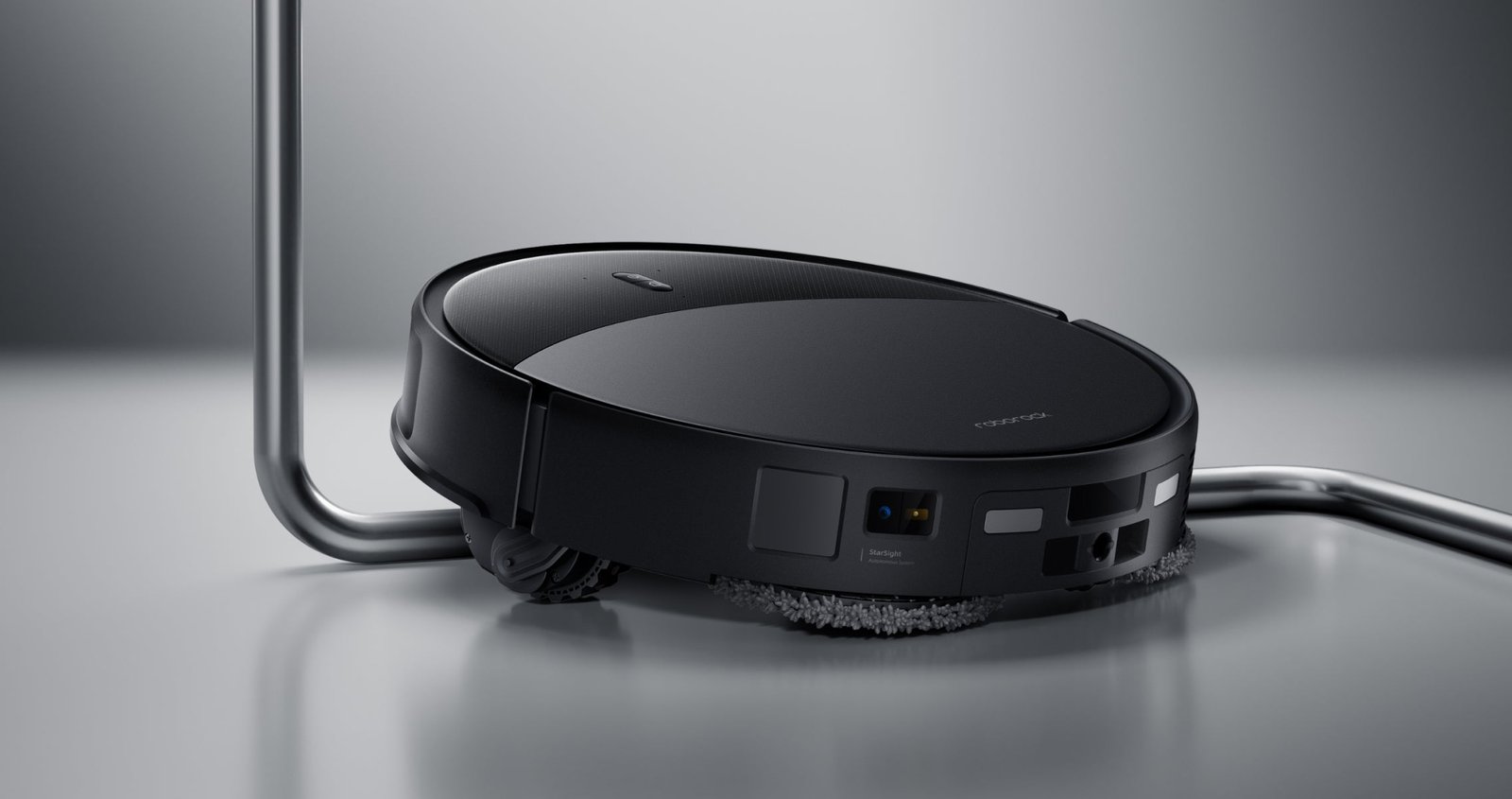
Author: Redakcja RoboMorrow. Advice and use-case selection are editorial analysis. Manufacturer claims are not RoboMorrow test results. The image illustrates a model or comparison; it does not document an editorial test.
Before buying: variants, offers and further comparisons
Check availability on Amazon
As an Amazon Associate, RoboMorrow earns from qualifying purchases. Check the seller, bundle, delivery and availability on the store page.
- Roborock Saros 20 · Amazon — international availability — check availability
- Roborock Saros 20 Sonic · Amazon — international availability — check availability
- Roborock Saros 10R — Complete · Amazon — international availability — check availability
- Dreame X50 Ultra Complete · Amazon Poland — check availability
Amazon may redirect you to a local store. If the identical product is unavailable, you may see search results. Check the model, bundle, power supply, delivery and warranty before buying.
Model pages and comparisons
Measure the dock and service access too
Robot height determines furniture access, but it does not plan the complete installation. Measure the dock footprint separately, including room to open lids, remove tanks and route the power cable safely.
Continue your comparison
Check offers for these models
As an Amazon Associate, RoboMorrow earns from qualifying purchases. Marketplace availability, seller and bundle contents may vary.