NEURA Acquires ADLATUS and Hundreds of Deployed Cleaning Robots
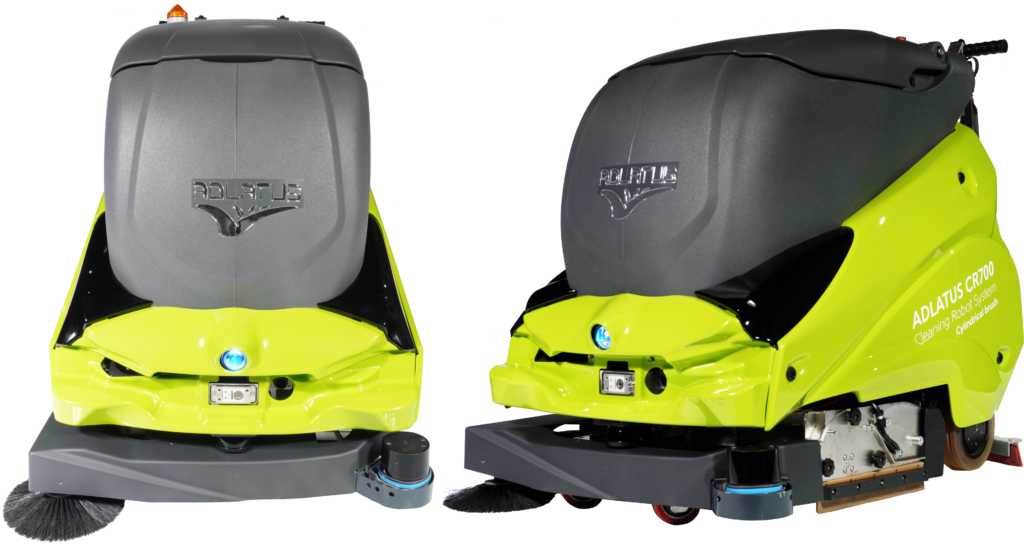
NEURA Robotics is acquiring 100% of ADLATUS Robotics and, with it, something a humanoid demo cannot manufacture overnight: an installed base of hundreds of cleaning robots already working at real customer sites. That installed base is the most important part of the Physical AI story. NEURA is not merely buying a research team; it is acquiring machines, navigation software, service experience and operational touchpoints across industry, logistics, healthcare and public/commercial facilities.
What exactly is being acquired?
According to NEURA and independent European reporting, NEURA Mobile Robots is acquiring all shares of Ulm-based ADLATUS Robotics GmbH. ADLATUS develops autonomous scrubbing/sweeping robots and its own navigation software. The companies already had a strategic partnership dating to September 2025, so the deal deepens an existing relationship rather than starting from zero.
The key scale word is “hundreds”. NEURA says hundreds of ADLATUS systems are already deployed in the field. It does not disclose the exact active fleet, customer count, revenue or utilization, so RoboMorrow does not turn “hundreds” into false precision.
The plan: turn a cleaner into a Physical AI node
NEURA plans additional sensors and AI functions and a gradual connection of the ADLATUS fleet to Neuraverse. The target vision goes beyond route replay: robots would identify surfaces and types of dirt, choose a cleaning strategy and learn from deployments. The important caveat is that this is an integration roadmap, not a description of capabilities already running across the installed fleet.
That is why the acquisition can matter more than another athletic robot demo. Physical AI needs contact with the physical world: error cases, recovery data, component wear and messy environmental variation. Hundreds of service robots can generate a more useful operational data stream than a handful of showcase prototypes.
ADLATUS already has the “boring” metrics businesses care about
CR700C documentation shows a practical service-robot profile: 700 mm cleaning width, roughly 60/55-liter tanks, around 4–6 hours of battery operation, approximately 1.5–2.5 hours charging and speed up to 4 km/h. These numbers rarely go viral, but they determine commercial economics: area covered, operator touch time, charging cycles and recovery from faults.
NEURA is building a platform through acquisitions
ADLATUS is not an isolated move. NEURA also acquired the ACTIVE Shuttle business from Bosch Rexroth in August. The direction is increasingly clear: rather than wait for one humanoid to do everything, NEURA is assembling multiple classes of real mobile robots and wants to connect them through software, fleet management and Neuraverse. In that model, the 4NE1 humanoid is one component of an ecosystem rather than the only product.
This may be particularly relevant in Europe. The region already has a large installed base of industrial automation, AMRs, machinery and service robots. Adding perception and AI layers to existing machines can create value faster than replacing every task with a biped.
What has independent confirmation?
EU-Startups and Tech.eu independently confirm the 100% acquisition, hundreds of deployed robots, ADLATUS’s navigation software and the planned Neuraverse integration. They do not independently validate the future AI behavior. Surface recognition, dirt classification, strategy selection and fleet learning remain NEURA’s stated roadmap.
What remains unknown?
- transaction price and financing structure,
- the exact active ADLATUS fleet size,
- ADLATUS revenue and profitability,
- which products receive sensor retrofits,
- the integration timetable for existing robots,
- whether customers need new hardware,
- how pricing, SLA and service contracts change.
Why this matters for Poland and the EU
European cleaning contractors, warehouses and large facilities care less about a spectacular demo than long-term fleet support, parts and software stability. ADLATUS brings operating history and deployed systems. If NEURA can add Neuraverse without disrupting the existing product, it could become a useful European model for upgrading mature service robotics with Physical AI.
Poland is a natural target for this class of automation because logistics, retail, manufacturing and facility management are large enough to support autonomous cleaning economics, but local integration and service usually decide the business case. The post-acquisition distribution model has not yet been disclosed.
What RoboMorrow will watch next
The real proof will not be a Neuraverse presentation. It will be the first concrete upgrade to an existing ADLATUS robot: a new sensor, a new AI capability, a measurable reduction in interventions or a new customer deployment. That is when the “buy an installed fleet and add Physical AI” strategy becomes testable.
The deal is also a useful counterpoint to humanoids. Our 2026 humanoid mega buying guide shows how many headline platforms remain in reservation, pilot or limited-deployment stages. ADLATUS brings something less cinematic but commercially valuable: hundreds of machines already doing paid physical work.
NEURA's strategy should also be read alongside its earlier ACTIVE Shuttle acquisition from Bosch Rexroth and the wider mobile-automation market. Enterprise readers can start with the RoboMorrow business section, while the broader humanoid/Physical AI context is mapped in our Humanoids 2026 mega guide.
What this deal does not prove
We do not know that every existing CR700C will receive the same AI package, and we do not know that hundreds of robots will immediately train one shared model. Fleet integration may require new sensors, customer permissions, contract changes, edge-compute upgrades and a staged rollout. “Learning from deployments” may also mean centralized data analysis and model updates rather than online learning on every machine.
The purchase price is undisclosed. Without it, there is no credible way to calculate what NEURA is paying per deployed robot, customer or unit of revenue. This article therefore interprets strategic logic without pretending to value the transaction financially.
The most valuable asset may sit beyond the hardware
Autonomous cleaning generates valuable operational data: site maps, edge cases, intervention history, surface/dirt conditions and service events. If NEURA can use appropriate parts of that data for model development within customer agreements and privacy constraints, it could shorten the path from laboratory Physical AI to systems trained around real operating conditions. That data flywheel — not a simple rebrand — is what we will watch next.
Next checkpoint: we will look for the first concrete disclosure showing which existing ADLATUS models receive new hardware or software and whether customers see a measurable change in intervention rate, uptime or operating cost. That evidence will separate product integration from platform narrative.