Roborock Saros 20 Flow vs Saros 20 Sonic: roller or vibrating mop?
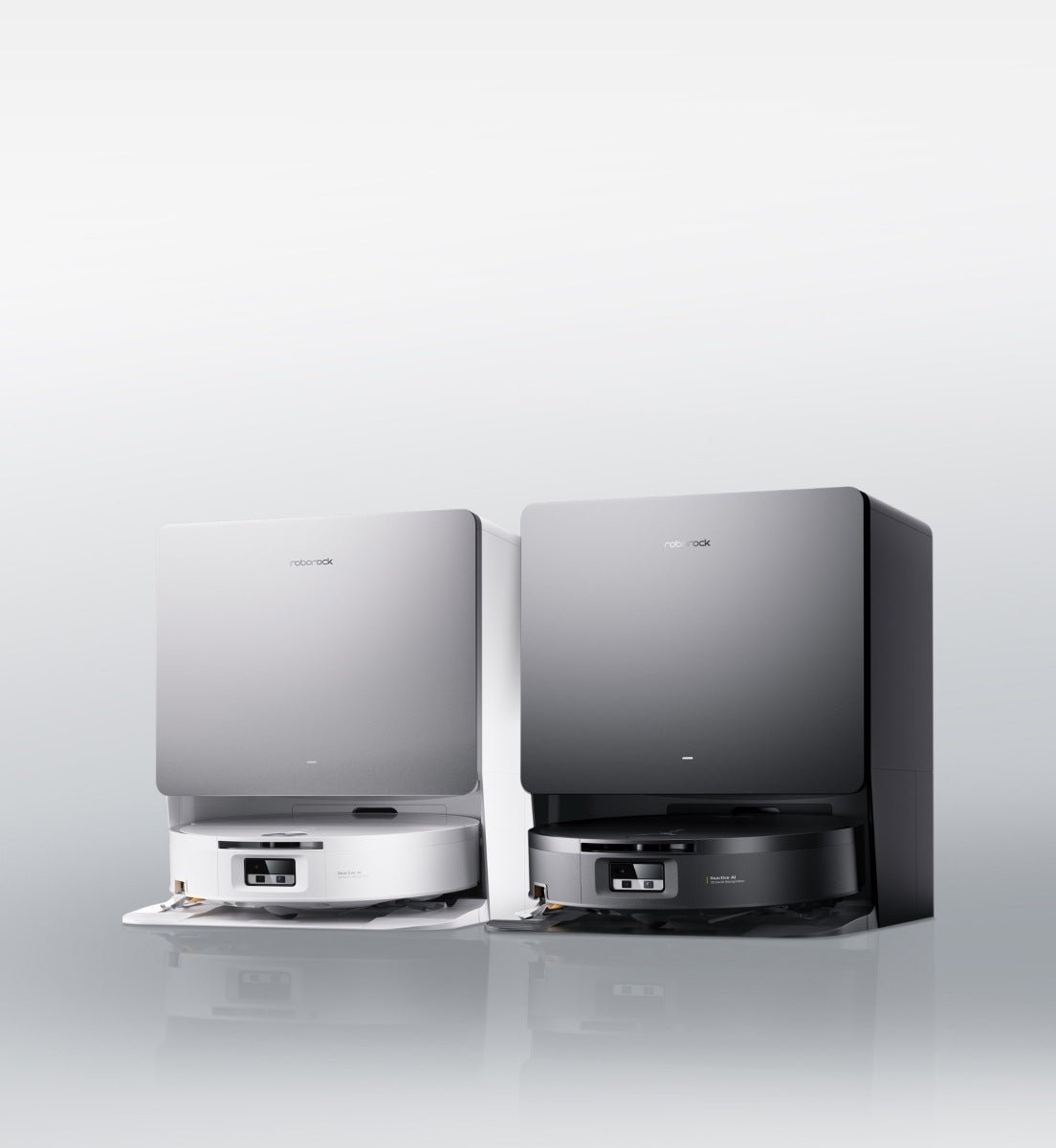
Roborock did something more interesting at IFA 2026 than a routine specification refresh. Saros 20 Flow and Saros 20 Sonic both headline 36,000 Pa suction, advanced threshold-crossing chassis and a new-generation RockDock. The real split is the part that changes hard-floor cleaning most: Flow uses a continuously refreshed SpiraFlow 2.0 roller; Sonic uses the vibrating VibraRise 5.0 pad.
This is not cosmetic naming. Flow tries to reduce dirt transfer by feeding fresh water to the roller while it moves. Sonic uses a high-pressure flat pad at 4,000 vibrations/min, with an extending mop for edges. Which approach makes more sense? Below, RoboMorrow separates manufacturer facts from analysis — without pretending we have independently tested a Flow that has just been shown at IFA.
30-second verdict
| If you care most about… | Better choice today | Why |
|---|---|---|
| continuous clean-water roller refreshing | Saros 20 Flow | SpiraFlow 2.0, 16 fresh-water outlets and 240 rpm |
| known pricing and immediate purchase | Saros 20 Sonic | already retailing; exact Amazon.com listing verified |
| low furniture | Sonic | 7.95 cm access vs 8.98 cm Flow height |
| roller edge mopping | Flow | roller extension and sub-10 mm manufacturer edge claim |
| aggressive spot scrubbing | Sonic on paper | 14 N + 4,000 vibrations/min; real result needs a side-by-side test |
| buying today | Sonic | Flow still lacks a public price/verified retail listing at this checkpoint |
Saros 20 Flow vs Sonic — key differences
| Feature | Saros 20 Flow | Saros 20 Sonic |
|---|---|---|
| Mopping system | SpiraFlow 2.0 — roller refreshed during cleaning | VibraRise 5.0 — vibrating flat pad |
| Mop motion | 240 rpm | 4,000 vibrations/min |
| Water system | 16 pressurised fresh-water outlets, warm-water mopping | adjustable water + vibration; mop serviced in RockDock |
| Downward pressure | Roborock says 2.5× vs Qrevo Curv; footnote states up to 15 N vs 6 N comparator | 14 N |
| Suction | 36,000 Pa | 36,000 Pa |
| Robot height | 89.8 mm / 8.98 cm | 79.8 mm; manufacturer advertises access from 7.95 cm |
| Thresholds | AdaptiLift Traverse 3.0; conditional 4.5 + 4.3 cm | AdaptiLift 3.0; conditional 4.5 + 4.3 cm |
| Obstacle avoidance | Reactive AI; manufacturer says 300+ types | Reactive AI 3.0 |
| Dock | RockDock; up to 100°C roller washing, 63°C drying, detergent, warm refill | RockDock; hot-water mop care and 55°C dust-path drying on the Polish specification |
| Price status | no public price verified yet | available now; regional pricing varies |
1. The central question: roller or vibrating pad?
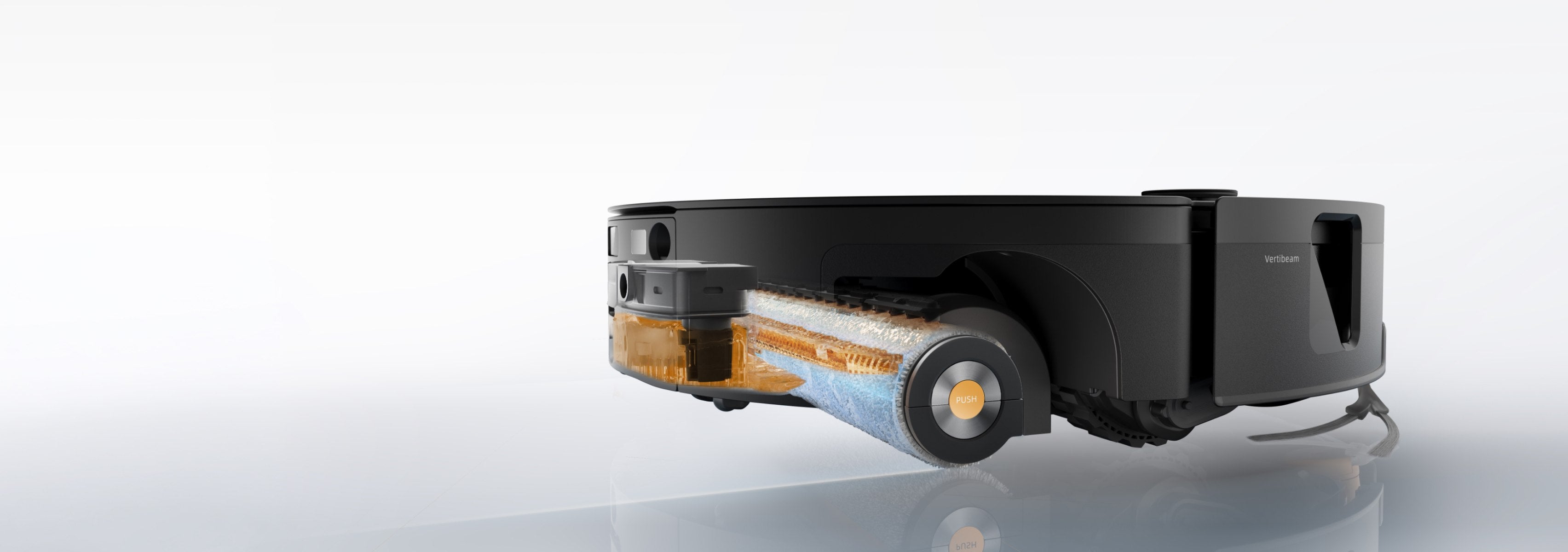
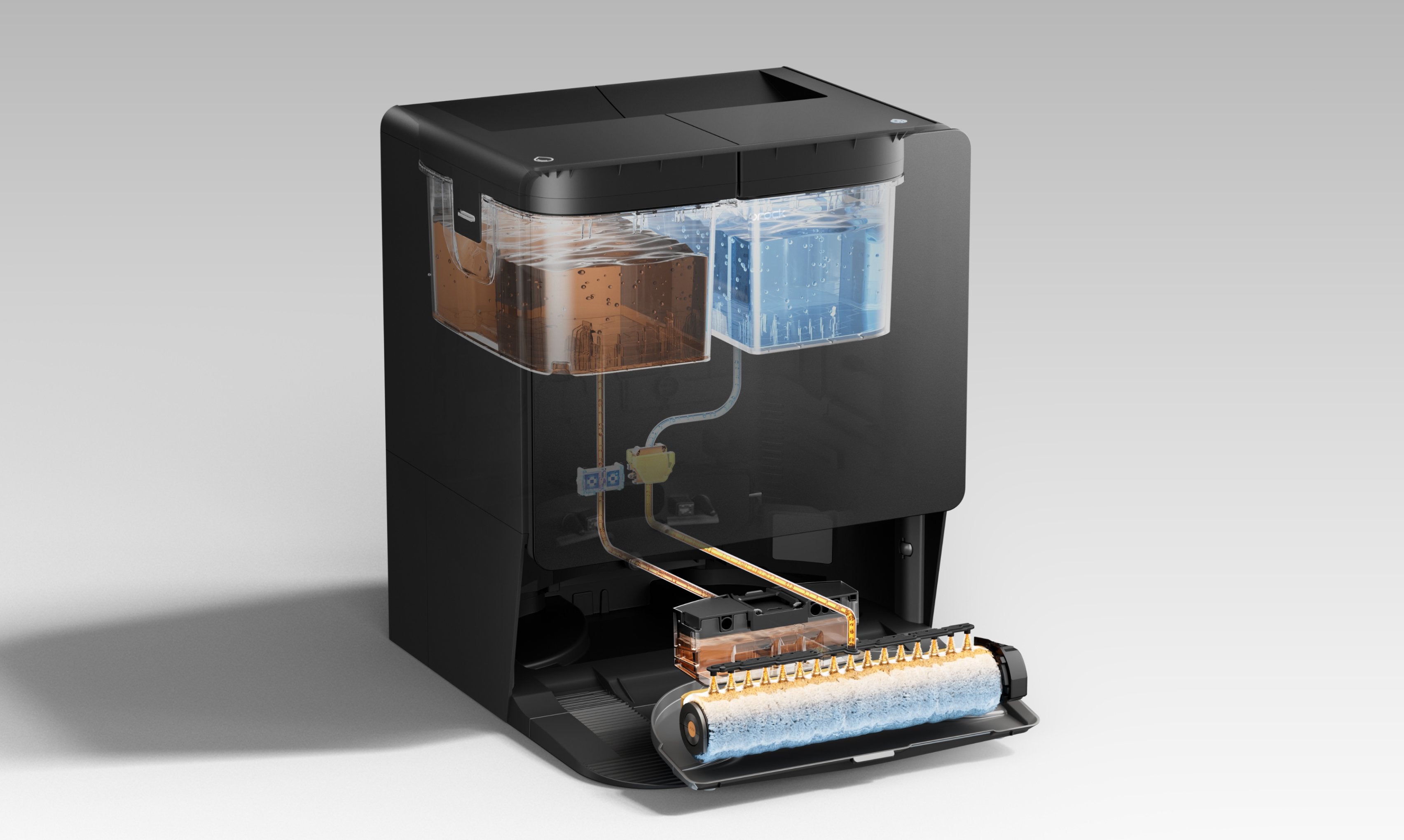
Flow uses a rotating roller supplied with fresh water through 16 pressurised outlets. Roborock specifies 240 rpm and continuous refreshing of the working mop surface. The idea is straightforward: less of the dirt collected early in a long cleaning cycle should continue travelling across the rest of the floor.
Sonic takes a different route. VibraRise 5.0 uses a flat pad at up to 4,000 vibrations/min with 14 N specified downward pressure. Water and vibration intensity can be adjusted in the app, and the pad extends toward edges.
It would be premature to say one “cleans better” without a side-by-side test. Flow has a strong process argument for wet, spreading dirt and long runs. Sonic has a credible argument for dried spot stains through fast vibration and high pressure. That is exactly the comparison RoboMorrow should test once Flow is available.
2. SpiraFlow 2.0: what does self-cleaning during the run change?
The biggest Flow change is moving part of mop hygiene from the dock into the robot itself. Roborock lists 16 clean-water outlets, a 240 rpm roller, AI RGB water-level control and a roller shield designed to manage carpet interaction.
A conventional mop is primarily refreshed when the robot returns to the dock. During a long kitchen or open-plan cycle, the working surface can accumulate more dirt between dock visits. Flow is designed to reduce that effect continuously.
3. Sonic is not simply an older, worse Flow
That would be the wrong conclusion. Sonic is lower: the body is about 79.8 mm, with Roborock advertising access from 7.95 cm. Flow is 89.8 mm. Roughly one centimetre can decide whether the robot enters under a particular sofa or kitchen unit.
VibraRise 5.0 also extends to reach edges, while Roborock specifies 14 N pressure and 4,000 vibrations/min. For a buyer shopping today, Sonic has another advantage: it is already a retail product and we can verify an exact Amazon.com listing.
4. Suction is a tie on paper — so stop shopping by Pa alone
Both models are rated at 36,000 Pa HyperForce. This is a good example of why headline suction is becoming less useful as the only premium-robot metric. A Pa number does not tell you how a brush behaves on carpet, how airflow is sealed, how hair is handled or how many passes are needed.
In Flow vs Sonic, the zero-Pa difference puts more weight on mopping, height, navigation, dock behaviour and price.
5. Thresholds: both target 8.8 cm, with an important footnote
Roborock describes conditional crossing of a 4.5 + 4.3 cm two-stage threshold. This is not the same as climbing one vertical 8.8 cm wall. The test requires a specific two-step geometry and spacing. That context matters because “8.8 cm threshold” sounds much more dramatic without the conditions.
In a normal home, repeatable crossing of tracks, trim and carpet edges matters more than one maximum test structure. The two AdaptiLift implementations are positioned very closely here.
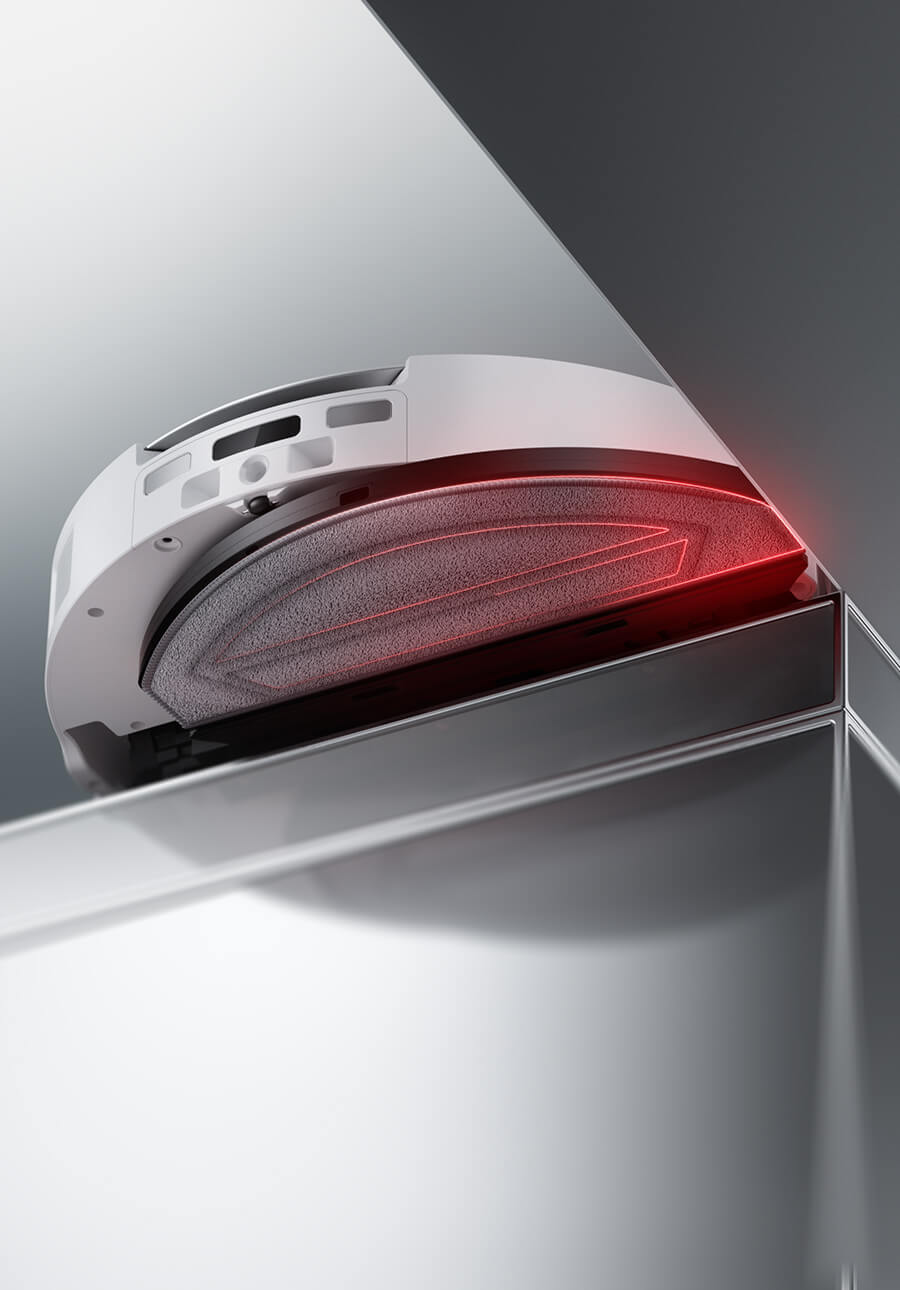
6. Edges: Flow roller extension versus Sonic pad extension
Flow's roller can extend, and Roborock describes a sub-10 mm edge-mopping distance under its test setup, with extension up to 44 mm. Sonic extends the VibraRise pad and advertises 0 mm at the edge under manufacturer conditions. These numbers are not directly equivalent because they come from different measurement methods.
An independent test should use the same wall, the same stain and measure the actual unwashed strip rather than compare two marketing numbers.
7. Dock: Flow pushes roller hygiene further
Flow's RockDock is specified for roller washing up to 100°C, warm-air drying up to 63°C, automatic detergent, warm-water refilling and dirt detection. Roborock also lists faster charging and up to 65 days of auto-empty operation under relevant conditions.
Sonic also uses a new RockDock with hot-water mop care; the Polish specification lists 55°C drying for the dust-disposal path. Flow is a more complex hygiene system because it supports a roller that is already being refreshed during the cleaning run.
8. Navigation: different labels, similar goal
Flow combines a retractable LDS / RetractSense system with Reactive AI. The global page says 300+ obstacle types are recognised under manufacturer definitions. Sonic uses RetractSense with Reactive AI 3.0 and puts strong emphasis on pet features, video viewing and obstacle recognition.
“300+” should not be interpreted as an accuracy score. A meaningful test needs repeated runs across varied objects, lighting and orientations.
9. Height may decide the purchase faster than the mop
Flow is 89.8 mm tall. Sonic is roughly 79.8 mm, with access advertised from 7.95 cm. If furniture clearance is between 8 and 9 cm, measure before buying. In that home Sonic can be the automatic winner even if you prefer Flow's self-cleaning roller concept.
10. Price: today Sonic wins on certainty
Sonic is already a retail product. Regional pricing changes, but exact current offers can be checked. Flow has a public Polish product page, yet RoboMorrow did not verify a public price or exact Amazon listing at this checkpoint. We will not invent one.
Where to buy Saros 20 Flow and Saros 20 Sonic
| Model | Official | Amazon | Status 3 Sep 2026 |
|---|---|---|---|
| Saros 20 Flow | Roborock official product page | No exact verified Amazon listing at publication time | product page live; public price not verified |
| Saros 20 Sonic | Roborock official product page | Amazon.com — exact Saros 20 Sonic (ASIN B0G64XBNWY) | retail product; check live regional price |
The Amazon.com link is a RoboMorrow affiliate link. Amazon price and availability can change. We did not verify an exact Amazon.pl listing for these models at this checkpoint, so we do not invent one.
Which model fits which home?
Lots of hard floor, kitchen spills and frequent wet dirt → Flow
Flow makes the strongest case where mopping matters as much as vacuuming: kitchens, pets, children and large tiled or vinyl areas. Continually refreshing the roller has a logical process advantage, even though the size of that advantage still needs measurement.
Low furniture and buying now → Sonic
Sonic is about a centimetre lower, is already on sale and has an exact verified Amazon.com listing. If your sofa clearance is below 9 cm, the decision may already be made.
Dried spot stains → Sonic may be stronger
14 N and 4,000 vibrations/min is an aggressive flat-mop specification. We do not call the winner without a test, but Sonic should be the benchmark Flow needs to beat on dried stains.
Long cleaning cycles without dragging a dirty pad → Flow
If the concern is spreading dirt across a large hard-floor area, clean-water refreshing during the run is a more compelling architecture than relying only on dock washing between zones.
What both models already share
36,000 Pa, advanced AdaptiLift chassis behaviour, anti-tangle systems, automated docks, sophisticated apps, Matter support and smart-cleaning features. They sit in a very similar premium tier. That is why mopping architecture and price matter more than a long list of shared features.
What we still do not know about Flow
- final European/Polish retail price;
- exact customer shipping date;
- roller life and consumables cost;
- how quickly the roller loads up with greasy dirt;
- whether 100°C dock washing produces a meaningful real-world hygiene advantage;
- how Flow performs side by side with Sonic on the same stains and floor.
RoboMorrow verdict
Today Saros 20 Sonic is the safer purchase, while Saros 20 Flow is the more technically interesting launch. Sonic has known retail availability, a lower body and an extremely aggressive vibrating mop. Flow changes the mopping process itself and could be better for large hard-floor areas and long cleaning cycles, but without price and independent testing we will not automatically call it “better.”
If Flow lands close to Sonic pricing, the roller could become a very difficult competitor. If it carries a large premium, the buying decision becomes a question of how much continuous clean-water refreshing is worth in real use. That is the comparison RoboMorrow should revisit after Flow enters retail.
Sources
- Roborock — Saros 20 Flow
- Roborock — Saros 20 Sonic
- Roborock — IFA 2026 line-up
- RoboMorrow — Saros 20 vs Saros 20 Sonic
Before buying: variants, offers and further comparisons
- Confirm that the offer is for the exact Saros 20 Sonic; the Flow and standard Saros 20 variants use different mopping systems.
- Compare bundle, seller, delivery, power supply and warranty. A global link does not confirm local stock.
- Choose the mopping system for your soil types and maintenance workflow rather than the series name alone.
Check availability on Amazon
As an Amazon Associate, RoboMorrow earns from qualifying purchases. Check the seller, bundle, delivery and availability on the store page.
Amazon may redirect you to a local store. If the identical product is unavailable, you may see search results. Check the model, bundle, power supply, delivery and warranty before buying.