Robot mower for up to 3,000 m²: drive, margin and navigation
BUYING IN YOUR MARKET
Availability in your country
Sales, delivery and support can differ by country and exact model. Choose your market to see the evidence we have checked.
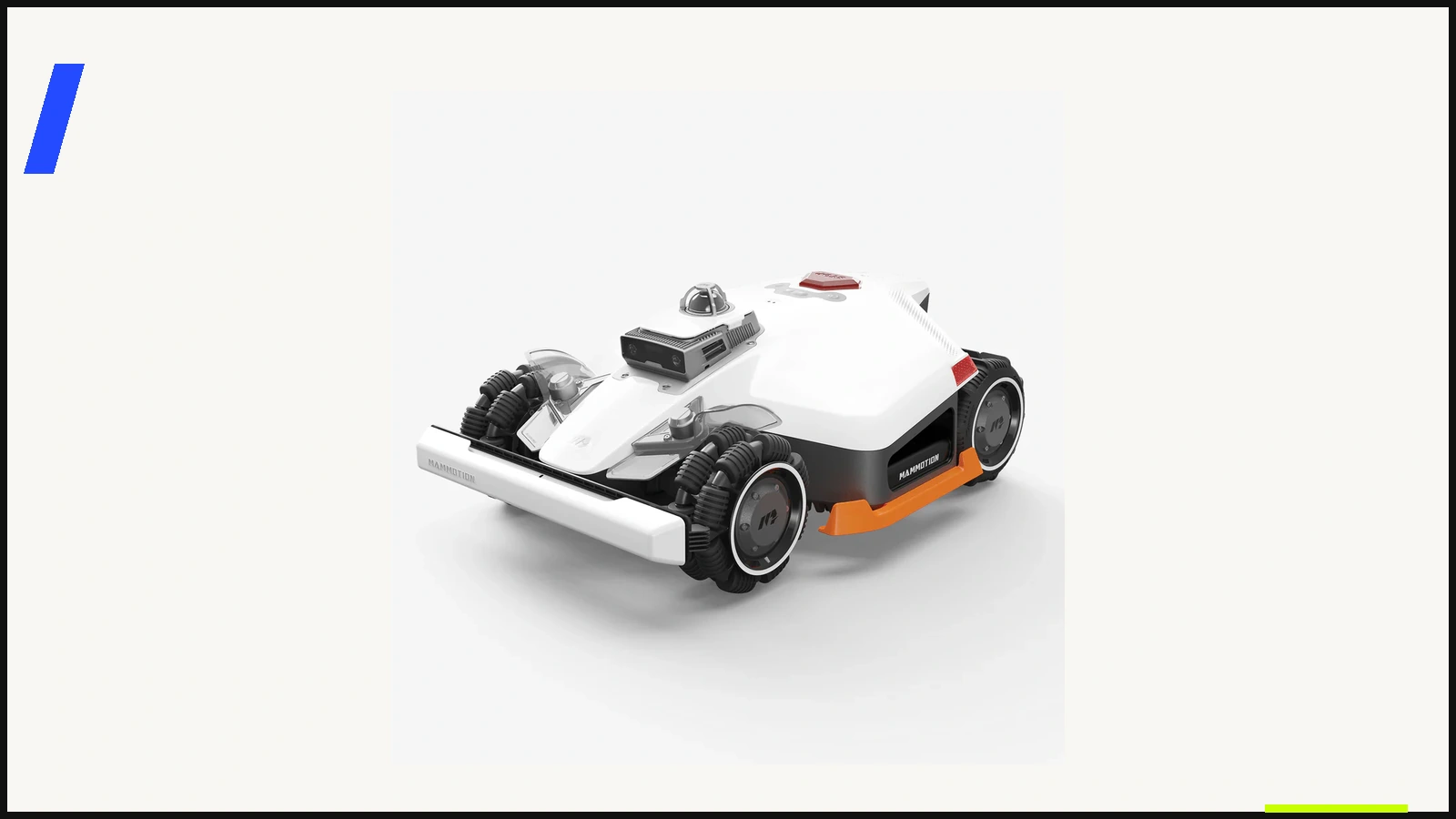
MAMMOTION LUBA 3 AWD 3000
Mammotion EU — supported destinations
Regional store lists this model — delivery country supported
- Seller / sales channel
- Mammotion EU
- Price
- See the linked offer for the current price, configuration and taxes
- Delivery
- Seller lists this country as a delivery destination; confirm postcode, model stock and dispatch at checkout
- Warranty and service
- Confirm warranty territory, local service and return shipping with the seller
Delivery countries: Sweden, Denmark, Austria, Belgium, Bulgaria, Croatia, Czechia, Estonia, Finland, Greece, Hungary, Ireland, Latvia, Lithuania, Luxembourg, Portugal, Romania, Slovakia, Slovenia, Poland, Netherlands, Switzerland
Exact model listing and the store’s delivery policy are linked separately. Supported delivery is not proof of current stock or local service.
Evidence checked: · Not a live stock feed
Mammotion EU: model offer ↗Supported delivery countries ↗No verified local offer in this dataset
No country-specific offer for this exact model has been established in our current sources. This is a gap in our research, not a statement that the robot cannot be bought here. Use the manufacturer’s sales contact to request a supplier serving your address; confirm configuration, imports, warranty and service.
- Price
- No verified local price in this dataset
- Delivery
- No confirmed date for your address
- Warranty and service
- Local coverage not verified
ROBOROCK RockMow Z1
No verified local offer in this dataset
A current local sales offer, exact regional variant, delivery date and service coverage have not been verified for this country in the regional dataset. This does not mean that the robot is unavailable.
- Price
- No verified local price in this dataset
- Delivery
- No confirmed date for your address
- Warranty and service
- Local coverage not verified
DREAME A2 2000
No verified local offer in this dataset
A current local sales offer, exact regional variant, delivery date and service coverage have not been verified for this country in the regional dataset. This does not mean that the robot is unavailable.
- Price
- No verified local price in this dataset
- Delivery
- No confirmed date for your address
- Warranty and service
- Local coverage not verified
“Listed” confirms a product page or sales route, not stock, delivery to every address or local service. “Pre-order” is not immediate availability. Unverified means we lack evidence; it does not mean unavailable. Prices belong to the named market and currency. Confirm the exact version, tax, shipping and support before ordering.
A lawn of approximately 3,000 m² requires a robot designed like a machine for regular work, not just a larger version of the urban model. At this level of surface, differences in traction, cutting width, mapping and multi-zone support translate into dozens of hours of work per season.
Why does a large lawn require a different approach?
Over 3000 m², a small error in route planning is repeated hundreds of times. Inefficient turning, avoiding every small obstacle or long charging time can cause the robot to work almost constantly and still not maintain an even mowing rhythm.
The five parameters that matter most
1. Actual daily capacity
The manufacturer may specify the maximum seasonal area or area served for a specific number of operating hours. Check how much the robot mows on one charge and how quickly it returns to the task.
2. Cutting width
Wider cutting system reduces the number of passes but increases the dimensions of the device. A large robot may have difficulty in narrow passages and small lawn islands.
3. Traction and tilt
AWD gives a clear advantage on slopes, unevenness, loose soil and wet grass. On smooth, open terrain, 2WD can be simpler, lighter and cheaper.
4. Hybrid Navigation
The combination of RTK, LiDAR and cameras increases resilience in places where one technology falters. However, this does not mean that every garden needs all sensors. An open plot can work well with RTK, and a garden with trees will benefit from local perception.
5. Field Service & Parts
With this space, peak season downtime quickly becomes apparent. It's worth checking who performs warranty repairs, how the robot is transported and whether the blades, tires and battery are available locally.
3000 m² class model or larger?
| Actual Lawn | Reasonable class of robot | Comment |
|---|---|---|
| 2200–2500 m² | 3000 m² | Good stock for most regular gardens |
| about 3000 m² | 4000–5000 m² or very efficient 3000 m² model | It is worth comparing the number of working hours and the complexity of the terrain |
| 3000 m² with large slopes | AWD, preferably with spare | Traction may be more important than nominal square footage |
| two separated parts | two robots or multi-zone solution | Check the possibility of autonomous driving |
LUBA 3 AWD 3000 as example
Card MAMMOTION LUBA 3 AWD 3000 shows the direction of a design intended for large, difficult gardens: four-wheel drive, a declared slope of up to 80%, virtual boundaries and a combination of LiDAR, network corrections and cameras. This does not automatically mean that it will be best for every flat lawn. For a simple garden, price, service and ease of use may be more important.
Is one robot enough?
One robot makes sense when the zones are connected and the device can safely reach them. Two robots are worth considering for separate lawns, very long and narrow layouts, or if you want shorter mowing times at specific times.
Most common error
Buying exactly "3000 by 3000". The maximum value does not guarantee comfortable work in every garden. High grass growth rates, numerous obstacles and the requirement to mow only during the day can reduce real efficiency.
Verdict
At 3000 m², start with a map of the terrain, slopes and connections between zones. Only then compare the square footage on the box. An efficient, systematic robot with the appropriate drive and local service will be better than a model with more functions, but constantly working at the limit.
Schedule for 3000 m²
Large surface area requires consideration of when the robot can work. If you rule out night time for pets and don't want mowing while you're using your garden, your available window may only be a few hours a day. In such a case, a model operating at the limit of the declared area may not be able to maintain the entire lawn during the period of rapid growth.
Zone mowing
Divide the garden by growth rate. An irrigated and fertilized lawn may require more frequent work than a dry part next to the road. Separate schedules reduce unnecessary travel and turf wear.
Fault and Weather Buffer
Two days of heavy rain or one docking problem creates a backlog. A robot with capacity to spare will make up for it faster. For this reason, with a full 3,000 m², it is worth looking at models of a class larger than the exact square footage or a two-device solution.
Infrastructure Cost
The price of the robot may include: a stable station base, power supply, cover, network coverage extension, traction accessories and professional map configuration. In a large garden, the cost of installation may be more justified than in a small one, because an incorrect map generates many hours of corrections.
When to order a demo
If the area has slopes, loose soil or unusual passages, ask for a demonstration on your own plot or a conditional sale with the possibility of return. The short demonstration should cover the most difficult driveway, crossing zones, docking and working under trees - not just a simple section of lawn.
FAQ: robot up to 3000 m²
Does 3000 m² mean the plot area?
No. What matters is the actual grass area. A large number of borders reduces the area, but increases the length of the edges and the number of turns, so the garden can remain demanding.
Does the big robot always mow faster?
Not always. A wide cutting deck helps in open spaces, but a large turning radius and careful avoidance of obstacles can limit your advantage in a complex garden.
Related Tabs in Robot Database
See the entire RoboMorrow Robot Database.
Related guides
Sources and verification date
The article was prepared based on manufacturer data and institutional materials available on August 3, 2026. Software parameters, prices, availability and functions may change.
Where to buy models from this article
We show only exact verified Amazon product pages. Before purchase, confirm the variant, seller, warranty and box contents.
Exact Amazon links. Where a verified RoboMorrow marketplace tracking ID is active, the link is an affiliate link and we may earn from qualifying purchases. Price and availability can change after you click.