Robot vacuum touch-ups: calculate the time you actually recover
Saved time is the difference between manual work before purchase and all human work after purchase. The robot’s running time is not the time you recover. Count route preparation, interventions, touch-ups and dock servicing separately. This calculation helps evaluate a model premium or leaving part of the home for manual cleaning.
Redakcja RoboMorrow · 8 October 2026 · decision guide, not device test results
Define a comparable job
Use the same area, frequency and acceptable result. Do not compare a quick crumb pickup with a thorough vacuum-and-mop job. Separate occasional work from recurring tasks. Record who performs each task and whether it is active work or waiting. If the robot increases cleaning frequency, report that as a separate benefit rather than pretending the scope is equal.
Record minutes before money
The value of an hour of personal time is your assumption, not a market rate the editors can set for you. Show the result in minutes first. Then optionally convert it using your own rate and label the assumption. A negative result means the robot required more active work than the baseline during the measured period; do not hide it.
A calculation example only
Assume 60 minutes of weekly manual work before purchase, followed by 10 minutes of preparation, 15 minutes of touch-ups and 10 minutes of upkeep after purchase. The result is 60 − 10 − 15 − 10 = 25 minutes per week. This is an invented calculation example, not a test result or product promise. Do not automatically multiply one good week by a year; repeat the record in different periods.
When a premium makes sense
Tie a premium to a specific task: reaching under furniture, fewer touch-ups or simpler dock upkeep. Check that this task actually occurs in your home. If the difference concerns an area you rarely clean by hand, it may barely affect the weekly result. Do not replace this measurement with a suction-pressure comparison.
Your recording sheet
Copy these fields into your notes. Mark missing data as “unconfirmed”, not as a zero result.
| Field | What to record |
|---|---|
| Baseline | Active minutes for the same manual job |
| After purchase | Preparation + interventions + touch-ups + upkeep |
| Result | Minutes before − total active minutes after |
| Quality | Accepted result and areas you still exclude |
Questions before deciding
Must I put a price on my time?
No. Minutes alone can evaluate convenience.
Do parts costs belong in the minutes calculation?
No. Keep parts and electricity in a separate ownership-cost budget.
What to check next
Choose the next step that addresses your uncertainty. A model profile explains the machine; a guide helps with the decision.
- How much does a robot vacuum cost per year?
- Saros 20 vs Dreame X50: Which Fits Your Home?
- Dreame X60 vs X50 Ultra: Is the Upgrade Worth It?
- Robot vacuum and dock dimensions: how to measure the space
Sources and scope
Check instructions and footnotes for the exact variant and purchase country. Manufacturer imagery illustrates the model; it does not document an editorial test.
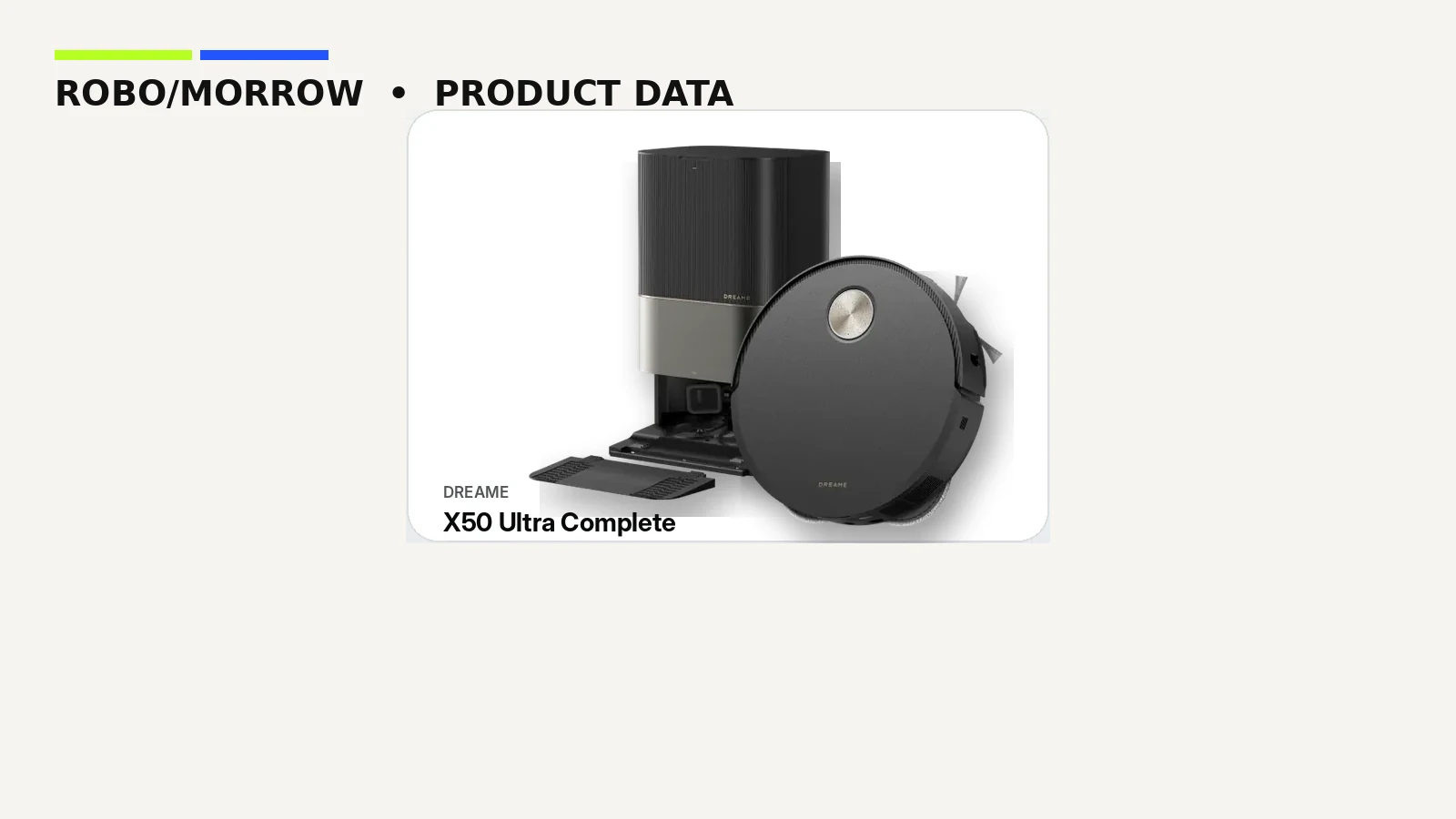
Image: previously published manufacturer material in RoboMorrow — Dreame X50 Ultra Complete. It illustrates an example and does not document completion of the checks described in this guide.
Author: Redakcja RoboMorrow. Featured image: manufacturer material or a composition of such materials from the published RoboMorrow library. It illustrates a product or example and is not evidence of an editorial test.
Where to buy models from this article
We show only exact verified Amazon product pages. Before purchase, confirm the variant, seller, warranty and box contents.
Exact Amazon links. Where a verified RoboMorrow marketplace tracking ID is active, the link is an affiliate link and we may earn from qualifying purchases. Price and availability can change after you click.