Unitree G1 vs R1: which humanoid makes more sense in 2026?
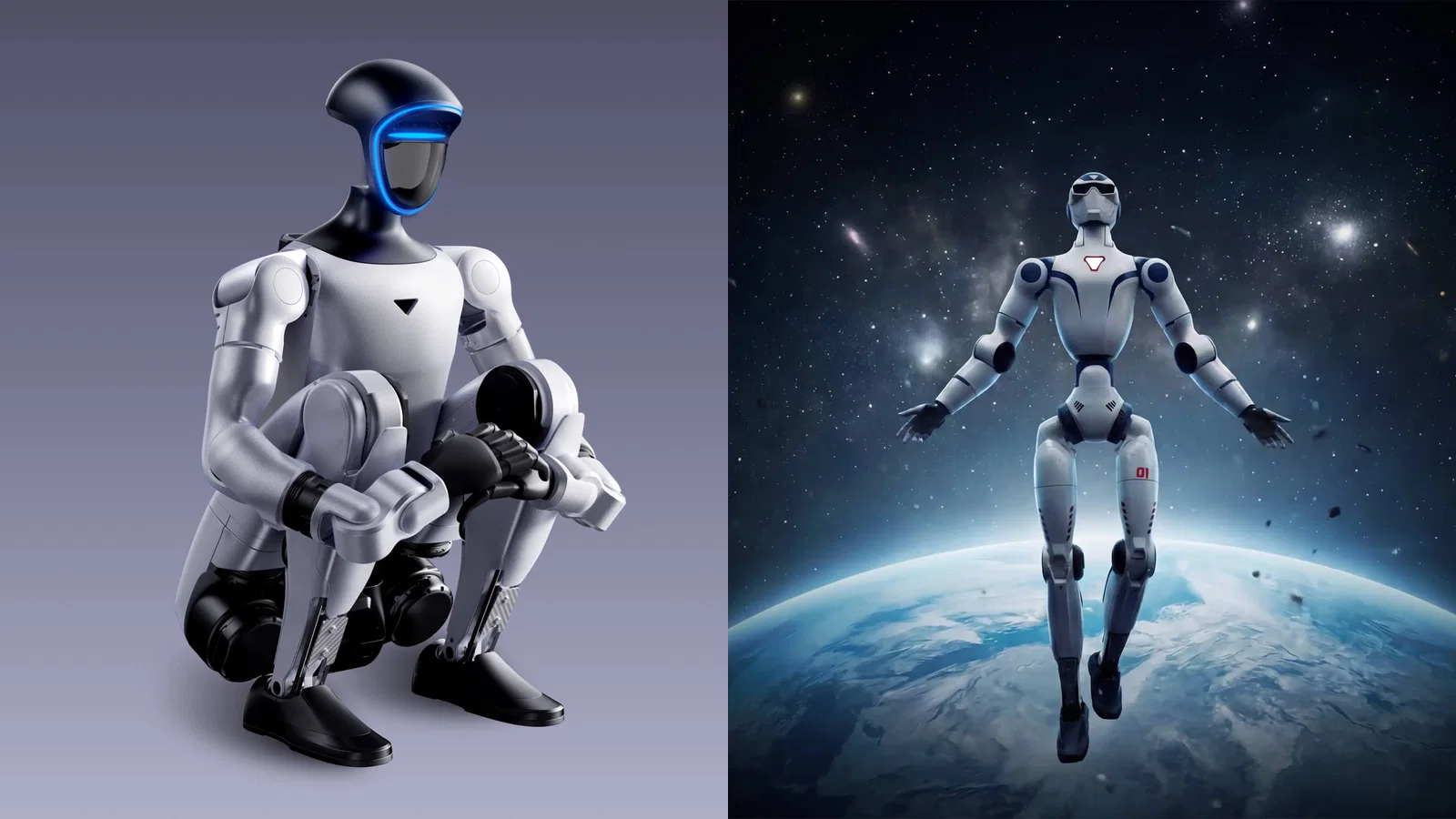
Unitree R1 has pushed the entry price for humanoids sharply lower, while G1 remains a more mature research and development platform. The right choice depends on whether cost or capability matters most.
Price
R1 AIR starts at $4,900 and R1 at $5,900. G1 starts at $13,500. Manufacturer prices exclude tax and shipping.
Size and weight
R1 stands 123 cm and weighs about 29 kg; G1 is 132 cm and about 35 kg. Both are substantially smaller than full-size industrial humanoids.
DOF and development
R1 offers 20–26 DOF depending on version, with R1 EDU reaching up to 40. Base G1 has 23 DOF while G1 EDU can reach 43. G1 EDU is explicitly positioned for secondary development.
Perception and autonomy
G1 uses a depth camera and 3D LiDAR. R1 integrates a multimodal voice-and-image model and open interfaces. In both cases, impressive motion demos should not be confused with autonomous execution of arbitrary work.
Verdict
R1 is the more interesting low-cost entry point for experimentation. G1 EDU makes more sense for research teams needing a richer platform and hardware options.
Sources: Unitree R1 and Unitree G1.
The practical differences
- Price: R1 AIR $4,900, R1 $5,900, G1 $13,500.
- Perception: G1 includes a depth camera + 3D LiDAR; R1 relies on cameras.
- Runtime: G1 about 2 h, R1 about 1 h.
- Development: deeper development is focused on EDU versions.
RoboMorrow verdict
R1 wins on price; G1 wins on sensing and R&D potential. For business automation, both still require a pilot and measurement of real human interventions.
Comparison at a glance
| Feature | R1 | G1 |
|---|---|---|
| Starting price | $4,900–$5,900 | $13,500 |
| Height | 123 cm | 132 cm |
| Weight | 27–29 kg | about 35 kg |
| Runtime | about 1 h | about 2 h |
| Perception | mono/binocular cameras | depth camera + 3D LiDAR |
| Secondary development | R1 EDU | G1 EDU |
For universities and education
R1 has a powerful advantage: more students and teams can access a physical humanoid. If the goal is learning control, locomotion, simulation and basic interaction, lower cost may matter more than LiDAR or an extra hour of runtime.
For AI/robotics R&D teams
G1 EDU is the stronger choice when projects need richer spatial perception, extra compute, hands and a broader secondary-development setup. The higher price can be justified if a team would otherwise need to add sensors or build its own perception stack around R1.
For companies automating work
Here a hardware ranking is not enough. Start with the task. For manipulation, measure grasping, payload, success rate and exceptions. For mobility, measure runtime and reliability. If a workflow still needs a person for most of the shift, a cheaper robot does not automatically create better ROI.
Hidden costs on both platforms
Both require budgeting for shipping, VAT/duties, parts, batteries, optional hands, development and work-cell safety. G1 costs more but may reduce the need to add sensing. R1 costs less but can reach the limits of its base configuration sooner in ambitious projects.
FAQ: G1 or R1?
Which is better as a first humanoid?
For most teams starting with learning and experimentation, R1 is the more logical choice because of price. G1 makes sense when LiDAR, longer runtime or a richer EDU path is known to be necessary from the start.
Does R1 replace G1?
No. R1 expands Unitree's range downward in price but does not remove G1's advantages. The products look similar at a high level, but sensing, runtime and development options differ.
Which has better ROI?
Without a defined task, there is no meaningful answer. In R&D, ROI can mean cost of access to a platform. In production, task success and human time dominate. A cheaper R1 will not automatically win if it requires more integration or intervention.
Is EDU worth the premium?
Not always if the team only wants ready-made functions. If the goal is custom research, sensor integration, manipulation and deeper control, EDU versions are much more logical.