XPENG signs $900M+ funding agreements for humanoid robotics as IRON targets mass production
What XPENG actually commissioned
XPENG says its humanoid manufacturing facility is now officially in operation and that IRON completed production-line assembly before walking off the line on its own. The company describes the milestone as a move from R&D prototyping to production-line manufacturing. Xinhua independently confirms the line launch, final assembly of IRON and the year-end mass-production target.
According to XPENG, more than 80% of core manufacturing processes are automated. The company is applying automotive-style quality systems to robotics, including repeatable critical processes, line control and capacity expansion. Those are manufacturer-provided figures; RoboMorrow does not have an independent audit of automation share, yield or takt time.
A production line is not the same as mass production
Those terms are frequently blurred in humanoid robotics. A commissioned line means assembly has moved from workshop or prototype processes into an organized manufacturing flow. Mass production requires repeatable output with controlled quality, yield, unit cost and delivery capacity. XPENG itself separates the milestones: today's announcement is line manufacturing, while mass production remains the next target.
That is why we are not rewriting the headline to say “IRON is in mass production.” The missing numbers still matter: current daily and monthly output, actual assembly cycle time, first-pass yield and production cost per unit.
Next: XPENG stores and campuses, then external markets in 2027
After entering mass production, XPENG plans initial commercial deployments in its own stores and campuses. Xinhua cites tasks including customer reception, vehicle introduction, visitor guidance, inspection and small-item handling. That gives XPENG a controlled environment in which it can collect real operational data and iterate hardware and software faster.
Official market launch and deliveries in China and overseas markets are planned for 2027. For Europe, that matters more than the visual milestone of a robot walking off the line. The next questions are which markets receive IRON, how regulatory and machinery-safety requirements are handled, who provides service and whether the commercial model is hardware sales, RaaS or a mix.
How this changes the earlier funding story
The original RoboMorrow article focused on more than $900 million of financing for XPENG's robotics business and the claim that capital would accelerate IRON industrialization. The line commissioning is the first major execution milestone after that story. It does not prove scale yet, but it does show the project moving beyond plans for a future factory.
The next useful update should be economic rather than another demo: monthly output, price, unit cost, number of robots operating with real customers or the first external contract outside XPENG's own ecosystem.
Update sources
XPENG — official IRON production-line announcement · Xinhua — independent confirmation of the line launch and production plan
XPENG is making a major move from financing humanoid prototypes toward industrial scaling. On 24 August 2026, the company said that Dogotix Inc., the XPENG subsidiary through which the robotics business is being organised, entered into share purchase agreements with investors for more than $900 million of newly issued shares. XPENG states a post-money valuation above $6.3 billion. Reuters independently confirms the scale of the financing, the investor group and the production plan.
The story matters for more than the headline valuation. XPENG is linking the financing to a concrete commercial timeline: IRON is expected to enter mass production by the end of 2026, initial commercial deployments are planned for XPENG stores and campuses, and official sales and deliveries in China and overseas markets are scheduled for 2027. Reuters additionally reports a target of reaching 1,000 robots per month by the end of 2026.
Funding agreements first, transaction closing second
XPENG's headline announcement says the robotics business is raising more than $900 million, but the detailed financial disclosure is more precise: Dogotix entered into agreements under which subscribers conditionally agreed to purchase newly issued shares. XPENG also says that, upon closing, it will retain controlling ownership of the robotics business and continue consolidating it into the Group's financial statements.
RoboMorrow therefore treats today's development as an agreed funding round pending closing, rather than evidence that the entire amount has already been transferred and settled. That distinction matters in large private transactions.
Who is investing in XPENG robotics?
IDG Capital leads the round. Gaorong Ventures is participating, while Tencent and Alibaba are described as strategic investors. XPENG says the capital will support robotics hardware and software R&D, training and iteration of Physical AI models, high-quality data generation, end-to-end mass-production facilities and global commercial expansion.
The company calls it the largest single-round private financing ever recorded in China's embodied AI industry. Reuters reports the same context and compares it with the earlier TARS Robotics financing. The record label still depends on how the sector and comparable transactions are defined, so RoboMorrow does not present it as an independently audited global ranking of robotics funding rounds.
IRON is supposed to move from demonstrations into production
The most important market signal is not the financing record but whether the capital converts into production. XPENG's official release says IRON is expected to enter mass production before the end of 2026, with initial commercial deployments at the company's stores and campuses. In 2027, XPENG plans the official launch and deliveries in China and overseas markets.
Reuters additionally reports that XPENG is targeting monthly output of 1,000 units by the end of 2026. If that pace were sustained for a full 12 months, it would equal an annualised run-rate of roughly 12,000 robots. That is simple arithmetic, not XPENG's official 2027 sales forecast.
For the current product status, availability and limitations, see the XPENG Next-Gen IRON profile in the RoboMorrow Robot Database. For a contrasting commercial model, the 1X NEO profile already tracks a public price and consumer pre-order structure.
Important: XPENG's official IRON specifications are not fully consistent
There is one detail worth flagging because it can easily disappear in launch coverage. Today's XPENG funding release describes “next-generation IRON” as having 76 degrees of freedom, 21 degrees of freedom in each hand and three Turing AI chips delivering up to 2,250 TOPS. Older official XPENG material from AI Day 2025 and its European newsroom listed different figures for Next-Gen IRON: 82 full-body degrees of freedom, 22 in the hand and up to 3,000 TOPS.
XPENG has not publicly explained whether this reflects a production configuration change, a different counting method, a hardware variant or a specification correction. RoboMorrow therefore does not use those figures as a clean comparable benchmark in this news story. The robot profile should be re-verified once XPENG publishes a full production specification.
Why an automaker may have an advantage
Humanoids and intelligent vehicles look different, but industrially they share several hard problems: sensors, compute, batteries, controllers, thermal management, reliable software, supplier quality and repeatable manufacturing. XPENG argues that its EV experience allows it to bring automotive-grade quality processes and scaling capability into robotics.
That does not automatically solve reliable task autonomy. Building one thousand mechanically consistent robots is a different challenge from making each robot complete useful work for hours without human intervention. For RoboMorrow, that second layer will be the more important test in 2027.
Europe: existing infrastructure, but no confirmed IRON market yet
XPENG officially says sales and deliveries will expand to “overseas markets” from 2027, but it has not named the first countries. There is therefore no basis today to claim a confirmed Polish or EU launch date.
XPENG does already have an established automotive presence in Europe, local sales and service structures and R&D operations. That could lower the organisational barrier to a future European humanoid launch compared with a startup building distribution from scratch. It does not replace robot-specific product compliance, safety work, service capability or local commercial support.
What we still do not know
XPENG has not disclosed IRON's price, sales or leasing model, full service cost, guaranteed battery endurance, reliability metrics or the level of autonomy achieved during long-duration commercial work. We also do not know the full 2027 delivery volume or the first overseas markets.
It is also unclear whether the 1,000-unit monthly target refers to a sustained production capacity or an output level reached only near year-end. That matters because “mass production” in humanoid robotics can describe anything from a newly commissioned line to sustained deliveries in the thousands.
What actually changes with this announcement?
The key signal is that the humanoid race is entering a phase where capital, manufacturing, supply chains and commercialisation matter as much as AI models and impressive demonstrations. XPENG now has agreed financing at a scale that can materially support that phase, but the next milestones are measurable: transaction closing, mass-production start, achievement of the stated production rate and first commercial deliveries.
Only those milestones will show whether IRON moves from an ambitious Physical AI platform into a product deployed at meaningful scale.
Sources and methodology
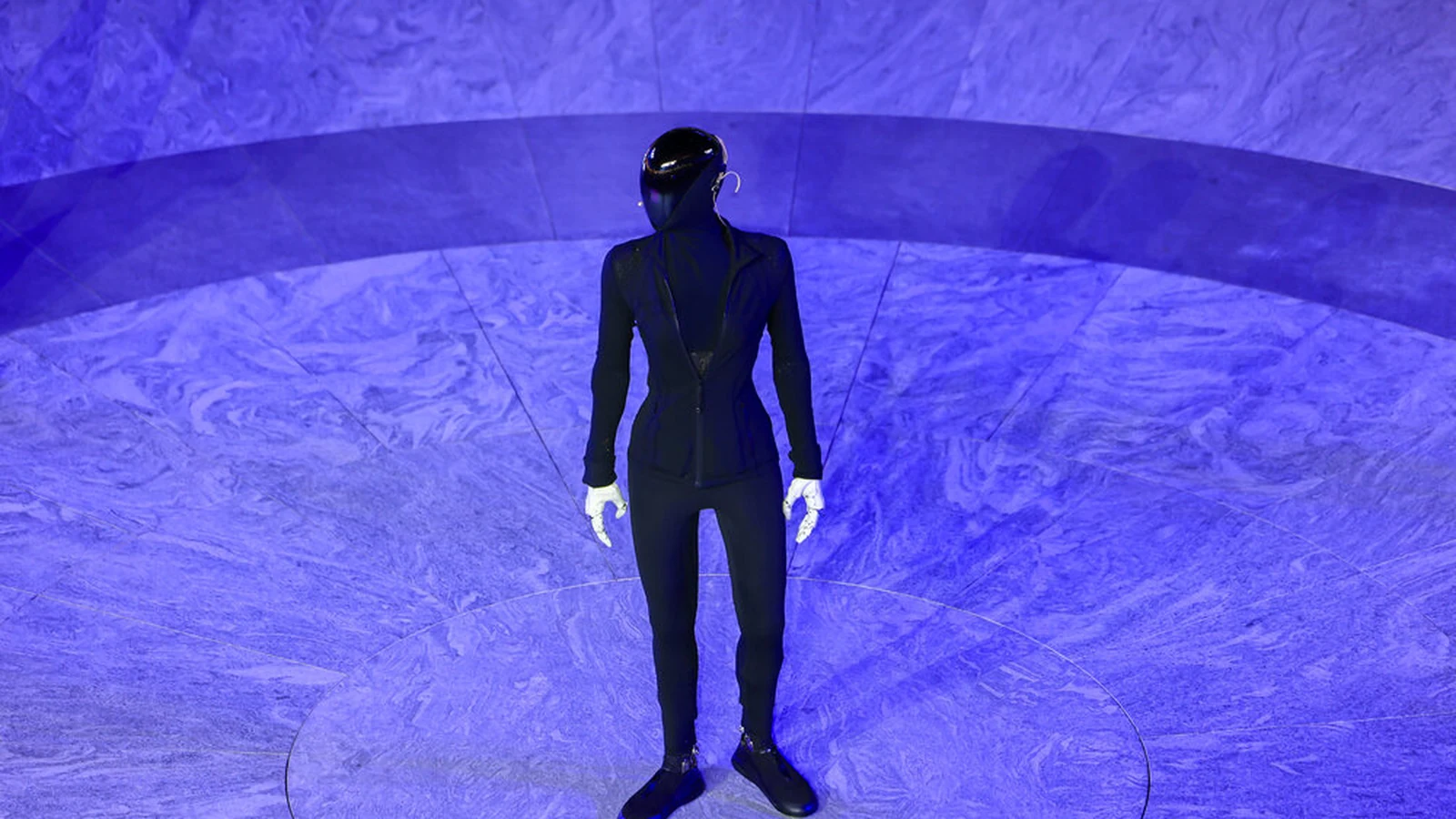
The primary source is XPENG Investor Relations, 24 August 2026, together with XPENG's financial-results disclosure describing the conditional Dogotix Share Purchase Agreement. Independent confirmation comes from Reuters. The featured image comes from XPENG's official European newsroom and shows Next-Gen IRON in 2026. RoboMorrow has not physically tested IRON.