Yarbo M Series vs Y Series 2026: which platform should you choose?
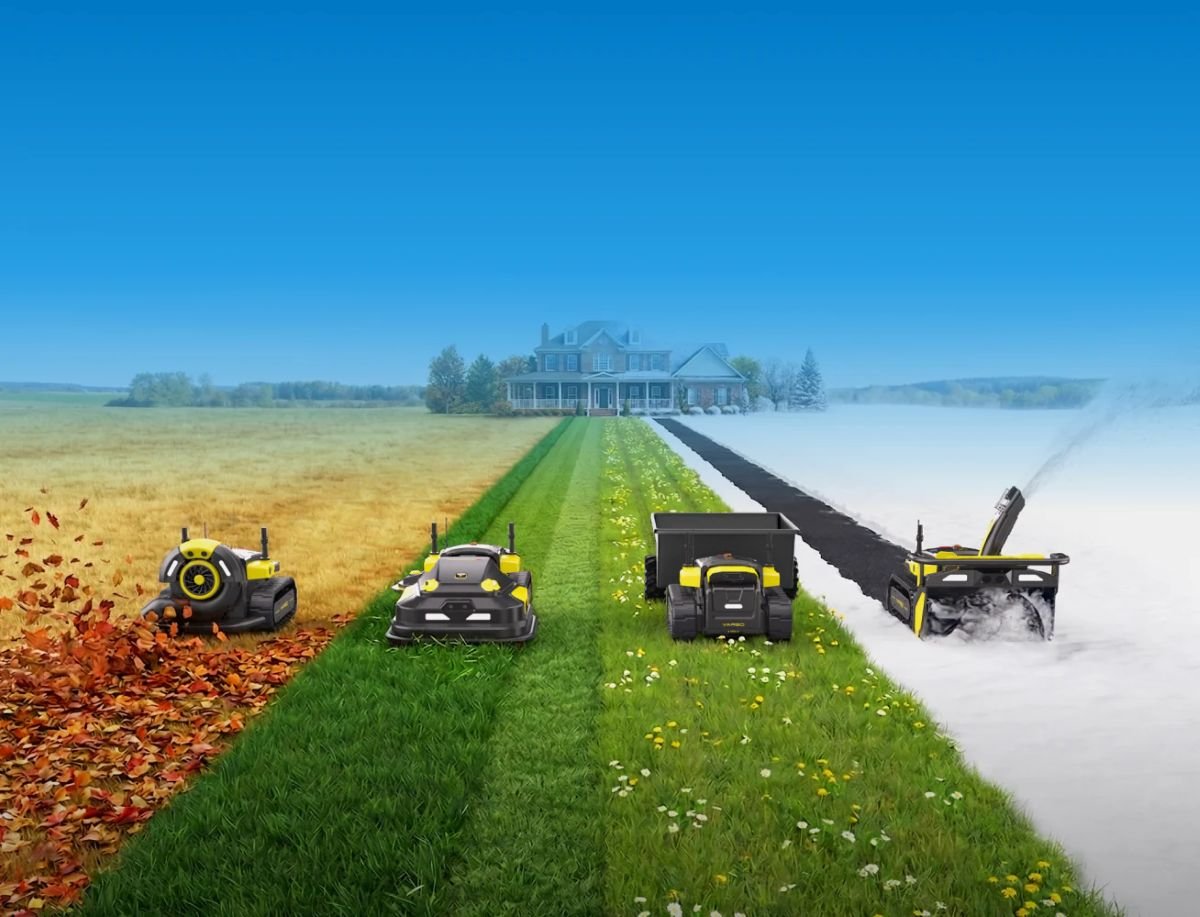
Yarbo now has two different answers to yard automation. Y Series remains the heavy-duty modular platform for large properties, while M Series is intended to bring the concept to standard residential yards with a smaller footprint and simpler setup. On 1 September 2026, however, they are not at the same buying-maturity stage: Y Series is sold through Yarbo's European store, while M Series is still presented through Kickstarter/pre-order and is scheduled for the first offline public appearance of its final version at IFA 2026 on 4–8 September.
This comparison therefore does not pretend to name a test winner. It asks a more useful question: do you need the current heavy-duty Y Series now, or should you wait for final M Series pricing, configurations and delivery details?
Quick decision
| Situation | Starting point | Why |
|---|---|---|
| large property and heavier multi-season work | Y Series | current heavy-duty line for large properties with an active European offer |
| standard residential yard | watch M Series | designed specifically for standard residential yards with a smaller footprint |
| you need a system now | Y Series | M Series remains Kickstarter/pre-order ahead of the first offline final-version showing |
| lower entry barrier is the priority | potentially M Series | Yarbo promises simpler setup, but full TCO needs the final commercial offer |
How does Yarbo position the two families?
Yarbo Europe calls Y Series “The Heavy-Duty Modular Yard Robot for Large Properties” and M Series “The Essential Modular Yard Robot for Every Home.” The segmentation is explicit. Y targets larger and more demanding properties; M is meant to lower the barrier to the modular platform.
In its 31 August release Yarbo says M Series has a smaller footprint and simplified setup. The manufacturer describes a tracked chassis for wet grass, dirt, stone pavers and mixed surfaces, with claims of approximately 35°/70% grade and edges around 2 inches/5 cm. These are manufacturer claims ahead of the public final-version showing, not RoboMorrow test results.
Status on 1 September 2026 is the critical difference
Y Series has specific products and euro prices on the European store, including Lawn Mower, Lawn Mower Pro and snow-blower bundles. M Series is routed to Kickstarter/pre-order. Yarbo says the final M Series will make its first offline public appearance at IFA Berlin from 4 to 8 September 2026.
Any article treating M Series today as a mature, broadly available retail product would therefore overstate the situation. After IFA, this comparison needs an update covering final specifications, demonstrations, configurations and real delivery timing.
Modularity: shared idea, different scale
Yarbo's core proposition is a platform that performs different seasonal tasks through modules. European Y Series communication shows mowing, leaf cleanup and snow removal among the scenarios. For M Series the company describes an expanding range of applications including mowing, snow clearing and leaf collection.
Do not assume automatically that every Y module fits M, that all variants ship at the same time, or that feature sets are identical. At publication time there is not enough evidence to publish unsupported future module dates. Buyers should verify exact final compatibility.
NetRTK changes installation and cost
Effective 1 August 2026, Yarbo says NetRTK is included free for the lifetime of all Yarbo models. The network-based RTK correction service is intended to provide centimetre-level positioning without a local base-station installation when suitable network coverage is available.
That can simplify both M and Y installation. It does not mean coverage is equally good everywhere. Woodland, remote properties and weak connectivity require location-specific verification before purchase.
4G: free periods are not the same
Yarbo's 4G policy effective 1 August differentiates product groups. M Series and Y40 get one year of free 4G service from activation. 2023 Y Series Kickstarter backers get five years, while existing owners received a fresh one-year period from 1 August 2026 through 31 July 2027. After the free period, 4G is optional through paid plans.
The important caveat is that Yarbo says core functions continue without a paid 4G subscription through other available connectivity. Do not automatically add a permanent 4G fee to TCO if your use case does not need remote live-view and off-property connectivity.
M Series: what could be its biggest advantage?
If the final product delivers on the positioning, M's main advantage may not be raw power but size and simplicity. Heavy-duty Y Series is naturally large, expensive and designed for demanding properties. A standard home may not use much of that capability.
M Series is attractive if Yarbo modularity is useful but Y is simply too much system. IFA should clarify whether the promised lower barrier translates into a meaningfully lower price, easier storage, lower weight and simpler module handling.
Y Series: when is the heavier platform justified?
Y is more logical for large properties, longer work areas, difficult terrain, heavier snow work and users who genuinely plan to use several modules through the year. In that scenario, the platform cost is shared across multiple seasonal tasks and its physical size is less of a disadvantage.
Price: compare the full system, not the core
Yarbo's European store lists Y Series products in the multi-thousand-euro premium range, with more expensive module bundles. M Series does not yet have a fully equivalent European retail offer. We therefore do not publish a misleading side-by-side “M costs X, Y costs Y” table.
Add modules, connectivity, storage, service, wear parts, potential battery replacement and downtime to TCO. Modularity is economically useful only when it actually replaces multiple separate machines.
What should be checked at IFA 2026?
- final M Series dimensions and weight;
- real module-swap procedure;
- M-versus-Y module compatibility;
- noise and stability on wet/mixed surfaces;
- the exact NetRTK mapping workflow;
- European pricing and delivery timing;
- EU service and spare-parts model;
- which functions require 4G and which remain local.
What do we still not know?
On 1 September there are no independent long-term tests of the final M Series, no complete equivalent European ecosystem price and insufficient evidence on durability of the final production configuration. Polish module availability is also not established. In a multi-season platform these are not minor details; service and module availability drive value years after launch.
M Series versus a dedicated robot mower
M's biggest competitor may be a good specialist mower rather than Y Series. If you only want mowing, a simpler single-purpose robot can be cheaper and easier. Modularity becomes valuable when you genuinely plan to automate more than one seasonal task.
Y Series versus conventional yard equipment
Similarly, Y should be compared with the set of machines it might replace. If you already own a ride-on mower, snow blower and powerful leaf blower, calculate whether automation justifies migrating away from that existing fleet.
RoboMorrow verdict on 1 September
Choose Y Series when you need a system now and genuinely have a large, demanding property. M Series looks more relevant to a standard home, but four days before the first offline public showing of the final version the rational move is to collect evidence rather than declare a winner. This article should receive a mandatory post-IFA update.
Storage and module logistics
Modularity reduces the number of separate powered machines, but physical attachments still need garage space. Check not only the core footprint but also storage for the mower deck, snow equipment, leaf module and accessories you genuinely plan to own. A smaller M Series only improves the residential proposition if the complete ecosystem is also manageable to move and store.
At IFA, verify whether one person can safely swap a module, whether a trolley or lifting aid is required and how long correct attachment takes. We do not assume those answers before seeing the final configuration demonstrated.
Service is part of a multi-season product
A mower used only in summer can sometimes wait several days for a part. A platform intended to mow, collect leaves and clear snow is more operationally critical: failure during heavy snow has a different cost from mower downtime in a quiet week. Ask about EU spare parts, core repair, module repair and replacement-unit policy.
In each European market, confirm who physically performs service. “European support” could mean local technicians, shipping to a regional centre or user-replaceable parts. Do not assume which model applies; verify the actual commercial offer.
Platform risk versus several specialist machines
One core covering several seasons can reduce the number of drives, batteries and control systems on a property. It also creates a shared failure point: when the core is unavailable, all attachments wait. With several specialist machines, a mower failure does not disable the snow blower. That is the classic platform trade-off.
TCO should therefore include not only module price but also the fallback during service. On a large property, the decision may depend on whether the owner has backup equipment or access to a local contractor.
Connectivity: test the property, not the marketing map
NetRTK is attractive because it can remove the need for a local base antenna, but satellite positioning and network connectivity still have physical limits. Trees, buildings, terrain and network reach can change conditions. If parts of the property have weak cellular or Wi‑Fi coverage, ask the seller to validate those exact areas.
The same applies to 4G. The free-period policy is clear, but the useful question is which features in your workflow truly need cellular connectivity. If core operation works through other available connections, a paid plan after the free period may be optional rather than a mandatory lifetime cost.
A post-IFA decision plan: 30 days instead of FOMO
- 4–8 September: collect final M Series data and demonstration evidence.
- After the show: confirm European configurations, pricing and delivery without relying on prototype information.
- Compare a complete M configuration with the specific Y configuration needed for the same property.
- Validate NetRTK/connectivity conditions and the local service model.
- Calculate three-year TCO including attachments and a core-failure scenario.
- Only then choose M, Y or specialist equipment.
This process matters especially with crowdfunding and pre-order products: an attractive entry price should not replace evaluation of product maturity, schedule and after-sales support.