How Astrobee works on the ISS and why it grips a handrail
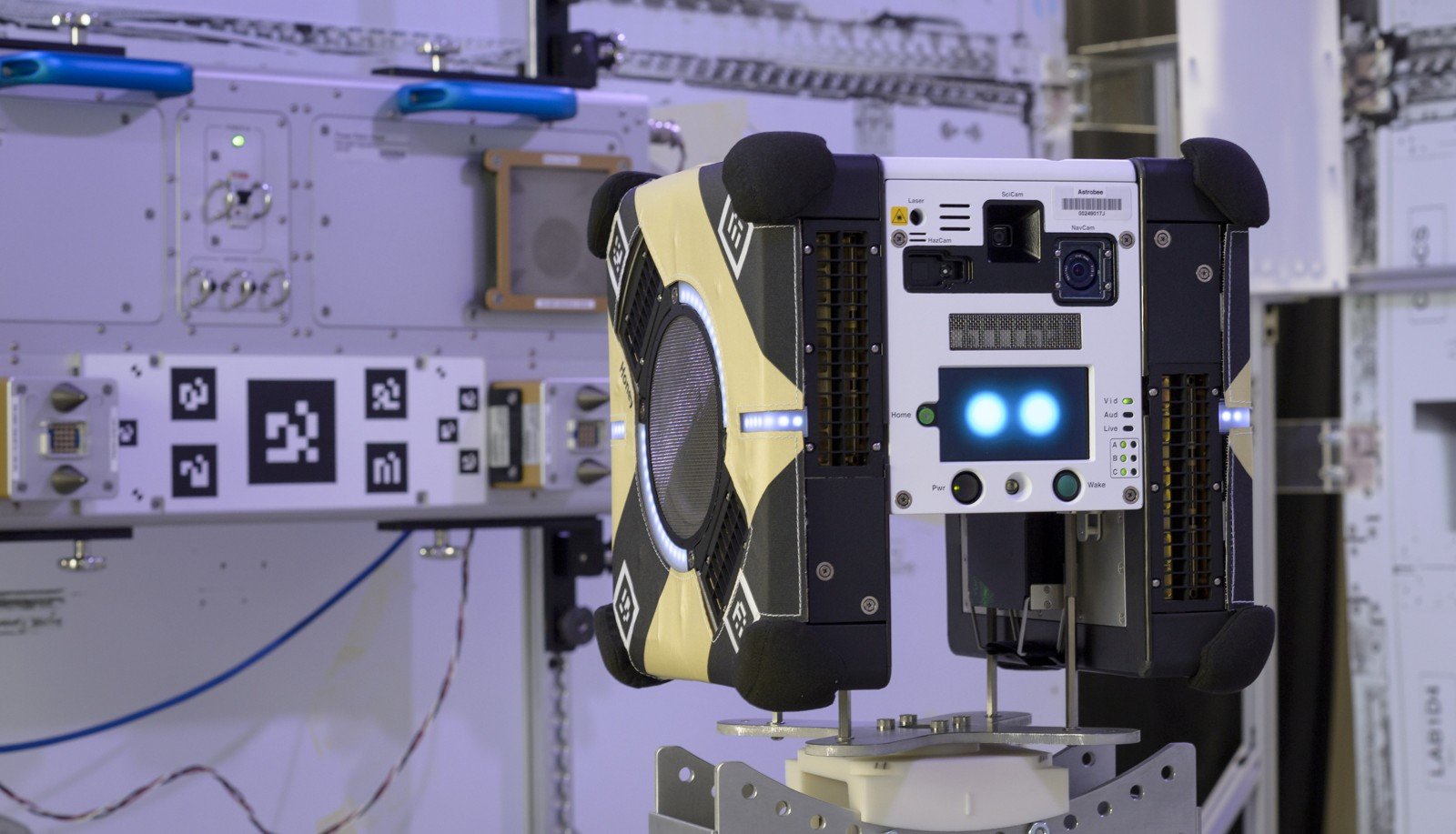
Honey flight unit and docking station in the Granite Lab. NASA/Dominic Hart.
To film an experiment from a fixed point, a flying robot can keep adjusting its position or grip something nearby. NASA gave Astrobee a small arm for just such a stop. A single observation task illustrates three quite different operations aboard the space station: flying to the site, watching from a handrail and returning for power.
Choosing the operating mode
| Task | Robot action | Purpose |
|---|---|---|
| Change viewpoint | Moves using electric fans | Takes a camera to another location |
| Watch from one spot | Grips a handrail with its arm | Saves power while stationary |
| Replenish energy | Returns to the docking station | Recharges its batteries |
What propels a robot in orbit?
Astrobee flies inside the station, where electric fans can move air. In a vacuum there would be no surrounding air to expel. In microgravity even a small thrust can change the robot’s motion relative to the module walls. Cameras and other sensors help it determine where it is.
Who decides where it goes?
Bumble, Honey and Queen are the programme’s three robots. They can perform tasks autonomously or work under the control of astronauts or teams on Earth. When watching footage, distinguish who chose the destination from who executed the manoeuvre. A picture of a robot on a handrail shows its position, but cannot tell us who planned its flight.
Reading the laboratory photograph
The photograph shows Honey in front of a docking unit in the Granite Lab in California. It is a useful view for identifying the hardware. Operations in orbit have their own evidence: NASA documented an autonomous docking demonstration in the Kibo module in 2024. Check the setting and task before assigning a flight result to a laboratory scene.
Related reading
- How RoboMorrow rates robots: availability, autonomy, economics and safety
- Try Microduck in your browser before buying the robot