Barn robots: milking, feeding and cleaning explained
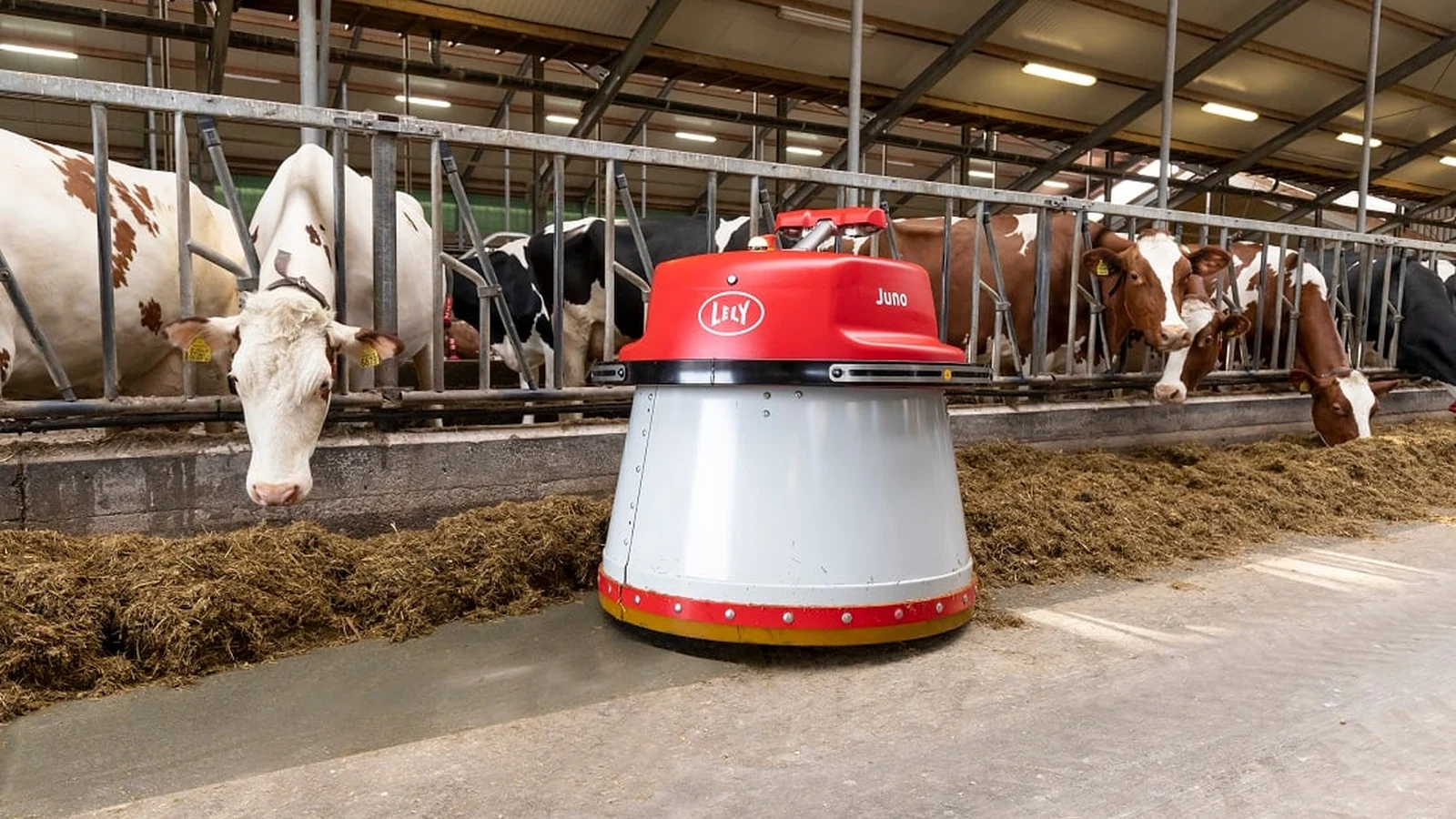
Manufacturer imagery: © Lely.
Barn robotics covers several separate processes: milking, preparing and delivering feed, pushing feed within reach and removing manure. Each has different requirements for the building, cow traffic and human attendance. Start by identifying the operation that consumes the most time or creates delays, then establish what would happen if its equipment stopped. Choosing the “best barn robot” before defining that job leads to comparisons between fundamentally different systems.
Four jobs that should not be combined
Lely Astronaut A5 Next and DeLaval VMS V300 are automatic milking systems. Lely Vector covers feed mixing and delivery within a feeding installation. Lely Juno pushes feed that has already been delivered. Discovery Collector collects manure from a suitable floor. These products can form parts of the same farm, but one purchase does not replace every other operation. Astronaut, VMS, Vector, Juno and Discovery Collector.
| Process | Example | First design question |
|---|---|---|
| Milking | Astronaut A5 Next, VMS V300 | How will cow traffic and exceptions be handled? |
| Feed preparation and delivery | Vector MFR Next | How will the feed kitchen and ingredient replenishment operate? |
| Feed pushing | Juno | Does the feed-alley route suit the machine? |
| Manure collection | Discovery Collector | Are the floor, passages and unloading point compatible? |
Map the daily workload
Record a representative week of work, identifying who performs each task and how much active attendance it requires. Separate machine operating time from human time. For feeding, include ingredient preparation, delivery, pushing and dealing with leftovers. For milking, also include cleaning, observing animals, reviewing alerts and attending to cows that need additional attention.
This can reveal that the bottleneck sits between tasks. Automatic feed pushing will not fix delayed feed preparation. A capable cleaning machine will not correct a route blocked by poorly positioned gates. Use these observations to design the process rather than assuming that every category of robot must be bought together. A smaller project can still address a clearly defined daily burden.
Automatic milking changes the routine
A milking project includes more than a box and robotic arm. It requires cow access, milk handling, cleaning, utilities, service access and integration with herd management. The supplier should assess the building and assumptions for the particular herd. A universal cows-per-robot figure without operating conditions is not a substitute for that assessment.
Before signing, ask for a description of an ordinary day after commissioning. Who reviews alerts? How are animals requiring attention handled? Who calls service and what happens during a stoppage? Herd health and milk-hygiene decisions remain with appropriately trained people and the veterinarian. The system provides equipment and information; it does not become the independent manager of the farm.
Feed pushing or a wider feeding system?
If feed is already prepared and delivered through an effective routine, automate pushing as a separate question. That is Juno's role. It does not fetch all ingredients from storage or independently formulate a new ration. Assess the route along the feed table, the desired schedule and the human work currently devoted to that specific operation.
Vector addresses a wider process. Its mixing and feeding robot operates with a feed kitchen and a system for replenishing ingredients. Read the quotation as an installation scope. Identify who prepares ingredients, monitors their availability and authorises ration changes. Automatic movement can be valuable while substantial work remains before loading and after each operating cycle.
Floor compatibility comes first for cleaning
Discovery Collector should be assessed against the specified solid-floor conditions and manure-handling arrangements. Do not equate it with a scraper for slatted floors or every other product using the Discovery name. Check clearance, turning space, thresholds, bedding and the unloading location. Collector product information.
During a reference visit, inspect the points where the machine turns or passes through gates. Ask how the robot itself is cleaned and how much routine maintenance it needs. Comparing alley width with vehicle width is not enough: allow for movement, attachments, other equipment and animals. The supplier should confirm the final layout rather than leaving compatibility as an assumption based on a brochure photograph.
Cost the installed process
Include equipment, building changes, utilities, commissioning, training and ongoing support. The alternative case should include improving the present system where that is realistic. Compare similar scopes over the same period. A lower-priced robot with extensive building work can require a larger investment than a more expensive system suited to the existing layout.
Record service agreements, consumables, energy and the human tasks that remain. Time released for family life or herd management has value, but it is not always cash available to pay finance instalments. The farm-robot payback guide separates financial savings from other benefits so that the investment's ability to fund itself is not overstated.
Deploy around the bottleneck
The sequence depends on the farm. Feed pushing may be a separate project when the building already suits it. A new milking system may need broader construction work. Automatic feeding must fit ingredient logistics. There is no compulsory sequence of “milking, then feeding, then cleaning” that makes sense for every barn.
Draw both a minimum project and a longer-term layout. Even when buying one machine, preserve service access and room for changes to working routines. Avoid positioning a new station where it would block a later system. A shared traffic plan becomes particularly important when equipment from different suppliers is intended to operate in the same space.
Acceptance should cover a complete cycle
Walk through preparation, task execution, normal stopping, requesting assistance and returning to operation. Establish which activities require training and how workers hand over between shifts. Acceptance should include usable documentation, service contacts and a fallback plan. Demonstrations must follow approved procedures without putting people or animals at risk.
Also agree what will be measured during the settling-in period. A single successful cycle is not the same as a stable daily routine. Record the frequency of interventions and whether the original operational bottleneck has actually improved. This provides a constructive basis for adjustment with the installer, instead of judging the investment solely by the amount of time its motors are running.
Browse the agricultural robot profiles and check the European availability and service guide before requesting a quotation. Verified 13 September 2026. This is a documentation review, not a RoboMorrow barn trial.