Dreame Winds Down Car Project and Refocuses on Robotics and Embodied AI
BUYING IN YOUR MARKET
Availability in your country
Sales, delivery and support can differ by country and exact model. Choose your market to see the evidence we have checked.
Dreame X50 Ultra Complete
Germany
Local store offer — check checkout availability
- Seller / sales channel
- Dreame Germany
- Price
- See the local offer for the current price and exact bundle
- Delivery
- Confirm stock and the delivery date for your address with the seller
- Warranty and service
- Confirm written warranty terms, parts and service coverage for your address
Dreame Germany lists this exact model for this market. A listing is evidence of a buying route, not a delivery commitment.
Evidence checked: · Not a live stock feed
Dreame Germany: check local offer ↗No verified local offer in this dataset
No country-specific offer for this exact model has been established in our current sources. This is a gap in our research, not a statement that the robot cannot be bought here. Use the manufacturer’s sales contact to request a supplier serving your address; confirm configuration, imports, warranty and service.
- Price
- No verified local price in this dataset
- Delivery
- No confirmed date for your address
- Warranty and service
- Local coverage not verified
“Listed” confirms a product page or sales route, not stock, delivery to every address or local service. “Pre-order” is not immediate availability. Unverified means we lack evidence; it does not mean unavailable. Prices belong to the named market and currency. Confirm the exact version, tax, shipping and support before ordering.
Updated 26 August 2026. Dreame is scaling down the car project it launched with considerable fanfare in 2025 and is refocusing on four areas: smart homes, outdoor living, smart mobility and embodied AI. This is more than a story about an abandoned vehicle programme. For robotics, the more important question is where the company reallocates engineering attention, capital and reusable technology after its automotive experiment.
Reuters, citing Chinese state and business media, reported that Dreame's car venture, known as the Star Project, is being wound down. A workforce that reportedly peaked at nearly 1,000 has been reduced to a small group handling supplier settlements and corporate closure work. Dreame did not directly answer Reuters' request on whether it was exiting car development, but a Weibo statement confirmed adjustments to exploratory businesses and named four areas of strategic focus. Source: Reuters.
From a world-fastest-car ambition to a robotics-adjacent core
The automotive project began in August 2025 with unusually ambitious messaging. Dreame talked about luxury EVs arriving in 2027 and, as recently as 2026, showed concepts and discussed Middle Eastern showrooms. The reversal is therefore material. It should not automatically be read as a crisis across the whole group: Dreame says core R&D, manufacturing, sales, delivery and after-sales operations continue normally.
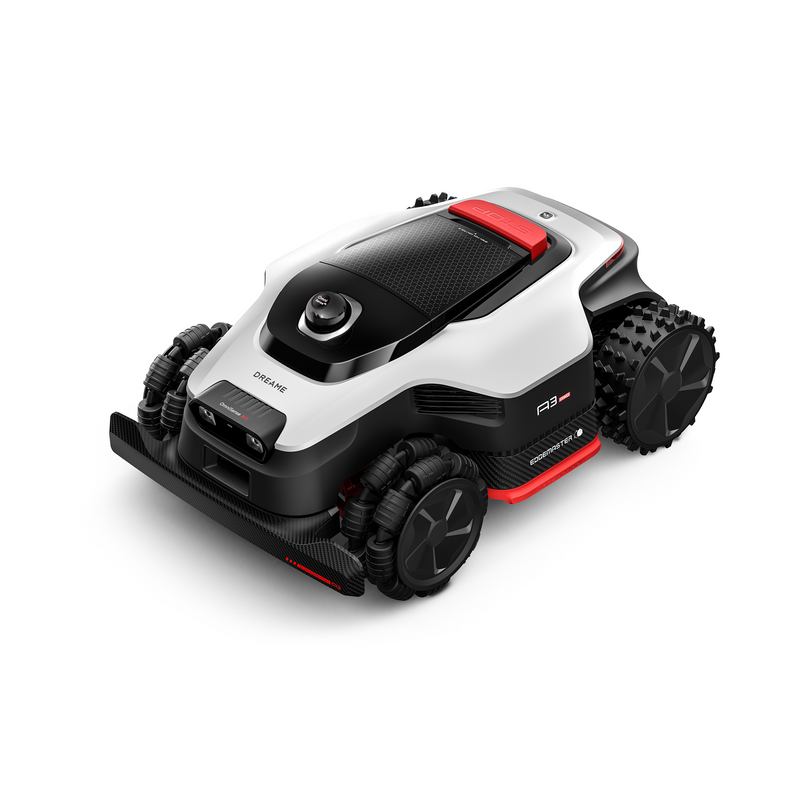
What matters to RoboMorrow is that the new priorities are close to competencies Dreame already monetises. Robot vacuums are a mature category for the company and its outdoor line includes robot lawn mowers. At CES 2026 Dreame presented a Whole-home Smart Ecosystem spanning cleaning, garden and other connected categories, built around reusable AI algorithms, high-speed motors and mechanical systems. Source: Dreame CES 2026.
Why embodied AI matters here
Embodied AI is an overused label, but for a manufacturer of physical machines it can describe a real engineering stack: perception, planning, actuation, manipulation and learning integrated in a device. A robot vacuum maps rooms, identifies obstacles and continuously changes its route. A robot mower solves a related problem outdoors, where terrain and positioning are less predictable. Those capabilities do not magically become a humanoid platform, but they are meaningful building blocks.
Dreame has explicitly described platform technologies being reused across categories. That business logic is more interesting than asking whether it could have won in cars. If the aim is to leverage existing engineering, home and garden robotics have a much shorter path to commercial products than building a full car brand with homologation, manufacturing, retail and service infrastructure.
What the shift could mean for Dreame products
There is no evidence today that a particular robot will suddenly gain a feature, or that the automotive budget will simply move wholesale into robotics. Dreame has not published such a plan. What is reasonable is to watch the categories it itself identified as core: smart home, outdoor, smart mobility and embodied AI.
Three signals will matter. First, the pace of garden robotics, where Dreame competes with Mammotion, Segway Navimow, Roborock and Husqvarna. Second, whether perception and mobility technology moves between product families. Third, whether embodied AI becomes more than positioning and results in machines that can manipulate and perform tasks beyond conventional cleaning.
Dreame already has a real-world robotics test bed
This is an advantage many Physical AI startups do not have. Consumer robots encounter cables, thresholds, rugs, pets, furniture and changing light every day. Mowers add slopes, wet grass, weather and difficult localisation. That is not proof of humanoid readiness, but it does force a company to operate sensors, motors, apps, telemetry, OTA updates and after-sales support for physical devices at scale.
For buyers, real products remain a better reference point than strategy slides. See our best robot vacuums of 2026, the Dreame X50 Ultra Complete database card and our best robot mowers of 2026.
The key caveat: a strategy is not a product
We will not turn this strategic shift into a claim that Dreame is launching a humanoid unless the company actually announces one. It would also be wrong to assume that winding down cars strengthens every other division automatically. New launches, hiring, investment and deployments will show where resources really go.
What is confirmed is more modest and more useful: after expanding aggressively, Dreame says it is concentrating on areas in which physical automation is one of its core competencies. In a year when many companies have simply added “robotics” to investor decks, execution — products, availability, service and deployments — is the metric worth tracking.
What to watch over the next 12 months
The best test of the new strategy will not be another corporate presentation but the pattern of product launches and investment. In robot vacuums, watch mobility, manipulation and dock automation. In the garden, the key measures are wire-free navigation, traction and reliability on large properties. If embodied AI is more than a portfolio label, Dreame should eventually show devices that do more than navigate and clean and can perform a broader range of physical tasks.
A second indicator is distribution and service. Dreame can launch many SKUs quickly, but physical robotics also depends on spare parts, firmware, app quality and after-sales execution. A third indicator is technological reuse. If the same perception, control and AI modules increasingly appear across vacuums, mowers and new robot form factors, the platform argument becomes much more credible.
What this news does not mean
There is currently no basis for calling Dreame a humanoid company or predicting a specific humanoid product. RoboMorrow separates embodied AI from humanoids: a machine can be physically intelligent and autonomous without having a human body plan. If your interest is in humanoids that can actually be ordered or purchased, see our Humanoids 2026 buying guide. This story is primarily about strategic allocation and a return toward markets where Dreame already has products, sales channels and practical experience with autonomous machines.
RoboMorrow verdict
This is worth following not because “robots beat cars”, but because a large consumer-tech manufacturer has named smart home, outdoor and embodied AI as strategic focus areas after a costly automotive experiment. If Dreame follows through, some of its most important competition over the next few quarters may be with companies racing to own autonomous machines in the home and garden, not with EV makers.
Where to buy models from this article
We show only exact verified Amazon product pages. Before purchase, confirm the variant, seller, warranty and box contents.
Exact Amazon links. Where a verified RoboMorrow marketplace tracking ID is active, the link is an affiliate link and we may earn from qualifying purchases. Price and availability can change after you click.