Hotel robots in 2026: cleaning, room service and reception — what actually makes sense?
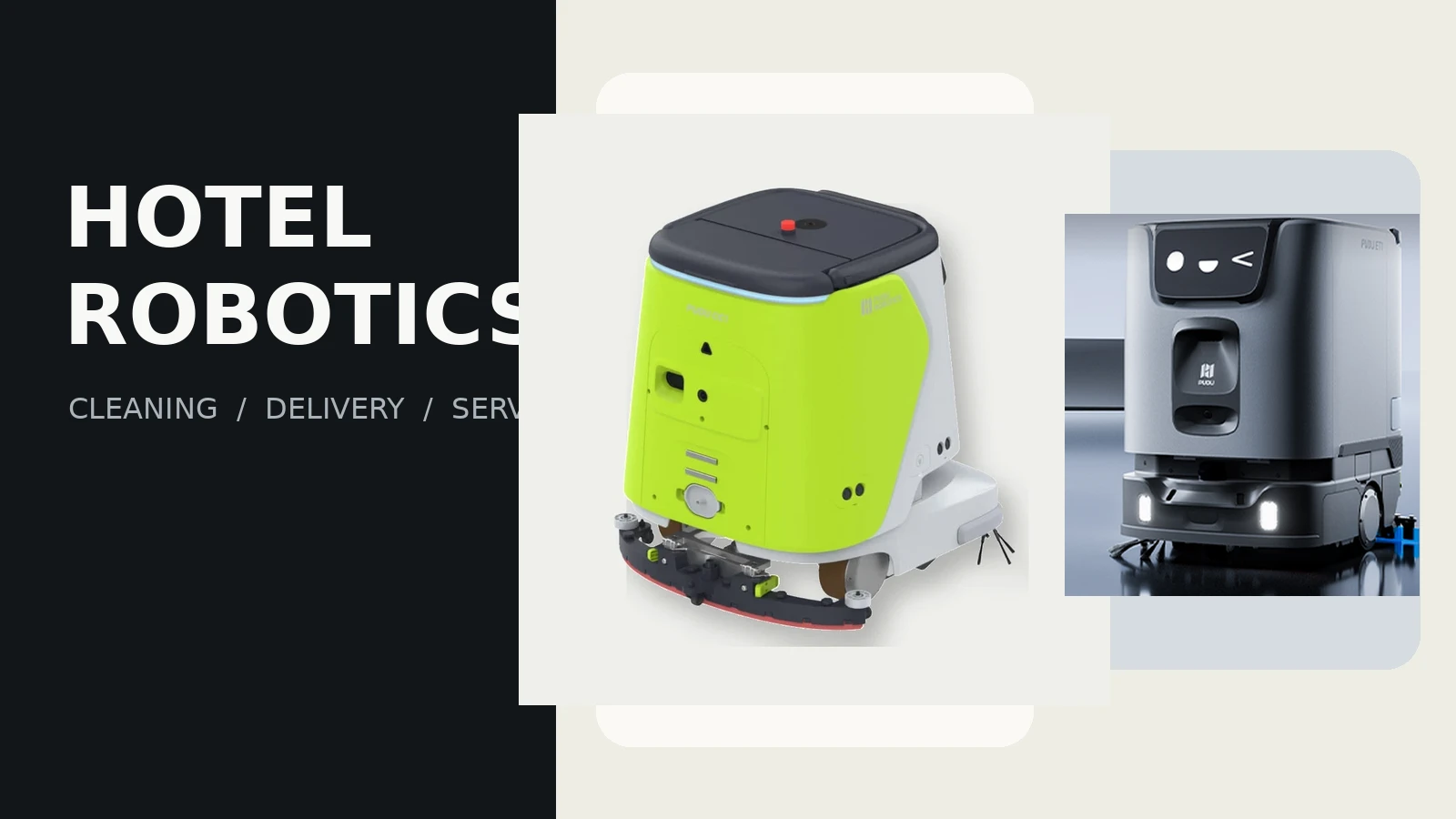
Hotels are one of the more interesting environments for service robots because they combine many repetitive processes, but not all of them should be automated in the same way. Cleaning a lobby, delivering towels to a room and greeting a guest are three very different tasks. The best strategy is not to buy “a hotel robot”, but to match a robot type to a defined process.
1. Cleaning common areas: the easiest business case
Lobbies, corridors, conference areas and parts of hotel F&B operations have regular floors that can be measured in square metres. This is where autonomous cleaning robots such as PUDU CC1 or the smaller PUDU ET1 fit. Value can be measured through operating time, floor area, intervention count and the percentage requiring manual rework.
A robot does not replace the entire housekeeping function. It cannot clean a bathroom like a person, change linen or handle every edge. It can, however, take over repeatable hours on common floor areas, particularly outside peak guest traffic.
2. Room service and small-item delivery
The second category is delivery robots. PUDU FlashBot is designed for multi-floor movement, elevator integration and secure delivery to guest rooms. The manufacturer highlights towels, toiletries, food and other small guest requests. The robot does not replace reception; it takes over repetitive trips through the building.
The key technical question is not top speed but integration with elevators, doors and access systems. Without that layer, an “autonomous” robot may need a person on every floor, quickly destroying ROI.
3. Dish transport and hotel restaurant support
Catering and transport robots can move prepared dishes, trays and dirty plates between kitchen and dining areas. Their real value is not novelty but reducing the kilometres staff walk. Waiters still speak to guests, advise them and handle exceptions; the robot becomes a mobile cart that can navigate and return for the next task.
4. Reception and greeting: automate information, not relationships
A robot at the entrance makes sense when it performs concrete functions: directions, maps, queue support, information display or check-in assistance. A robot that merely stands in the lobby quickly loses value. Human interaction still matters in hospitality, so reception automation should remove routine work while preserving access to staff.
A European example: Parkhotel in Austria
PUDU describes a deployment at Parkhotel Eisenstadt in Austria using five robot types: KettyBot, HolaBot, BellaBot, FlashBot and PUDU CC1. According to the manufacturer case study, they support floor cleaning, item and food delivery and guest greeting. This is manufacturer material rather than an independent ROI study, but it demonstrates an important point: a hotel does not need one universal robot. Different machines can automate different processes.
The biggest challenge: building integration
A robot confined to one floor is easier to deploy. A hotel-wide system needs elevator, access-control and sometimes phone or PMS integration. PUDU and KEENON both build hotel solutions around this infrastructure layer.
Before purchase, ask who performs the integration, who owns failures after elevator software updates, what happens during internet outages and whether the robot can stop safely without blocking a corridor.
How should ROI be calculated?
Start with one process. For room service, measure daily trip count and average trip duration. For cleaning, measure floor area, human minutes and frequency. For dish transport, count kitchen-to-floor movements. Only then compare saved time with lease/depreciation, service and remaining human labour.
What should a hotel pilot measure?
- tasks completed without intervention,
- human servicing minutes per shift,
- elevator wait time and integration errors,
- service response time,
- guest acceptance and cases requiring staff,
- actual cost per delivery or per 1,000 m² cleaned.
Where should a small hotel start?
A smaller property should begin with a low-exception task. That is often common-area floor cleaning or reception-to-room delivery where elevator integration is feasible. A humanoid is not required to carry a towel or scrub a lobby.
RoboMorrow conclusion
Hotel robotics makes sense when it automates kilometres, square metres and repetitive trips, while staff stay focused on conversation, judgement and flexibility. Specialised cleaning and delivery robots are currently the most mature options. Building integration, local service and interventions per shift matter more than an impressive demonstration.