Robot mower electricity use: measure monthly and seasonal cost
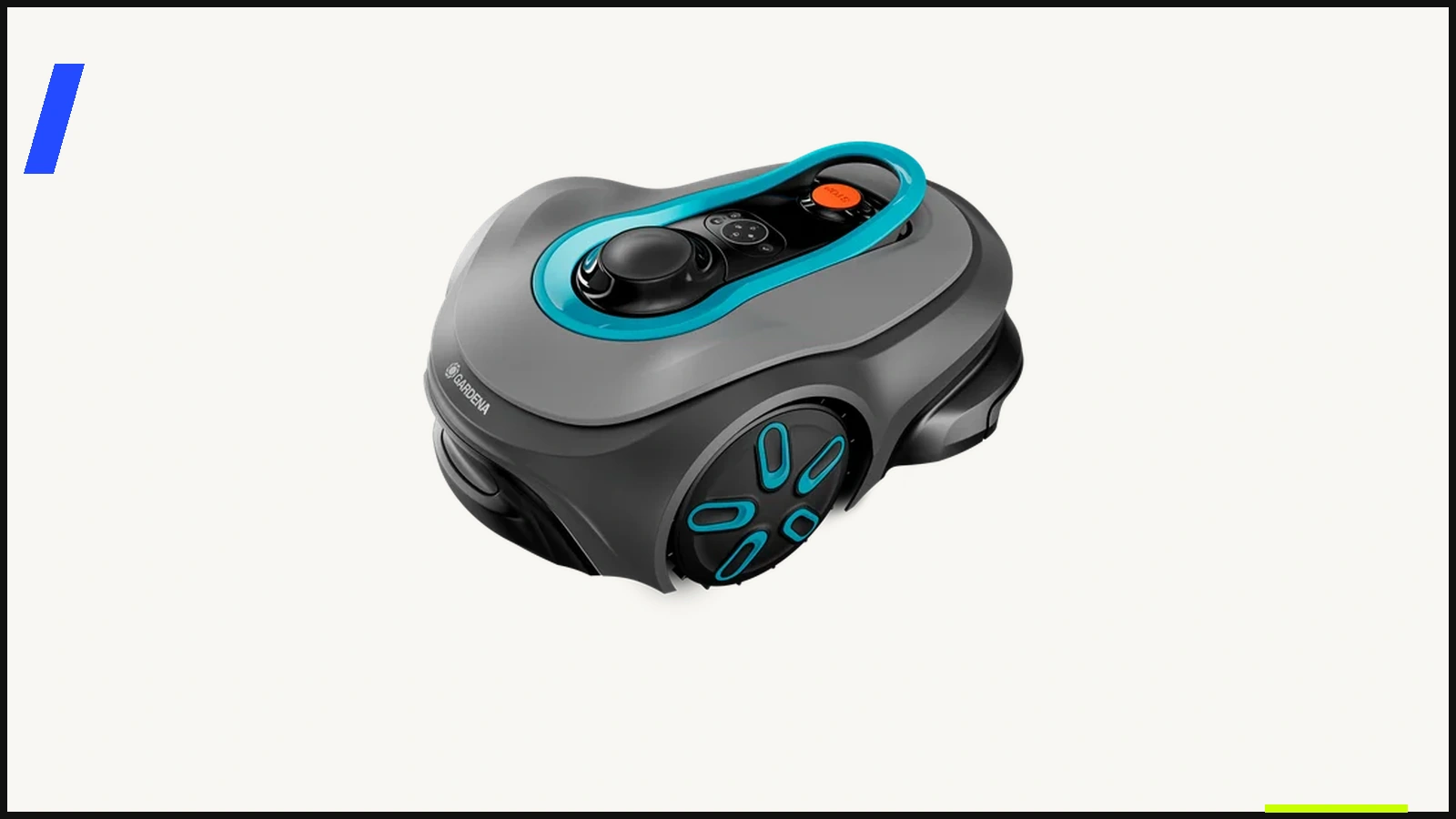
Calculate mower electricity cost from the energy used by the complete system and the applicable price per kWh. The adapter rating or battery capacity alone is not enough. The dock remains connected between cycles, and operating hours vary with the schedule and garden conditions.
Measure a representative period where possible. If you use a manufacturer estimate instead, retain the model and stated conditions and label the result as an estimate.
Define the measurement boundary
Include the mower and dock, not just one charging session. If either compared configuration requires additional powered equipment, record and include it consistently.
The meter and connections must be suitable for the installation environment. Do not leave an indoor meter exposed to rain or modify the electrical installation for the experiment. Ask an installer for a suitable arrangement if necessary.
Record starting and ending readings, dates, maintained grass area and schedule. Note downtime and periods without operation. A kWh figure without the work performed says little about efficiency.
Calculate a month
Energy = final meter reading − initial reading.
Variable cost = energy × applicable price per kWh.
| Field | Illustrative reading |
|---|---|
| Initial reading | 125 kWh |
| Final reading | 137 kWh |
| Period consumption | 12 kWh |
| Assumed variable rate | €0.275/kWh |
| Cost | 12 × 0.275 = €3.30 |
Check availability in your country
BUYING IN YOUR MARKET
Availability in your country
Sales, delivery and support can differ by country and exact model. Choose your market to see the evidence we have checked.
GARDENA smart SILENO free 800
Germany
Local manufacturer catalogue — ask about ordering
- Seller / sales channel
- GARDENA Germany
- Price
- See the local offer for the current price and exact bundle
- Delivery
- Confirm stock and the delivery date for your address with the seller
- Warranty and service
- Confirm written warranty terms, parts and service coverage for your address
GARDENA Germany lists this exact model for this market. A listing is evidence of a buying route, not a delivery commitment.
Evidence checked: · Not a live stock feed
GARDENA Germany: check local offer ↗No verified local offer in this dataset
No country-specific offer for this exact model has been established in our current sources. This is a gap in our research, not a statement that the robot cannot be bought here. Use the manufacturer’s sales contact to request a supplier serving your address; confirm configuration, imports, warranty and service.
- Price
- No verified local price in this dataset
- Delivery
- No confirmed date for your address
- Warranty and service
- Local coverage not verified
HUSQVARNA Automower 410VE NERA
Germany
Local manufacturer catalogue — ask about ordering
- Seller / sales channel
- Husqvarna Germany
- Price
- See the local offer for the current price and exact bundle
- Delivery
- Confirm stock and the delivery date for your address with the seller
- Warranty and service
- Confirm written warranty terms, parts and service coverage for your address
Husqvarna Germany lists this exact model for this market. A listing is evidence of a buying route, not a delivery commitment.
Evidence checked: · Not a live stock feed
Husqvarna Germany: check local offer ↗No verified local offer in this dataset
No country-specific offer for this exact model has been established in our current sources. This is a gap in our research, not a statement that the robot cannot be bought here. Use the manufacturer’s sales contact to request a supplier serving your address; confirm configuration, imports, warranty and service.
- Price
- No verified local price in this dataset
- Delivery
- No confirmed date for your address
- Warranty and service
- Local coverage not verified
DREAME A2 2000
No verified local offer in this dataset
A current local sales offer, exact regional variant, delivery date and service coverage have not been verified for this country in the regional dataset. This does not mean that the robot is unavailable.
- Price
- No verified local price in this dataset
- Delivery
- No confirmed date for your address
- Warranty and service
- Local coverage not verified
“Listed” confirms a product page or sales route, not stock, delivery to every address or local service. “Pre-order” is not immediate availability. Unverified means we lack evidence; it does not mean unavailable. Prices belong to the named market and currency. Confirm the exact version, tax, shipping and support before ordering.
This is arithmetic, not a monthly prediction for a particular mower. The rate is an example corresponding to about €0.28 at the editorial conversion of about €1 per euro. Use your own tariff and applicable consumption-based charges.
Keep fixed household charges separate when they exist regardless of the mower. Do not assign the entire electricity bill to this device.
Handle multiple tariff periods
Split energy according to the actual rates. For example, 8 kWh at €0.20 plus 4 kWh at €0.35 costs €1.60 + €1.40 = €3. A simple average of the rates is wrong unless consumption is split equally.
If the meter only provides a total, obtain a time breakdown or state the approximation. Do not assume charging takes place only during mowing hours; check the actual behaviour.
Add the season rather than multiplying one month
Spring and late-season schedules may differ. Sum recorded periods where available. Every value below is hypothetical, with a constant assumed rate of €0.275/kWh.
| Month | Energy | Cost |
|---|---|---|
| April | 8 kWh | €2.20 |
| May | 12 kWh | €3.30 |
| June | 14 kWh | €3.85 |
| July | 12 kWh | €3.30 |
| August | 10 kWh | €2.75 |
| September | 8 kWh | €2.20 |
| October | 4 kWh | €1.10 |
| Season | 68 kWh | €18.70 |
When rates change, apply the appropriate rate to each period. Include off-season consumption only where it actually occurs. Follow the device instructions for winter storage and disconnection.
Why watts and amp-hours are insufficient
Watts describe power; kWh describes energy over time. An adapter does not necessarily draw its rated power continuously. Multiplying its rating by every hour of the day can therefore mislead.
An Ah battery figure also requires voltage to estimate nominal stored energy. Even that does not equal total wall-socket consumption: charging and dock operation must be considered. For a household budget, measuring the complete system is more useful.
Compare energy with the work completed
Lower consumption is not automatically better if the mower simply cuts less grass and leaves an unacceptable result. Compare the same maintained area, required finish and remaining manual work.
Record blade costs, paid service, downtime and edging alongside electricity. Energy is one expense, not the entire operating cost. Use the season log and capacity guide to complete the picture.
The formulas are basic energy and cost calculations. Tables are editorial examples, not product measurements or current energy quotations.