Robot Mower 500 vs 1000 m²: How Much Capacity Headroom?
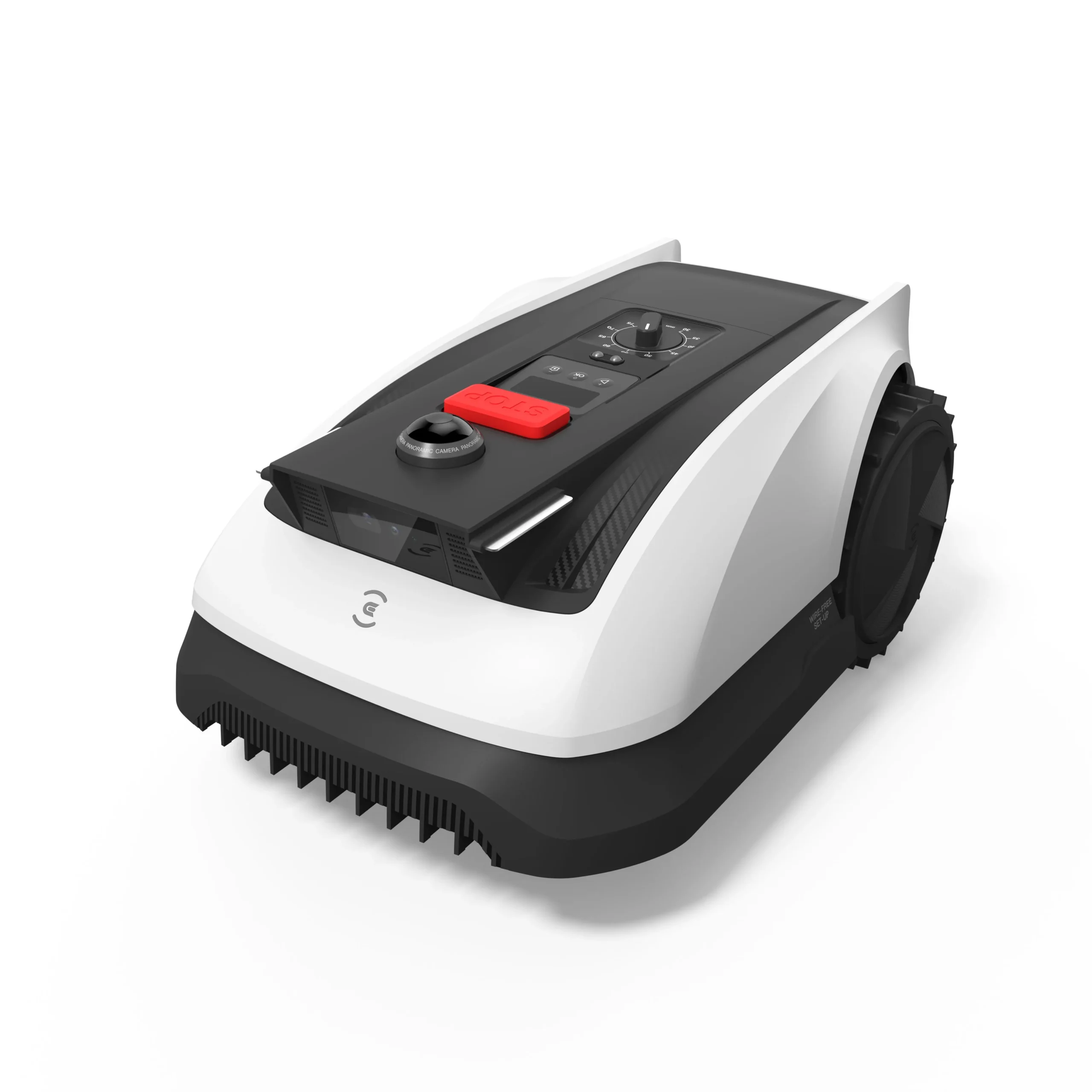
A mower “rated for 500 m²” is not automatically the best mower for a 500 m² lawn. Area rating is usually a maximum operating class rather than a promise of comfortable scheduling in every property. Trees, slopes, multiple zones, frequent turns and rain delays reduce practical time headroom.
Short answer
For a simple open 400–450 m² lawn, a 500 m² mower can be rational. At 480–500 m² with difficult geometry, compare 600–800 m² classes. A 1000 m² mower is useful when it creates a genuinely shorter mowing window, stronger battery margin or better technology fit — not simply because the number is larger.
1. Measure lawn, not property
Subtract the house, driveway, patio, beds, pool and other non-mown areas. Measure disconnected zones and connecting routes. A 700 m² property can contain 420 m² of grass, while a compact 520 m² plot can contain almost 480 m².
2. What consumes capacity
- many corners and turns
- several separate zones
- long non-mowing transfers
- slopes and soft turf
- rain delays
- tree-cover recovery and slower localisation
- fast spring growth
3. 500 vs 1000 m² is not only battery size
The larger model may have a bigger battery but may also be heavier, wider and less agile. Check minimum passage, turning method, turf protection and navigation architecture. A compact 500 m² mower can be better than a large 1000 m² machine on a 350 m² lawn with one narrow corridor.
| Actual lawn | Conditions | Class to compare |
|---|---|---|
| 250–350 m² | simple/open | 400–500 m² |
| 250–350 m² | complex / narrow | 500–800 m² but compact body |
| 400–500 m² | simple | 500–600 m² |
| 400–500 m² | multi-zone / trees / slope | 600–1000 m² |
| 500–700 m² | simple | 800–1000 m² |
| 500–700 m² | difficult | 1000 m²+ with suitable navigation and traction |
4. When 30–50% headroom is useful
Headroom helps when mowing is restricted to part of the day, grass grows quickly or you want to avoid night operation. It can also provide margin after several seasons of battery ageing. It is not a universal rule for every property.
5. When the bigger mower is overbuying
If the larger machine does not improve navigation, solve the slope or fit the passages, extra capacity may have little value. Spend the difference on service, traction or positioning technology matched to the property.
6. Trees: capacity does not fix GNSS
Moving from 500 to 1000 m² does not solve dense canopy if both models use the same positioning architecture. Compare LiDAR, vision and sensor fusion instead. See robot mowers under trees.
7. Slopes: area does not replace traction
On a steep section, drivetrain, tyres, weight, turning room and boundary slope matter. A 1000 m² 2WD machine can be worse than a compact AWD mower with a lower nominal capacity.
8. How long should it run each day?
If evening quiet or child use of the garden matters, additional capacity can shorten the mowing window. That practical value is not visible in the purchase price alone.
9. Electricity
A larger mower does not necessarily use proportionally more energy if it completes the job faster. Calculate from actual consumption and your tariff using the robot-mower energy guide.
10. Decision checklist
- measure actual grass area
- record the narrowest passage
- measure the slope and boundary slope
- mark tree canopy and walls
- count zones and transfers
- define the hours when mowing is acceptable
- compare two capacity classes with similar navigation and service quality
Related RoboMorrow guides
Start with the 500 m² mower guide, Best Robot Mowers 2026 and the five-year TCO guide.
Verdict
Buy capacity headroom when it shortens the operating window or makes the schedule more resilient. Do not buy a larger class only because it feels safer. Navigation, traction, geometry and service still matter more than the maximum m² number.
11. The rainy-week test for schedule headroom
The useful question is not whether the mower can cover 500 m² in an ideal week, but whether it can recover after three days without mowing. A machine operating near its limit may need very long sessions after weather delays. Extra headroom can restore the routine without night mowing or allowing grass to become too long.
12. Example: simple 350 m² lawn
With open sky, one zone and near-rectangular geometry, the 500 m² class usually provides sensible margin. Jumping to 1000 m² adds little unless the larger mower also improves service, noise, navigation or another feature you genuinely need.
13. Example: 480 m², three zones and trees
The nominal 500 m² can be much harder here. Time is lost in connectors, turns and localisation recovery. A 700–1000 m² class can be rational only if the larger machine retains suitable width, manoeuvrability and positioning performance under canopy.
14. Example: 650 m² with a slope
Area alone points toward 800–1000 m², but traction can matter more than battery capacity. If a 1000 m² 2WD mower struggles while a smaller AWD platform is stable, the area label should not decide the purchase. A difficult section can also be handled separately if that produces a better total system.
15. Weight and turf marking
Larger machines can be heavier. On wet, soft turf they may leave more visible tracks, particularly at repeated turning points. Active steering and good route logic help but do not remove physics. On a small garden, added weight can be the price of capacity you never use.
16. Battery ageing
Capacity margin can buffer battery ageing, but it is not a reason to buy twice the required class. Battery replaceability, parts pricing and post-warranty service matter more. A mower operating at 70–80% of its useful schedule has more resilience than one that needs its full daily window from day one.
17. RoboMorrow rule
Choose the navigation and drivetrain architecture that fits the property first: wire, RTK/Network RTK, LiDAR, vision, sensor fusion and AWD where needed. Only then choose the area class with sensible headroom. Reversing the order can buy a large battery in a mower that still loses position under trees or cannot climb the slope.