Pa, temperature and thresholds: what robot vacuum specs mean
Large suction numbers, hot water and impressive threshold heights appear to make robot selection simple. In practice, they describe different phenomena, sometimes under specific test conditions. Adding them together does not produce a cleaning-quality score.
For each specification, ask what was measured, under what conditions and how it relates to your home. Without a common measurement method, you can compare published claims but cannot turn them into a proven cleaning advantage.
Pascals are not the amount of dirt collected
The pascal is a unit of pressure. A suction claim alone does not establish how much hair remains in a rug or whether the brush reaches a wall edge. Air-path design, brushes, floor contact, settings and debris all affect the task.
If hypothetical models list 30,000 and 36,000 Pa, the second number is mathematically 20% higher. That does not mean 20% better vacuuming. Such a claim needs a comparable cleaning-performance test.
Check whether the number describes the motor, robot or dock-emptying system. Read the footnote and identify the mode. Maximum operation may differ from your everyday setting because of noise or scheduling preferences.
Temperature: ask where it is measured
| Claim | What it describes | What it does not establish |
|---|---|---|
| Hot-water mop washing | A dock-maintenance stage | The same temperature across the floor |
| Warm-air drying | The drying system | Immediate drying of every component |
| Water temperature at an outlet | A particular measurement point | Constant temperature throughout a cycle |
| Bacterial reduction in a test | A tested sample and procedure | A sterile home |
For example, the Saros 20 documentation specifies a dock water measurement location and conditions. That is more precise than saying the robot washes the entire floor at the headline temperature.
The practical outcome is a clean mop, suitable upkeep and compatibility with the floor. A temperature claim does not override the flooring manufacturer’s care instructions.
Thresholds: total height does not describe geometry
One vertical step and two separated steps are different obstacles. Individual heights, separation, profile, surface and approach direction matter. Space between steps can permit a manoeuvre that one uninterrupted edge cannot.
The MOVA Z60 page describes its 8 cm figure as a particular two-step arrangement. It is not a promise to cross every single 8 cm threshold. This illustrates why the conditions below a headline matter.
Measure your own passage and photograph its side profile. Ask the seller to address that geometry rather than repeat the maximum number. Also consider the return direction; a robot must complete the route both ways.
Height, sensor position and usable clearance
Body height may differ from the maximum height during travel. For a moving sensor, check raised and lowered positions and the activation conditions. The lowest configuration may not apply continuously.
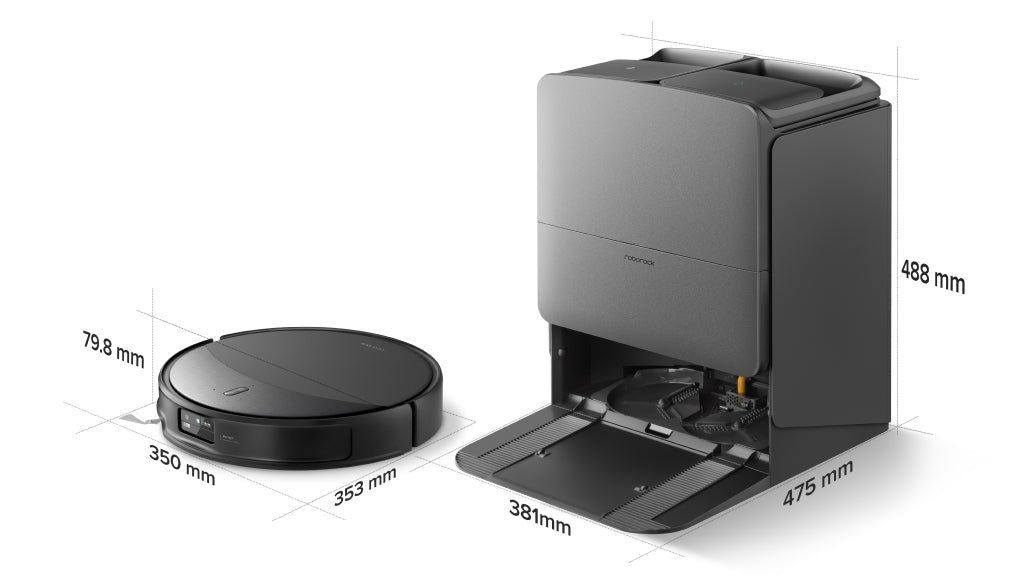
Do not assume a nominally exact fit is usable. Rugs, uneven flooring, hanging upholstery and internal furniture beams can reduce clearance. Dock dimensions also do not establish whether a water tank can be removed beneath a counter.
Use the measuring guide to turn catalogue dimensions into a practical space check.
Runtime: a declared maximum versus your schedule
Battery runtime can depend on mode, floor and task. Identify whether the claim concerns vacuuming, combined cleaning or another configuration. A maximum runtime is not a promise to finish any home.
Include wash returns, charging and resumption in the schedule. A large battery does not solve an inaccessible room. Conversely, a charging break may be acceptable if the full job still fits your available time.
For comparisons, write down the room area and required result. A long quiet run that removes little dirt is not directly comparable with a shorter intensive pass.
AI and obstacle-category counts
A list of recognised object categories describes a claimed feature scope, not perfect detection in every situation. Lighting, size, object position and documented limitations matter. Do not deliberately test pet-waste avoidance by leaving waste in the cleaning path.
The useful question is whether the robot needs fewer interventions in your home after appropriate preparation. Observation answers that question; the AI label alone does not.
Distinguish a manufacturer demonstration from an independent repeated test. Both may be informative, but they answer different questions and should not be presented as interchangeable evidence.
Build a comparison worksheet
Use five columns: parameter; model A; model B; measurement conditions; relevance to my home. Where methods differ or are undisclosed, write “comparability not established”. That is more honest than a percentage advantage calculated from mismatched figures.
Select three essential requirements, such as low-furniture access, carpet handling and maintenance workload, before considering extras. Specifications help exclude an unsuitable device; they do not replace a home acceptance test.
Example sources: Roborock Saros 20 specifications and footnotes and MOVA Z60 declarations and conditions, checked 14 October 2026. The comparison framework is editorial analysis.
Where to buy models from this article
We show only exact verified Amazon product pages. Before purchase, confirm the variant, seller, warranty and box contents.
Exact Amazon links. Where a verified RoboMorrow marketplace tracking ID is active, the link is an affiliate link and we may earn from qualifying purchases. Price and availability can change after you click.