Maxinsights raises $30M to record human work for robots
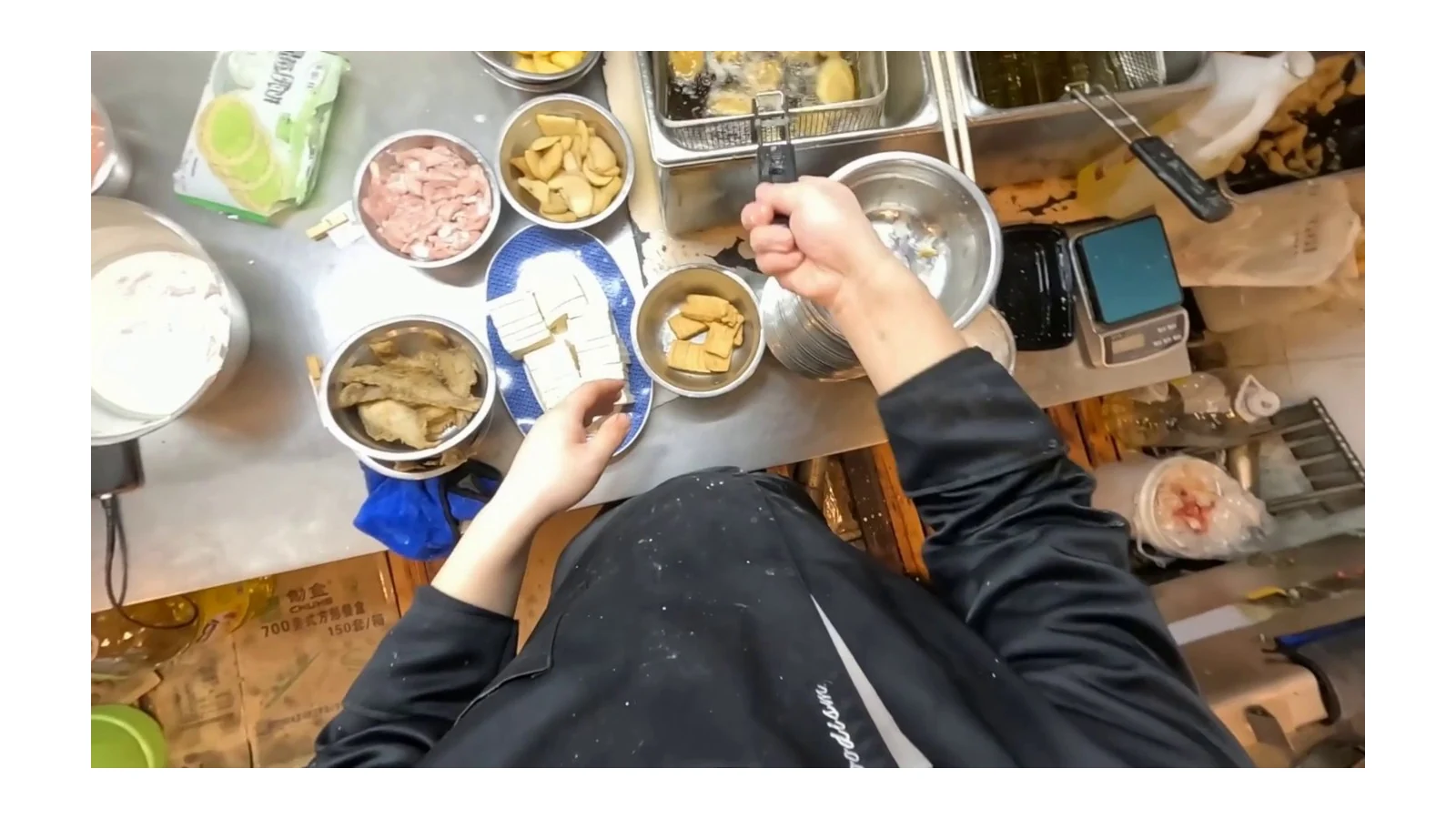
Before a robot learns to clean a kitchen, somebody needs to show it real work in a real kitchen. On 22 October 2026, Maxinsights announced a USD 30 million seed round led by Peak XV. It develops first-person activity data and two tools: MaxLoop for quality control and MaxGlove for recording touch and force. The funding concerns the data layer; it is not proof of autonomous capability in robots trained on the footage.
Maxinsights material: human-viewpoint capture of kitchen activity. This does not show a deployed robot performing the task.
What robotics teams are buying
The release says Maxinsights pays more than 5,000 contractors to record everyday activities. It reports over two million collected hours, including 1.5 million described as model-ready. Other named investors are Tola Capital, South Park Commons, INCE Capital and Alumni Ventures. The round amount is financing, not the company valuation or revenue. We retain the original funding currency rather than presenting a retail euro price.
One geographical detail remains inconsistent: the release refers to contractors in six countries, while the company description mentions eight. We do not guess whether those numbers describe different operating stages. The important model is real-activity capture; the precise geographical scope needs clarification at source.
An hour of footage is not an hour of robot skill
A camera can show the sequence of human movements, but the robot has different geometry, grippers and motion limits. The recording must become a useful task representation. Failure examples and boundary cases matter too. A large corpus can contain many similar actions while poorly covering an event that is essential for a customer.
Our analytical conclusion is that data buyers should ask about diversity, visibility of contact, synchronisation and separation of test data. Another million hours of similar views may not improve a particular grasp. The useful comparison evaluates a policy before and after adding data, using new scenes rather than the same recordings used for training.
MaxLoop and MaxGlove address different gaps
MaxLoop is intended to assess recordings during collection and reduce manual review. MaxGlove adds touch and force signals that cannot reliably be recovered from an image alone. The company reports substantial reductions in review effort; we do not present them as independently verified results. An announcement does not establish the benefit for another customer model or robot type.
A jar illustrates the distinction. Video may reveal one hand holding the container while the other turns the lid. Reliable execution also needs force control and an indication that the lid actually released. This does not mean the glove delivers a complete robot skill. A measurement signal and a working control policy are separate parts of the system.
Testing data value before a large purchase
Obtain a sample for one task and agree evaluation rules before training. Keep a separate test set and measure correct completions, time and human interventions. Check usage rights, consent scope and how unnecessary information about people or surroundings is limited. Requiring provenance documentation does not imply that a supplier has acted improperly.
For robotics, the round shows investment reaching training-data suppliers as well as hardware builders. Product value will depend on better robot behaviour, not archive size alone. RoboMorrow explored related questions in our Figure Index coverage and Dyna-2 laundry-workflow analysis.
Sources and methodology
Redakcja RoboMorrow. Verified 26 October 2026. Analysis of documentation and source material; no physical hardware test. Manufacturer statements are not independent measurements.