Navimow i210 LiDAR Pro vs i208: when is Pro worth it?
BUYING IN YOUR MARKET
Availability in your country
Sales, delivery and support can differ by country and exact model. Choose your market to see the evidence we have checked.
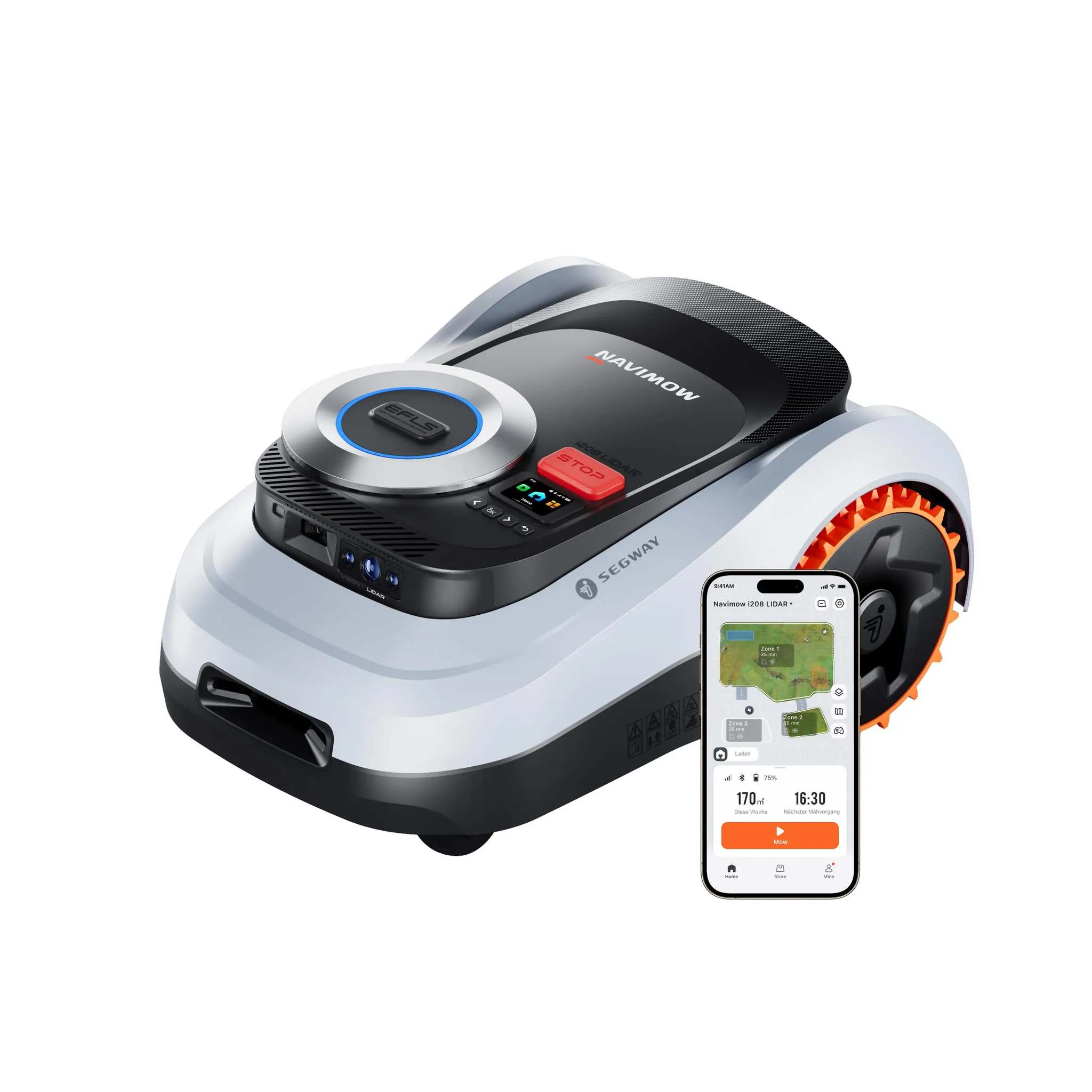
Segway Navimow i208 LiDAR
Germany
Local store offer — check checkout availability
- Seller / sales channel
- Navimow Germany
- Price
- See the local offer for the current price and exact bundle
- Delivery
- Confirm stock and the delivery date for your address with the seller
- Warranty and service
- Confirm written warranty terms, parts and service coverage for your address
Navimow Germany lists this exact model for this market. A listing is evidence of a buying route, not a delivery commitment.
Evidence checked: · Not a live stock feed
Navimow Germany: check local offer ↗No verified local offer in this dataset
No country-specific offer for this exact model has been established in our current sources. This is a gap in our research, not a statement that the robot cannot be bought here. Use the manufacturer’s sales contact to request a supplier serving your address; confirm configuration, imports, warranty and service.
- Price
- No verified local price in this dataset
- Delivery
- No confirmed date for your address
- Warranty and service
- Local coverage not verified
Segway Navimow i210 LiDAR Pro
Germany
Local store offer — check checkout availability
- Seller / sales channel
- Navimow Germany
- Price
- See the local offer for the current price and exact bundle
- Delivery
- Confirm stock and the delivery date for your address with the seller
- Warranty and service
- Confirm written warranty terms, parts and service coverage for your address
Navimow Germany lists this exact model for this market. A listing is evidence of a buying route, not a delivery commitment.
Evidence checked: · Not a live stock feed
Navimow Germany: check local offer ↗No verified local offer in this dataset
No country-specific offer for this exact model has been established in our current sources. This is a gap in our research, not a statement that the robot cannot be bought here. Use the manufacturer’s sales contact to request a supplier serving your address; confirm configuration, imports, warranty and service.
- Price
- No verified local price in this dataset
- Delivery
- No confirmed date for your address
- Warranty and service
- Local coverage not verified
“Listed” confirms a product page or sales route, not stock, delivery to every address or local service. “Pre-order” is not immediate availability. Unverified means we lack evidence; it does not mean unavailable. Prices belong to the named market and currency. Confirm the exact version, tax, shipping and support before ordering.
Compare the Navimow i208 LiDAR with the i210 LiDAR Pro when both cover your required area and terrain or navigation could change the decision. Pro is not automatically the better purchase for a flat lawn. Its extra cost should address a specific limitation of the site.
Differences in European manufacturer listings
| Feature | i208 LiDAR | i210 LiDAR Pro |
|---|---|---|
| Recommended lawn area | 800 m² | 1,000 m² |
| Navigation | LiDAR and Vision | LiDAR, Network RTK and Vision |
| Claimed maximum working slope | 45% | 55% |
| Reason to consider it | Suitable simpler terrain within its area rating | AWD and an additional positioning method |
These are manufacturer specifications checked on 12 October 2026, not a parallel RoboMorrow field test. Do not apply the working-area slope limit automatically at a boundary. Check the exact variant's manual, traction conditions and the surroundings of the slope.
When to start with i208
If the lawn fits the rating, the terrain is suitable and the main need is consistent routine mowing, start with an i208 demonstration. Trees alone do not establish a need for Pro. Show the seller the hardest location and assess passage, return to the dock and boundary behaviour.
Compare packages with the same scope: mower, dock, delivery, installation, extras and support. A device-only price from another country is not your complete installed cost.
When to investigate Pro
Pro becomes relevant when traction and movement between different garden environments are actual concerns. The manufacturer describes three positioning methods and AWD. This does not promise operation on every wet slope. Request a representative route demonstration within permitted conditions, away from hazardous edges.
Check Network RTK coverage for the actual address before ordering. Separate correction-service terms from optional cellular connectivity functions; they need not be the same package. Keep the offer and its applicable period rather than building a budget around a general no-fee claim.
A site-based decision test
- Measure the grass to be cut, rather than the entire plot.
- Mark boundaries, slopes, narrow passages and the dock.
- Define the hours when mowing is actually acceptable.
- Test the complete route: departure, difficult location and return.
- Record edges that still need manual finishing.
Conclusion: choose i208 if it meets the requirements and the demonstration reveals no problem that justifies upgrading. Investigate i210 Pro if its drive or navigation addresses an identified limitation. Both conclusions are conditional; the specification sheet cannot replace fitting the mower to the site.
Continue with your next question
- Navimow i210 Pro vs i215 LiDAR: terrain or more area?
- Mammotion vs Navimow: choose for your lawn and support
- Robot mower electricity use: measure monthly and season costs
Availability and sources
Check the exact regional model, compatible consumables, delivery to your address and local support before ordering. A product listing is not stock confirmation. This article adds no affiliate offers.
Redakcja RoboMorrow · updated 12 October 2026. Manufacturer statements are attributed above; practical checklists and fictional examples are editorial analysis, not hands-on test results. Product images are existing RoboMorrow manufacturer materials and illustrate the model, not an editorial test.
Before buying: variants, offers and further comparisons
- List the grass area, number of zones and narrow connecting passages.
- Separate positioning difficulties from traction problems. Record slopes and conditions beneath trees.
- Check the exact store variant: i208 LiDAR, i208 AWD and i210 LiDAR Pro are different models. Confirm what the bundle includes.
Check availability on Amazon
As an Amazon Associate, RoboMorrow earns from qualifying purchases. Check the seller, bundle, delivery and availability on the store page.