Orchard robots: what can be automated before harvesting?
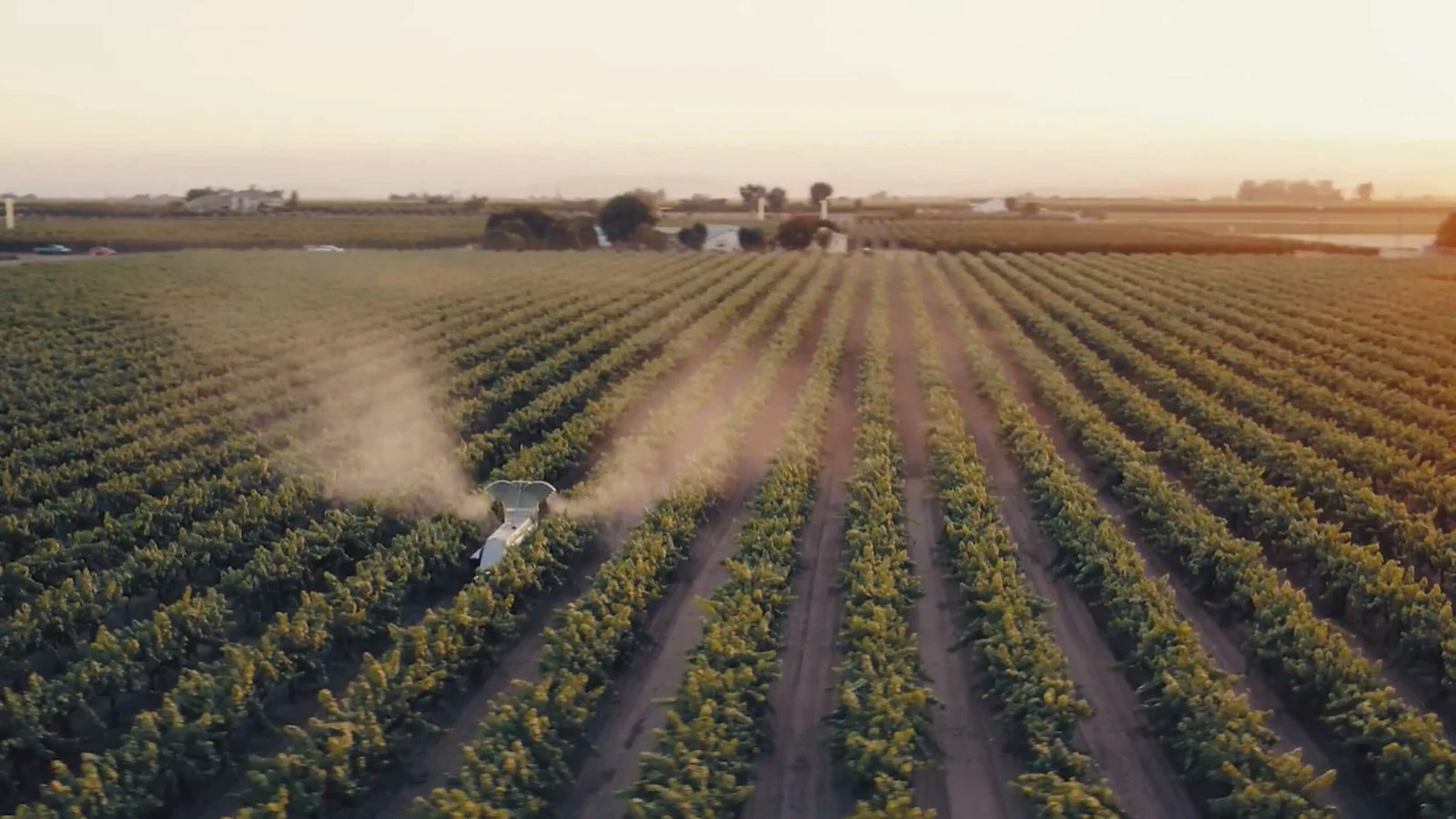
Manufacturer imagery: © GUSS Automation.
Orchard robotics extends well beyond picking apples. Spraying, transport, maintaining access routes and selected crop-care operations can all be examined separately. Harvesting adds further requirements: selecting an appropriate fruit, removing it and preserving its quality. Assess each system against a particular job, orchard layout and verified deployment route rather than assuming that a demonstration abroad represents a ready-made solution for every European grower.
Why orchard structure matters
Poland accounted for about 32% of EU apple-orchard area in Eurostat's 2023 data. This is a share of area, not fruit production or sales. It shows the importance of the segment without establishing how many farms could justify a particular machine. Eurostat: orchards in the European Union.
An orchard presents multiple operating constraints: row width, clearance below canopies, slopes, netting, supports, fallen fruit and workers moving through the same space. A vehicle that travels easily along a wide alley may not complete its task at a tight headland. Measure these conditions before comparing advertised throughput. The layout is part of the machinery specification, even though it belongs to the farm.
Spraying combines travel and treatment
Mini GUSS is offered as a compact autonomous sprayer for orchards and vineyards. The manufacturer describes supervision of multiple machines by one operator. That should not be interpreted as a completely unattended production process. Preparing treatment, refilling, transport and responding to stoppages remain part of the operating assessment. Mini GUSS.
During a demonstration, examine more than navigation between rows. Ask how the supplier assesses treatment coverage, canopy settings, turns and completion of the job. The treatment parameters and product application require agronomic assessment and compliance with the relevant label. Autonomous travel is one capability; it is not evidence by itself that the whole orchard has received a correct crop-protection treatment.
Modular platforms need available implements
Yamaha Agriculture's Prospr is a platform for row-crop environments including orchards and vineyards. Its value depends on the specific equipment supplied with it. A global product page and deployment in selected markets do not automatically establish installation and support in another country. Yamaha Agriculture: Prospr.
Request a list of implements available in the quoted configuration and separate current equipment from planned additions. If the financial model assumes months of use across several tasks, each task needs a real implement, operating procedure and place in the work calendar. Otherwise, annual utilisation rests on a product roadmap rather than an operation that the farm can actually perform after delivery.
Transport may offer a narrower first project
Burro develops agricultural platforms for carrying and towing loads. These can support harvest logistics without picking fruit themselves. Identify who loads containers, where loads are collected and what happens while the platform waits for more produce. Burro platform range.
Measure worker walking time and the amount of material delivered during a transport trial. Record empty trips, charging and manual interventions. If the longest queue occurs at the receiving point, faster movement through rows may not improve the team's output. A robot should address the measured bottleneck, rather than replace a visible movement that was not actually limiting production.
Picking requires a different output measure
Tevel describes Flying Autonomous Robots connected to a platform for fruit harvesting. This is a specialised integrated system whose suitability needs assessment for the fruit species, tree training and local deployment conditions. It is not interchangeable with an ordinary crop-monitoring drone. Tevel technology.
A useful acceptance measure is kilograms of fruit meeting the required market quality across a complete working cycle. Also record ripe fruit left behind, damage and the work of handling containers. Grips per minute or fruit detected by a camera cannot establish the economic outcome on their own. The trial should cover a representative orchard area rather than only the easiest exposed fruit.
Keep comparisons within the same job
| Job | Example technology | Outcome to measure |
|---|---|---|
| Spraying | Mini GUSS | Correct treatment including attendance and refilling |
| Implement work | Prospr | Completed task using equipment actually available |
| Transport | Burro | Delivered loads and reduced worker walking |
| Fruit picking | Tevel | Marketable kilograms, losses and full cycle time |
This is not a ranking of machines. A transporter does not become an inferior picker because it cannot detach fruit; it addresses another operation. Similarly, throughput measured in different crops or fruit sizes should not be placed in one comparison without explaining the conditions. The task and quality requirement determine which products can reasonably be evaluated together.
Prepare a representative demonstration
Select several rows including headlands and difficult areas. Provide dimensions, slopes and information about nets and other installations. Agree where people may be present and how stopping will be handled. Do not test safety by unexpectedly stepping in front of moving machinery. The supplier should demonstrate responses through an approved procedure.
Record preparation, operation and completion. Identify assistance from an engineer who would not normally be present after purchase. Include transport between blocks and interaction with harvesting crews. A useful demonstration reveals ordinary organisational requirements, instead of showing only a successful autonomous drive. Its report should allow a farm manager to estimate staffing and fallback arrangements for the next season.
Confirm support for the actual country
This review does not establish a complete Polish sales and service route for every system listed. That is not evidence that supply is impossible. It means the manufacturer must provide a specific local proposal covering commissioning, parts, assistance and responsibility for integration. Growers elsewhere in Europe should apply the same country-specific check.
When contacting a supplier, ask for a comparable reference orchard and permission to discuss the working routine with its manager. A reference should describe crop, layout, equipment and deployment stage. A research trial, an early commercial installation and a routine service operation offer different levels of evidence. None should be silently presented as the others.
Cost the season and the saleable output
Compare the complete seasonal operation and, for harvesting, the quality of the resulting crop. Freed worker hours can be redirected to other jobs, but cash savings appear only where an expense is actually removed. Include transport, setup, supervision, maintenance and the alternative method needed if the robot cannot complete the job within the available window.
Use the farm-robot cost model and availability and service guide to organise the next step. The farming hub also covers vegetable and livestock applications. Verified 13 September 2026. Manufacturer-documentation review; no RoboMorrow orchard field trial.