Robot mowers for uneven terrain: wheels, clearance, AWD and mapping
BUYING IN YOUR MARKET
Availability in your country
Sales, delivery and support can differ by country and exact model. Choose your market to see the evidence we have checked.
MAMMOTION LUBA 3 AWD 3000
Mammotion EU — supported destinations
Regional store lists this model — delivery country supported
- Seller / sales channel
- Mammotion EU
- Price
- See the linked offer for the current price, configuration and taxes
- Delivery
- Seller lists this country as a delivery destination; confirm postcode, model stock and dispatch at checkout
- Warranty and service
- Confirm warranty territory, local service and return shipping with the seller
Delivery countries: Sweden, Denmark, Austria, Belgium, Bulgaria, Croatia, Czechia, Estonia, Finland, Greece, Hungary, Ireland, Latvia, Lithuania, Luxembourg, Portugal, Romania, Slovakia, Slovenia, Poland, Netherlands, Switzerland
Exact model listing and the store’s delivery policy are linked separately. Supported delivery is not proof of current stock or local service.
Evidence checked: · Not a live stock feed
Mammotion EU: model offer ↗Supported delivery countries ↗No verified local offer in this dataset
No country-specific offer for this exact model has been established in our current sources. This is a gap in our research, not a statement that the robot cannot be bought here. Use the manufacturer’s sales contact to request a supplier serving your address; confirm configuration, imports, warranty and service.
- Price
- No verified local price in this dataset
- Delivery
- No confirmed date for your address
- Warranty and service
- Local coverage not verified
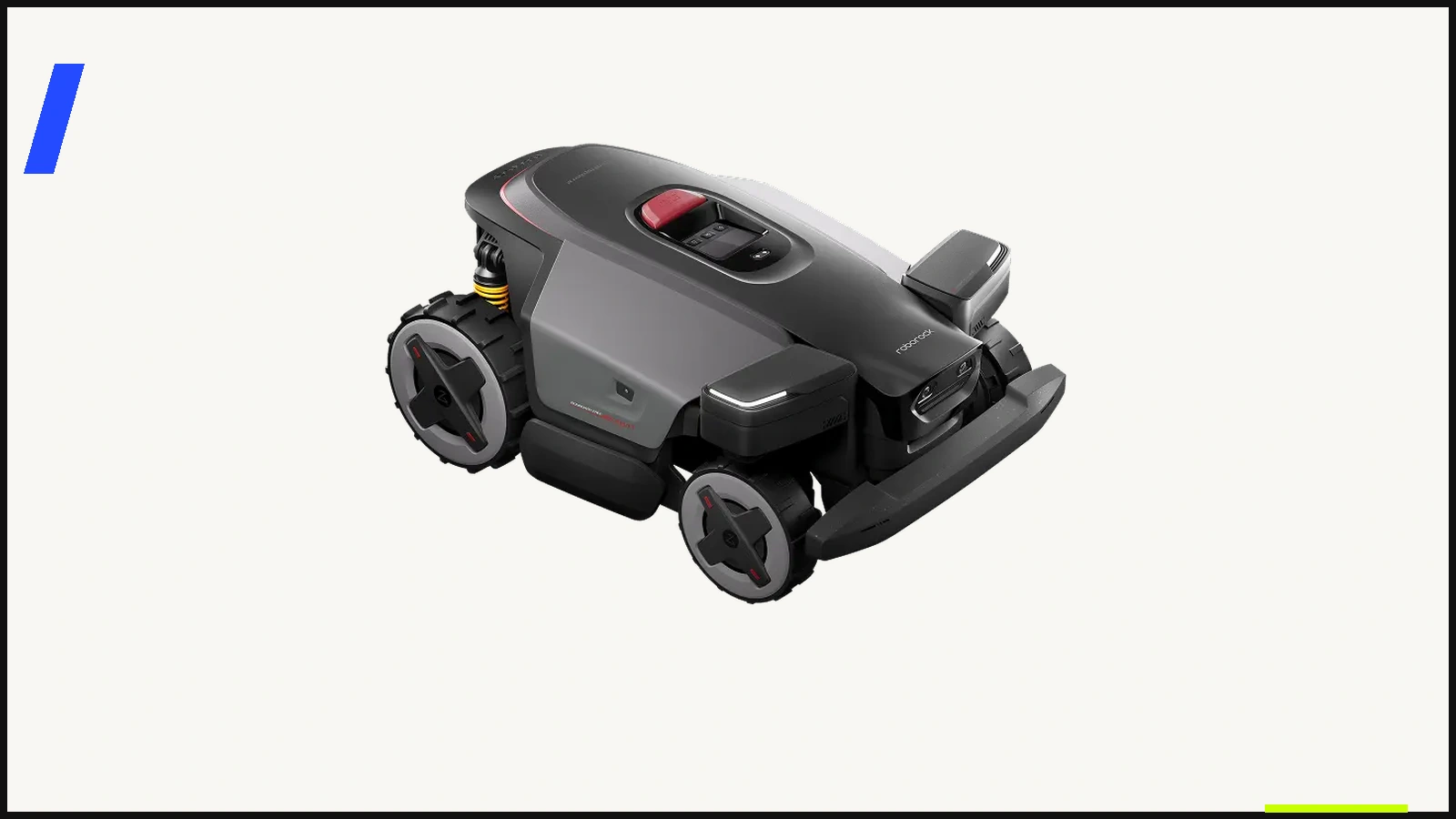
ROBOROCK RockMow Z1
No verified local offer in this dataset
A current local sales offer, exact regional variant, delivery date and service coverage have not been verified for this country in the regional dataset. This does not mean that the robot is unavailable.
- Price
- No verified local price in this dataset
- Delivery
- No confirmed date for your address
- Warranty and service
- Local coverage not verified
DREAME A2 2000
No verified local offer in this dataset
A current local sales offer, exact regional variant, delivery date and service coverage have not been verified for this country in the regional dataset. This does not mean that the robot is unavailable.
- Price
- No verified local price in this dataset
- Delivery
- No confirmed date for your address
- Warranty and service
- Local coverage not verified
Segway Navimow i210 LiDAR Pro
Germany
Local store offer — check checkout availability
- Seller / sales channel
- Navimow Germany
- Price
- See the local offer for the current price and exact bundle
- Delivery
- Confirm stock and the delivery date for your address with the seller
- Warranty and service
- Confirm written warranty terms, parts and service coverage for your address
Navimow Germany lists this exact model for this market. A listing is evidence of a buying route, not a delivery commitment.
Evidence checked: · Not a live stock feed
Navimow Germany: check local offer ↗No verified local offer in this dataset
No country-specific offer for this exact model has been established in our current sources. This is a gap in our research, not a statement that the robot cannot be bought here. Use the manufacturer’s sales contact to request a supplier serving your address; confirm configuration, imports, warranty and service.
- Price
- No verified local price in this dataset
- Delivery
- No confirmed date for your address
- Warranty and service
- Local coverage not verified
“Listed” confirms a product page or sales route, not stock, delivery to every address or local service. “Pre-order” is not immediate availability. Unverified means we lack evidence; it does not mean unavailable. Prices belong to the named market and currency. Confirm the exact version, tax, shipping and support before ordering.
“Rough terrain” may mean gentle waves, molehills, roots, ruts, short rapids, or a steep slope. Each of these problems requires something different. The high inclination limit itself does not guarantee that the robot will not hang on its belly, spin or damage the turf during a turn.
Inequality is not the same as slope
| Problem | What you need | What the slope limit alone can't do |
|---|---|---|
| Long slope | traction, AWD or powerful 2WD, safe limit | side sill clearance |
| Ruts and molehills | large wheels, ground clearance, flexible geometry | lateral tilt stability |
| Roots and Stones | obstacle perception, low turf pressure | driving over sharp edges |
| Narrow thresholds between zones | fault crossing capacity and precision map | working on soft mud |
AWD: when is it really needed?
Four-wheel drive makes the most sense on slopes, with frequent changes in traction and in gardens, where the robot must move uphill on wet grass. On an even lawn it may add price, weight and complexity without much benefit.
Card MAMMOTION LUBA 3 AWD 3000 describes an AWD design with a claimed rake of up to 80%. ROBOROCK RockMow Z1 is also announced as an AWD robot for difficult terrain. Manufacturers' declarations are a starting point, but plot boundaries, wet grass and side slopes may lower the safe limit.
Ground clearance and chassis geometry
The robot may have high climbing ability and still hang on a short hump. Pay attention to the distance between the axles, the lowest point of the housing and how the cutting disc is mounted. A short robot with large wheels can better traverse local irregularities than a long structure with a similar maximum slope.
Relapses and grass destruction
A heavy robot rotating in place may wipe the turf, especially after rain. It is worth looking for control limiting slip, swivel wheels or an algorithm for gentle turns. Before purchasing, check the recordings of real work on wet and sloping terrain, not just a video on perfect turf.
What to improve in the garden before starting
- fill holes deeper than a few centimeters and tamp down the soil;
- remove loose stones, branches and protruding installation elements;
- mitigate sharp faults at edges and crossings;
- reinforce permanently wet places;
- set separate zones or prohibitions at points that the robot should not attempt to traverse;
- start with a higher cutting height to keep the blade from hitting the ground.
When to choose LiDAR or Vision?
On uneven terrain, local sensors help you spot stones, toys and other obstacles. LiDAR is good at measuring the geometry of the environment, and cameras can recognize classes of objects. No system can guarantee detection of a small, flat object hidden in the grass, so the garden still needs to be inspected.
Verdict
The entire system is selected for uneven terrain: wheels, ground clearance, geometry, drive, perception and turning algorithm. If the terrain is really difficult, improving a few spots in the garden may provide more reliability than paying extra for another sensor.
Side slope is more difficult than straight uphill
The claimed grade limit is often measured while driving straight uphill on dry grass. The robot moving across a slope may lose direction, slide down and mow unevenly. With water, a wall or a road at the bottom of a slope, a greater safety margin is needed than indicated in the catalogue.
Tyres, weight and grass pressure
Aggressive tread improves traction but may tear up soft turf. A heavy robot is stable, but it is easier to leave ruts on wet ground. The best choice depends on the soil: sandy, clay and constantly irrigated surfaces react differently.
Traction accessories
Some manufacturers offer off-road wheels, spikes or additional weights. They can improve your driveway, but they increase pressure and the risk of damaging the grass when turning. Accessories should be model approved and tested on the least visible part.
How to test the site after installation
- Make a complete run on a dry day and after light rain.
- Observe where the robot rotates on tilt.
- Check that the disc is not touching the ground on humps.
- Mark ruts and soft areas as temporarily disabled zones.
- After a week, inspect the turf near the station and the most common turns.
When to level the ground instead of buying a more expensive model
Filling in a few potholes, making a gentle run around the edge or stabilizing a wet passage may cost less than the extra payment for the top AWD model. Preparing your garden also increases safety and reduces wear and tear on any robot, regardless of its drive.
FAQ: difficult terrain
Will the robot pass through the stone path?
Only if the manufacturer allows transport passage, the surface is stable and the threshold is within the limit. Loose grit can block small wheels and damage the edges of the disc.
Can you mow a very uneven meadow?
Robot mowers are mainly intended for regularly maintained lawns. Tall, tufted vegetation and deep ruts require prior preparation of the area and the first mowing with a classic machine.
Related Tabs in Robot Database
See the entire RoboMorrow Robot Database.
Related guides
Sources and verification date
The article was prepared based on manufacturer data and institutional materials available on August 3, 2026. Software parameters, prices, availability and functions may change.
- MAMMOTION LUBA 3 AWD – official product card
- Segway Navimow i2 LiDAR Pro – official data
- Husqvarna – selecting a robot for large and uneven gardens
Where to buy models from this article
We show only exact verified Amazon product pages. Before purchase, confirm the variant, seller, warranty and box contents.
Exact Amazon links. Where a verified RoboMorrow marketplace tracking ID is active, the link is an affiliate link and we may earn from qualifying purchases. Price and availability can change after you click.