Agility Digit / Digit 5: applications, price and availability
BUYING IN YOUR MARKET
Availability in your country
Sales, delivery and support can differ by country and exact model. Choose your market to see the evidence we have checked.
Agility Digit / Digit 5: applications, price and availability
No verified local offer in this dataset
A current local sales offer, exact regional variant, delivery date and service coverage have not been verified for this country in the regional dataset. This does not mean that the robot is unavailable.
- Price
- No verified local price in this dataset
- Delivery
- No confirmed date for your address
- Warranty and service
- Local coverage not verified
“Listed” confirms a product page or sales route, not stock, delivery to every address or local service. “Pre-order” is not immediate availability. Unverified means we lack evidence; it does not mean unavailable. Prices belong to the named market and currency. Confirm the exact version, tax, shipping and support before ordering.
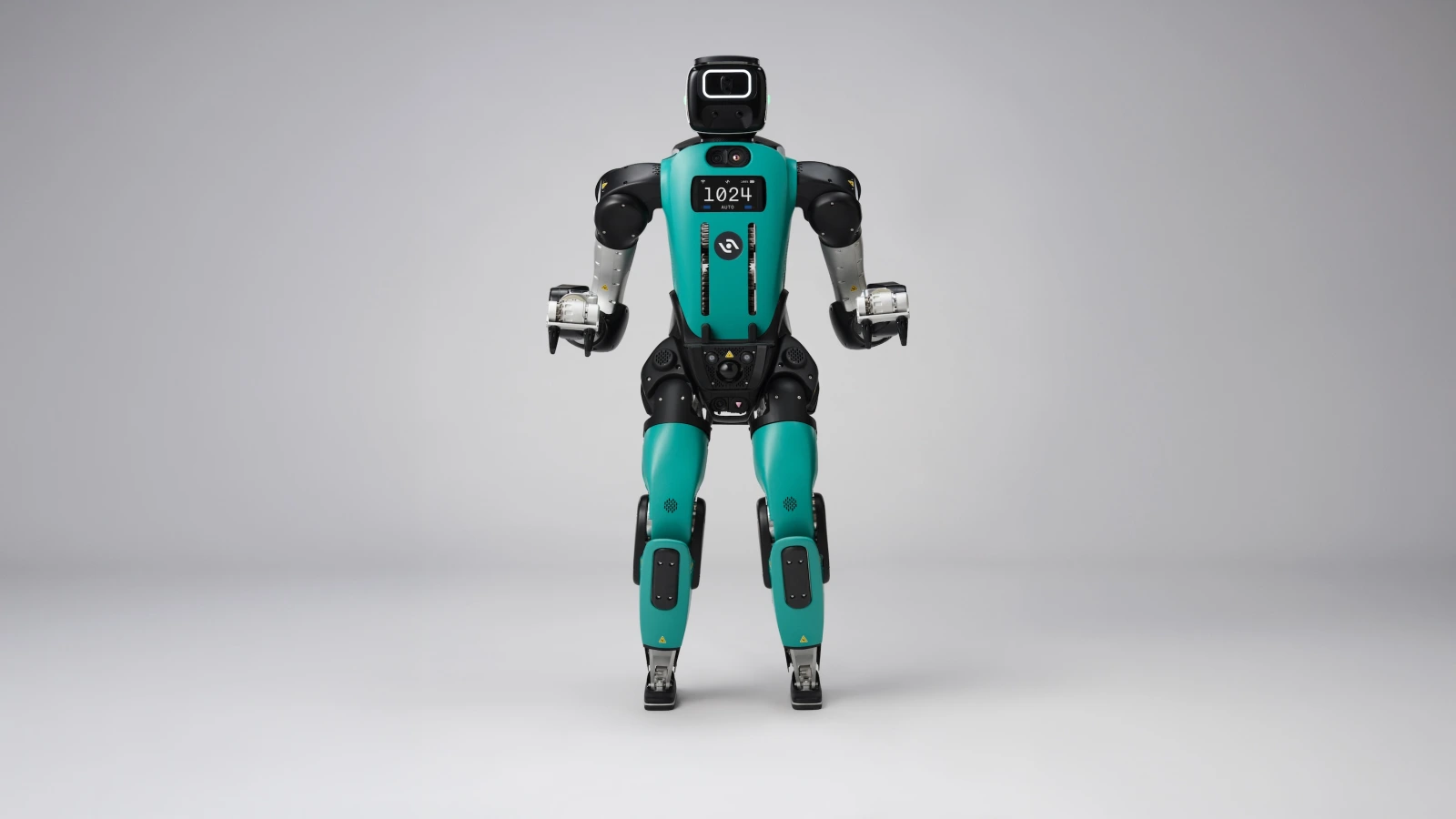
Featured visual: Agility Robotics. Product material; not a RoboMorrow hands-on test photograph.
Agility Digit is a family of bipedal robots developed for logistics work. Digit 5 is the announced next generation, not a machine with confirmed immediate delivery in September 2026. Keeping those statements separate matters when reading operating statistics or planning deployment.
| Area | What the source establishes |
|---|---|
| Manufacturer | Agility Robotics |
| Digit 5 announcement | 15 September 2026 |
| Availability plan | Early access in H1 2027; general availability by the end of 2027 |
| Development figures | About 23 kg payload; a 90-minute work / 9-minute charge scenario |
| Price | Project quotation; no verified public retail price |
| Previous experience | More than 65,000 hours attributed to Digit 4, not Digit 5 |
Dates, performance figures and operating statistics are manufacturer statements. Development specifications do not guarantee performance in an arbitrary task. [11] · [12]
What changes with the new generation?
The industrial question is not whether Digit 5 walks more impressively. It is how manipulation, energy management, stopping and recovery fit together in a working process. Agility frames this generation around scaling work rather than entertainment.
The advertised charging scenario is interesting, but should not be converted directly into installation uptime. Travel to the charger, waiting, process interruptions and human interventions remain relevant. A complete-cycle measurement shows how much productive work the installation provides.
Tool selection should consider the object, pickup and placement height, and motion constraints. A maximum payload does not describe every posture or acceleration. That matters particularly when a demonstration uses regular totes but the proposed application involves different objects.
Reading the operating record correctly
Digit 4 experience is useful context, but it must not be transferred to Digit 5 as an achievement already delivered by the new model. Equally, tote counts and accuracy while performing a task do not automatically describe around-the-clock reliability.
A pilot should measure completed operations, human interventions, downtime and recovery separately. Those measures help distinguish a limitation of the robot from one imposed by the surrounding process.
We provide neither a star rating nor a RoboMorrow test score. We have not independently tested this generation, and a manufacturer announcement does not justify pretending otherwise.
The practical comparison is against the actual alternative for a specific workflow. A robot that fits existing workstations may offer integration advantages, but those advantages need to be weighed against supervision, charging and exception-handling requirements.
Procurement and European deployment
A proposal should identify the exact generation and supported market. A planned European rollout is not a confirmed delivery date or completed documentation for a specific installation.
Agree the integration scope, training, support, software responsibility and acceptance method before ordering. Separate functions available at delivery from updates still on a development roadmap.
The most relevant buyer is a team able to define a repeatable logistics task and compare alternative solutions. Wanting a humanoid does not itself define an application.
A trial can be valuable without proving general-purpose autonomy. Its result should be stated with the task and conditions attached, allowing another team to judge how much of the evidence transfers to its own operation.
Frequently asked questions
Is Digit 5 available for immediate delivery?
The reviewed sources do not establish that. Agility plans early access in the first half of 2027.
Do the previous operating hours belong to Digit 5?
No. The cited figure of more than 65,000 hours concerns the preceding Digit 4 generation.
Read the Digit 5 analysis, humanoid purchasing guide and IROS 2026 research report.
Sources and methodology
Editorial analysis based on the linked sources, checked on 28 September 2026. Manufacturer and seller statements are not RoboMorrow test results. We have not independently tested these robots.
Agility — Digit 5 announcement, 15.09.2026 · Agility — Digit 5, development specifications
Where to buy
We do not yet have a verified exact Amazon product page for this model. Check the official source above.
News about this robot and brand
Humanoids in 2026: which can you actually buy, order or reserve?
Unitree G1, R1 and H2, NEURA, NEO, Digit, Agile, Atlas, Figure and Optimus: separate hardware purchases, reservations, subscriptions and deployment projects.Read more →Guides
No related guides are available yet.
Comparisons and rankings
No related comparisons are available yet.